The First World War in East Africa
Four years of war fought across what is now Tanzania, from the beaches of Tanga to the Ruvuma and beyond. Most of the dead were not soldiers but African carriers, and the civilians whose food the armies took.
Edited by Kabeer Dalvi · Updated 3 October 2026
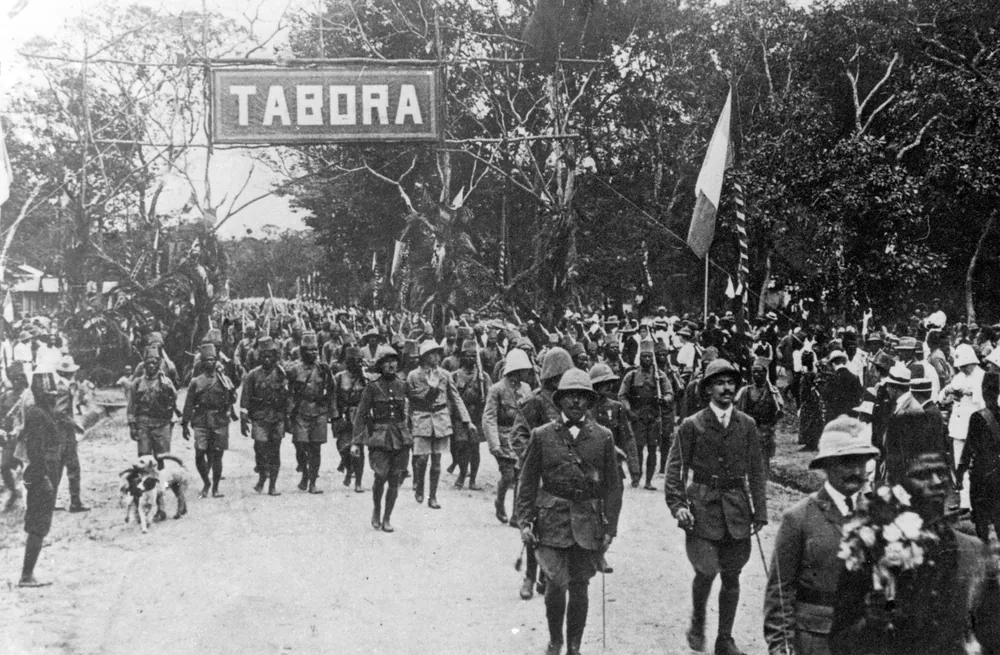
Belgian colonial troops of the Force Publique march into Tabora, 19 September 1916.
- The Battle of Tanga
- 3–5 November 1914
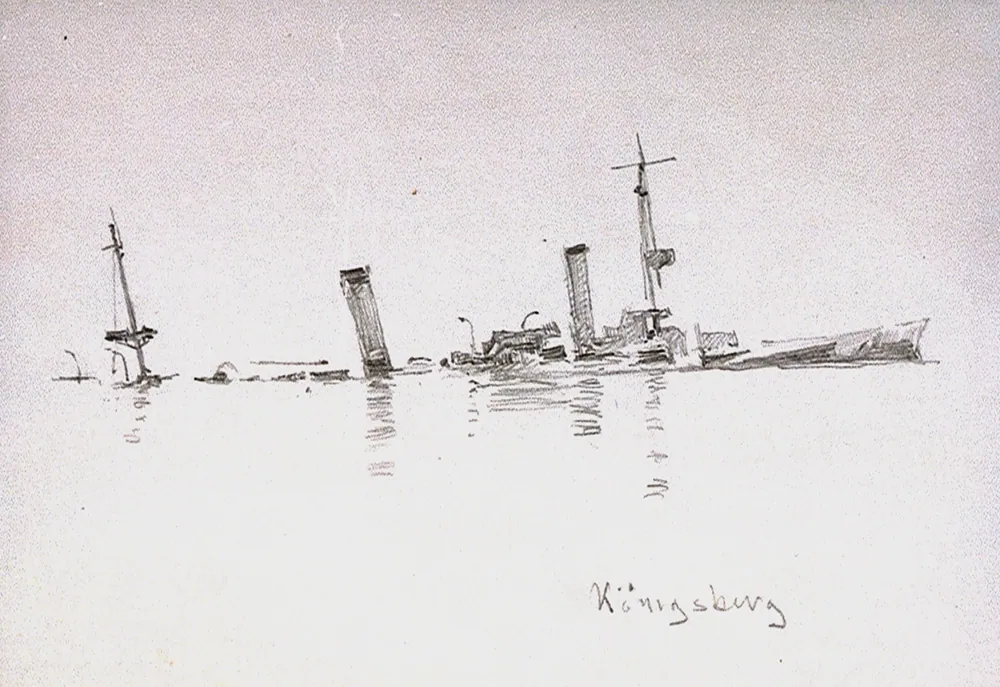
- The cruiser Königsberg destroyed in the Rufiji delta
- 11 July 1915
- The Graf von Götzen scuttled on Lake Tanganyika
- 26 July 1916
- Dar es Salaam falls to the British
- 3 September 1916
- Tabora falls to the Belgians
- 19 September 1916
- The Battle of Mahiwa
- October 1917
- The German force surrenders at Abercorn
- 25 November 1918
War reaches the colony
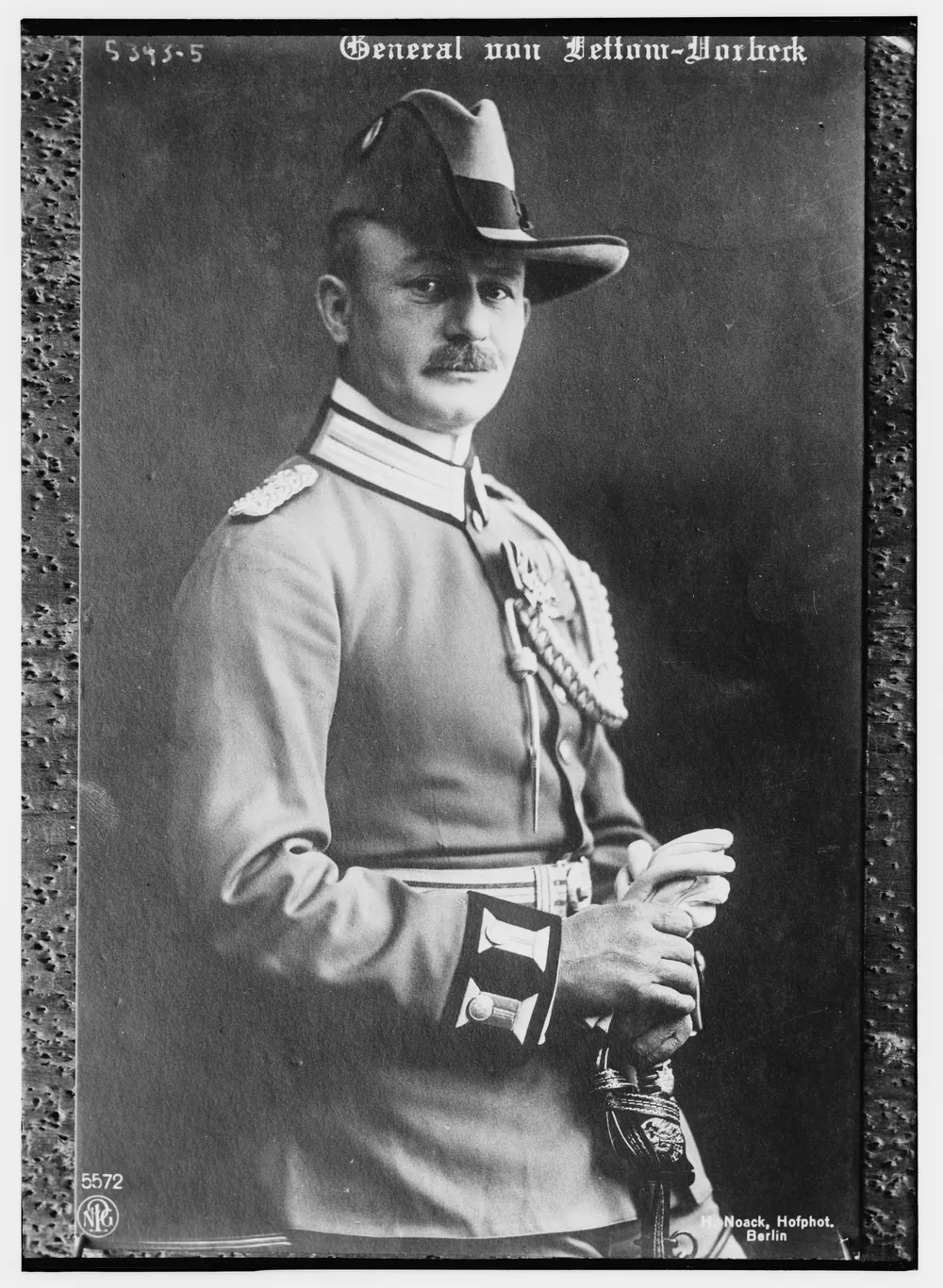
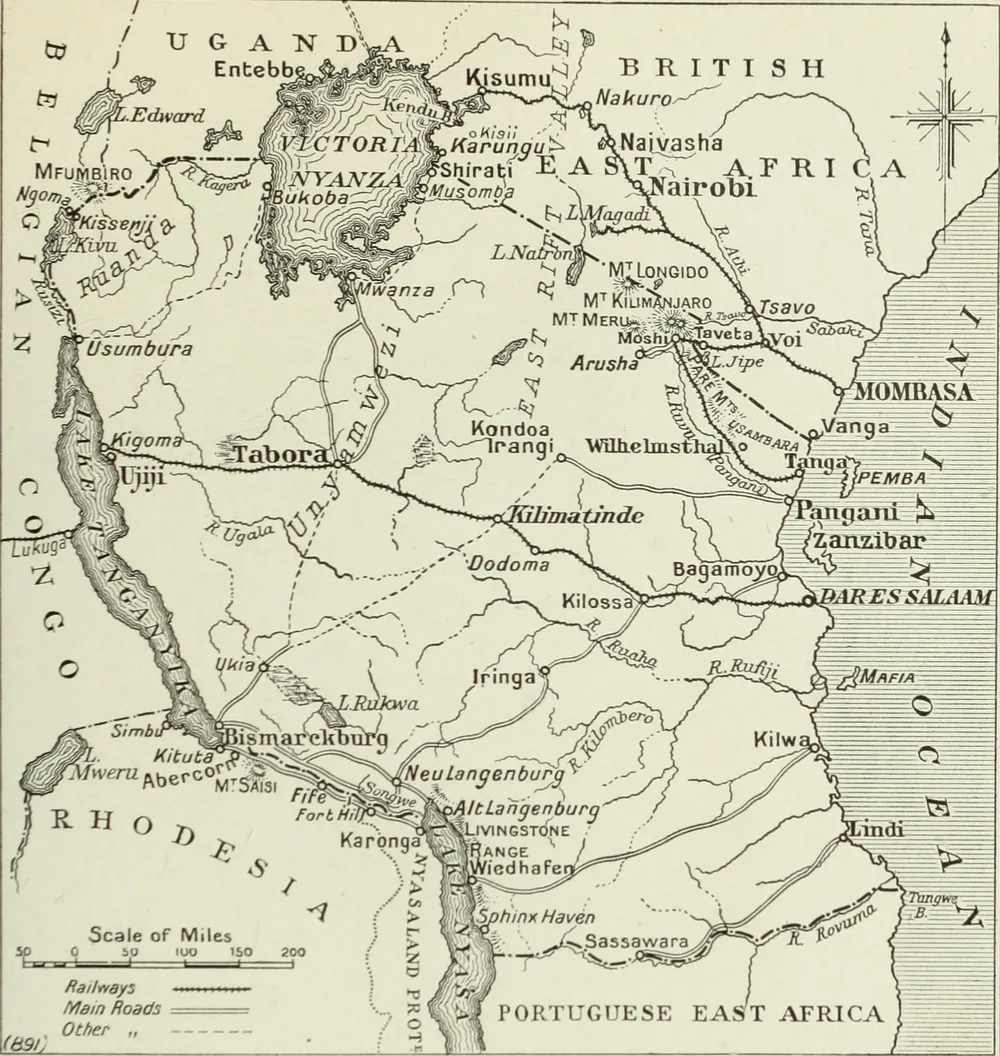
When war broke out in Europe in August 1914, German East Africa had railways, plantations and a small colonial army, the Schutztruppe, commanded by Paul von Lettow-Vorbeck. The colony's story up to that point is told on German East Africa. On 8 August 1914 a British cruiser shelled the wireless station at Dar es Salaam, and within days there was fighting along the border with British East Africa, now Kenya, around Kilimanjaro.
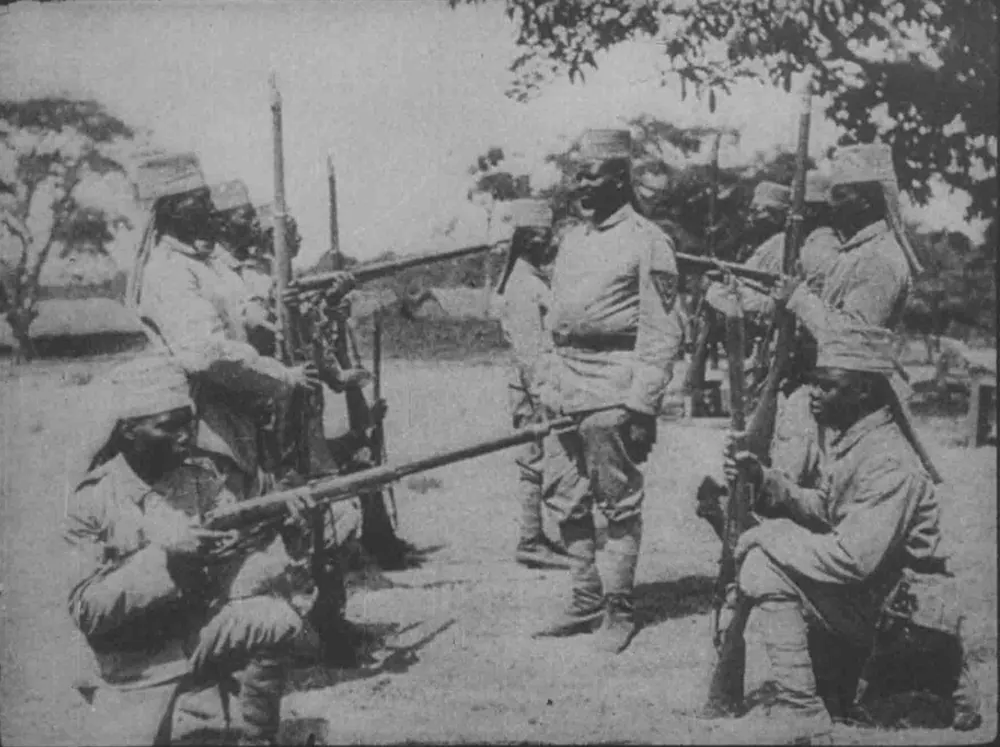
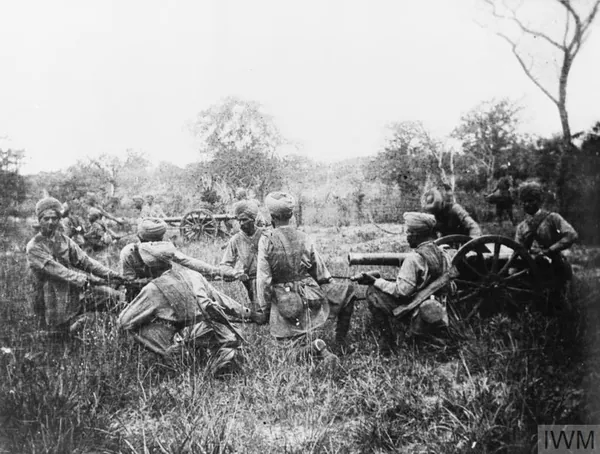
Lettow-Vorbeck's force never numbered more than about 14,000 men, according to the National Army Museum: about 3,000 Germans and 11,000 African soldiers, the askari. His aim was not to win in Africa but to keep as many Allied troops as possible tied down there and away from Europe.
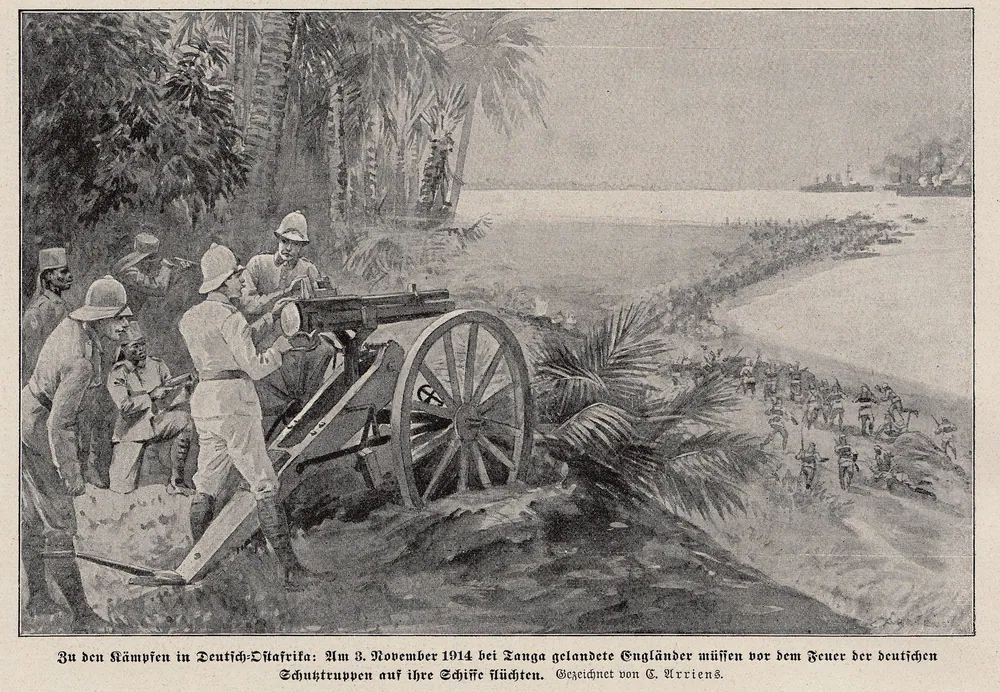
Britain's first attempt to take the colony failed. On 3–5 November 1914 an expeditionary force from India landed at Tanga and was thrown back by a much smaller German force. The battle, and the bees that attacked both sides in the middle of it, is told on the Tanga guide.
The coast and the lakes
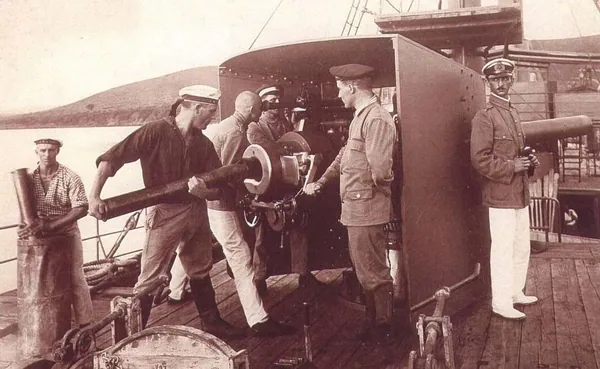
The German cruiser Königsberg sank a British cruiser at Zanzibar in September 1914 and then hid in the maze of channels of the Rufiji delta. The British took Mafia island in January 1915 partly to hunt her, and on 11 July 1915 two shallow-draught monitors finally wrecked her. Her crew stripped the ship's guns and hauled them inland to fight on land, and one of them was mounted on the lake steamer Graf von Götzen.
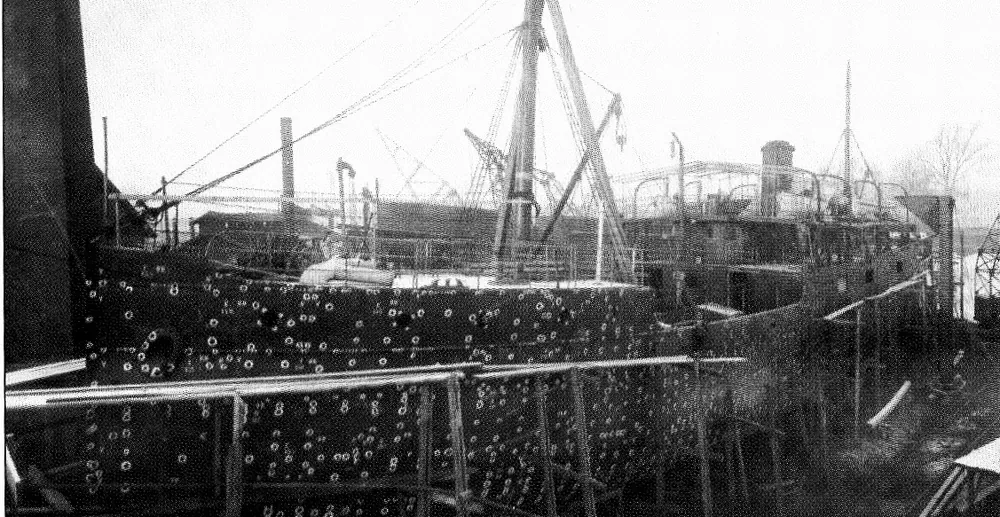
On Lake Tanganyika the Germans held the water at first. The Graf von Götzen had been built in Germany, carried out in pieces and reassembled at Kigoma, and was launched there on 5 February 1915. Britain answered by hauling two small motor boats, the Mimi and the Toutou, overland through southern Africa and the Congo; on the lake they captured the German Kingani on 26 December 1915 and sank the Hedwig von Wissmann in February 1916.
As Belgian forces closed on Kigoma, the Germans scuttled the Graf von Götzen on 26 July 1916, and the Belgians took the town two days later. The British raised her, and she has sailed the lake since 1927 as the MV Liemba, as the Kigoma guide tells.
1916: the colony is overrun
In 1916 the South African general Jan Smuts took command of the British forces and attacked from several directions at once, while Belgian troops from the Congo came in from the west. South African troops pushed past Kilimanjaro and down to the centre of the colony, where Lettow-Vorbeck attacked them at Kondoa in May 1916.
By the end of August Smuts held the central railway. British forces took Dar es Salaam on 3 September 1916 (Dar es Salaam guide), and on 19 September the Belgians entered Tabora, where the Germans, cut off by the blockade, had been striking gold coins from metal mined at Sekenke in Singida. By the end of the year the German force was confined to the south of the colony.
1917–1918: the war in the south, and beyond
The fighting moved south, into the country behind Kilwa and Lindi. The hunter and writer Frederick Selous, serving with the Royal Fusiliers at 65, was killed on 4 January 1917 and is buried where he fell, in what is now Nyerere National Park. In mid-October 1917, at Mahiwa, near Lindi, Lettow-Vorbeck's force fought one of the largest and costliest battles of the campaign against British, Nigerian and Indian troops.
Short of men and ammunition, the Germans crossed the Ruvuma into Portuguese Mozambique in late November 1917 and lived off captured supplies. In 1918 they came back north through the south-west of the colony and into Northern Rhodesia, now Zambia. There, on 14 November 1918, they learned of the armistice signed in Europe three days earlier, and on 25 November 1918 Lettow-Vorbeck formally surrendered at Abercorn, now Mbala, with fewer than 1,500 soldiers left.
The carriers, and the cost
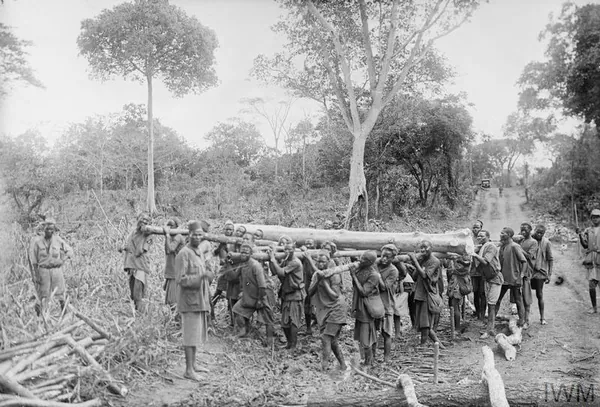
In country with few roads and where tsetse fly killed horses and oxen, almost everything the armies needed went on people's heads. Both sides recruited, and often forced, hundreds of thousands of African men as carriers. Dar es Salaam's great market district of Kariakoo is named after the British Carrier Corps, who were quartered there.
The National Army Museum puts the deaths at over 10,000 soldiers of the British Empire, about 2,000 on the German side, and around 100,000 carriers and camp followers on both sides. Disease killed far more than fighting did.
The armies also took grain and cattle wherever they went. In central Tanzania, requisitioning by both sides and the failure of the rains from late 1917 brought the famine the Gogo of Dodoma call Mtunya, "the scramble", the worst in their recorded history.
After the war
Germany gave up its colonies under the Treaty of Versailles in 1919. German East Africa was divided: Rwanda and Burundi went to Belgium as Ruanda-Urundi, a small strip south of the Ruvuma, the Kionga triangle, went to Portugal, and Britain took the rest as Tanganyika Territory, a League of Nations mandate from 20 July 1922. The forty years that followed are told on British Tanganyika.
- Was there fighting in Tanzania in the First World War?
- Yes. Tanzania was the German colony of German East Africa, and it was fought over for the whole war, from August 1914 to November 1918. The fighting covered most of the country, from Tanga and Kilimanjaro to Lake Tanganyika and the Ruvuma.
- What was the Battle of Tanga?
- A British attempt to take the port of Tanga on 3–5 November 1914. An expeditionary force from India landed and was defeated by a much smaller German force. Swarms of bees attacked both sides during the fighting, and it is often called the Battle of the Bees.
- Who was Lettow-Vorbeck?
- Paul von Lettow-Vorbeck commanded the German colonial army in East Africa throughout the war. He kept it in the field for four years, moving into Mozambique and Northern Rhodesia, and surrendered only on 25 November 1918, after the armistice in Europe.
- Is the MV Liemba really a First World War ship?
- Yes. She was built in Germany as the Graf von Götzen, reassembled at Kigoma and launched in February 1915. The Germans scuttled her in July 1916; the British raised her, and she has served on Lake Tanganyika as the MV Liemba since 1927.
- How many people died in the East African campaign?
- The National Army Museum gives over 10,000 soldiers of the British Empire, about 2,000 on the German side, and around 100,000 African carriers and camp followers on both sides. Many civilians also died in the famines the war caused.
- Why is Kariakoo called Kariakoo?
- The name is a Swahili rendering of Carrier Corps, the British army's corps of African carriers, who were quartered in that part of Dar es Salaam during the First World War.
Last reviewed 3 October 2026
Edited by Kabeer Dalvi
Checked against
- The East Africa campaignNational Army Museum
- East African campaign (World War I)Wikipedia
- SMS Königsberg (1905)Wikipedia
- Battle for Lake TanganyikaWikipedia
- MV Liemba (Graf von Götzen)Wikipedia
- Battle of MahiwaWikipedia
- Chambeshi Monument — the ceasefire and the surrender at AbercornWikipedia
- Gogo people — the Mtunya famine (citing Iliffe, A Modern History of Tanganyika, 1979)Wikipedia