German East Africa
How a chartered company's treaties became a German colony, and how it was fought at every step: the Abushiri revolt on the coast, the Hehe war inland under Mkwawa, and the Maji Maji war of 1905–07 that cost the south its people to a scorched-earth famine.
Edited by Kabeer Dalvi · Updated 28 September 2026
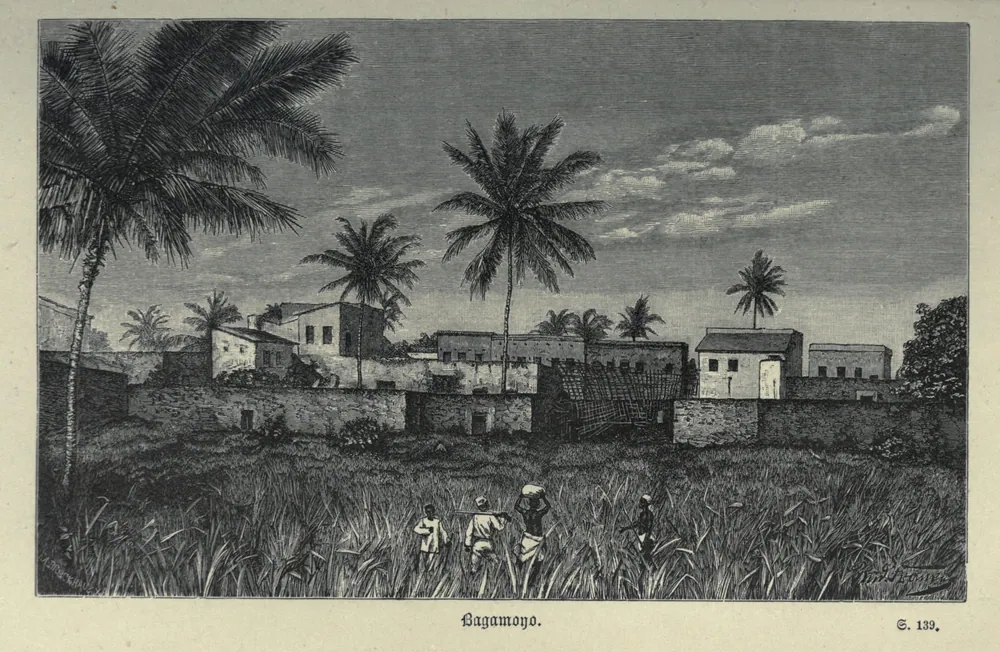
Bagamoyo, in an engraving by Rudolf Hellgrewe published before 1891.
- Imperial charter granted to Peters' company
- 27 February 1885
- Abushiri revolt
- 1888 – 1889
- Colony taken over by the German state
- 1 January 1891
- Mkwawa's death
- 1898
- The Maji Maji war
- 1905 – 1907
Carl Peters and the chartered company
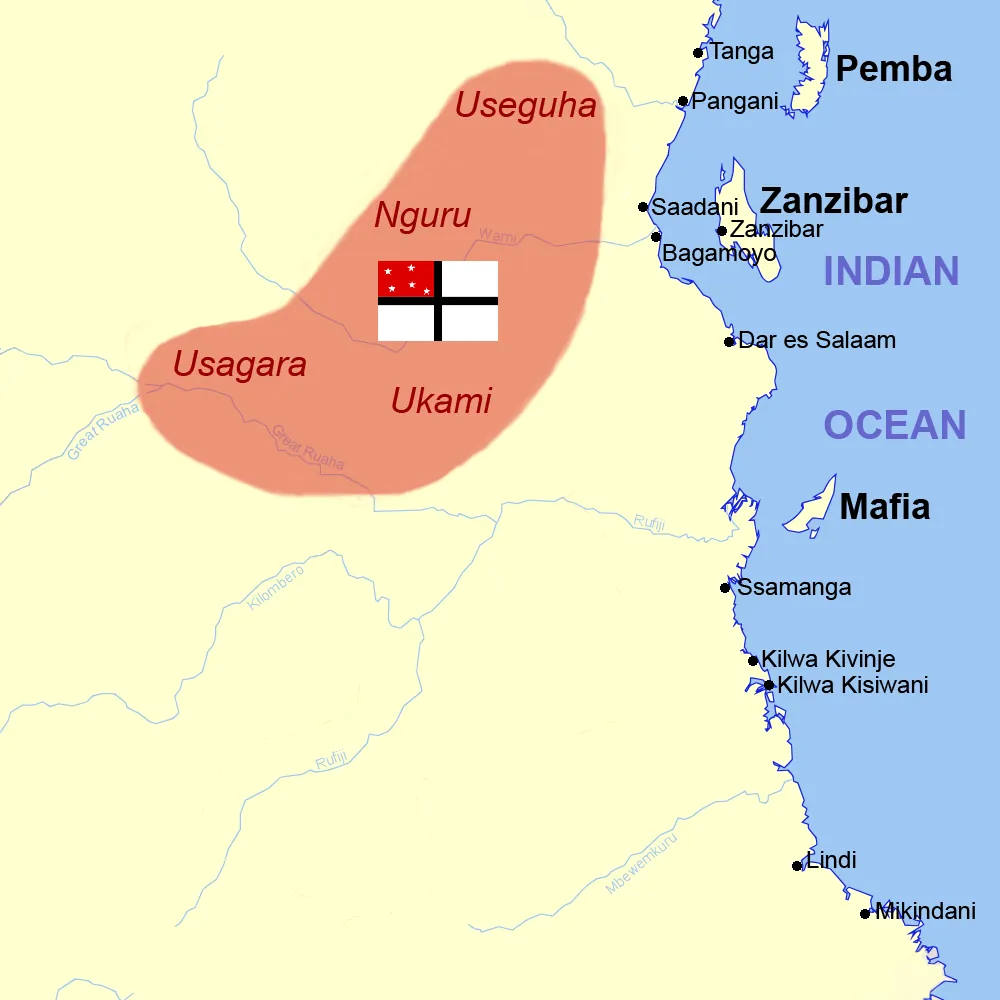
In November and December 1884 the adventurer Carl Peters signed so-called treaties of protection with local chiefs in Usagara and neighbouring areas inland of the coast, on behalf of a private colonial society. The German government recognised the claim: on 27 February 1885 Chancellor Otto von Bismarck signed an imperial charter for the territory, and on 2 April 1885 Peters formed the German East Africa Company (Deutsch-Ostafrikanische Gesellschaft, DOAG) to govern and develop it, modelled on the British East India Company.
The Sultan of Zanzibar, who claimed authority over the coast, was pressured into leasing his mainland strip to the company on 28 April 1888. Germany and Britain divided the wider region between themselves by treaty in 1890, fixing what became the border between German East Africa and British-ruled Kenya. Bagamoyo became the company's headquarters and the colony's first capital in 1886.
The Abushiri revolt
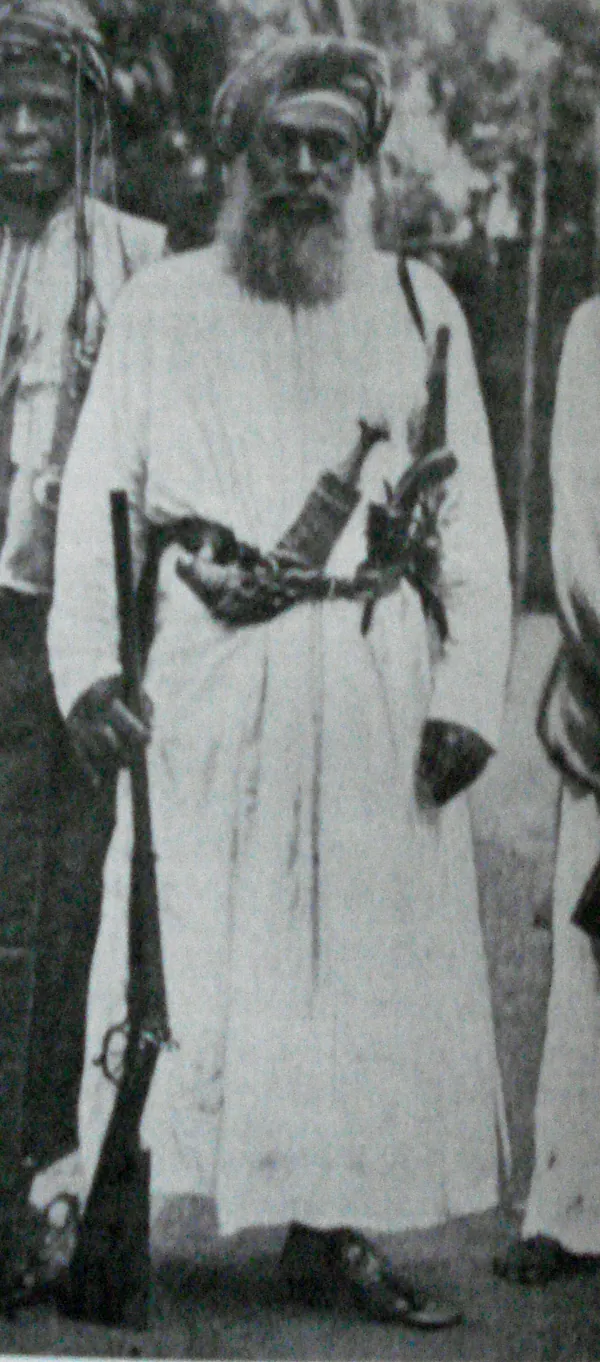
From August 1888 the company tried to take direct control of the coastal towns, hauling down the Sultan's flag and raising its own. The Arab and Swahili population, whose trade in ivory and enslaved people the company threatened, rose against it under the planter Abushiri ibn Salim al-Harthi, based at Pangani. The revolt spread along the coast from Tanga to Lindi and Mikindani.
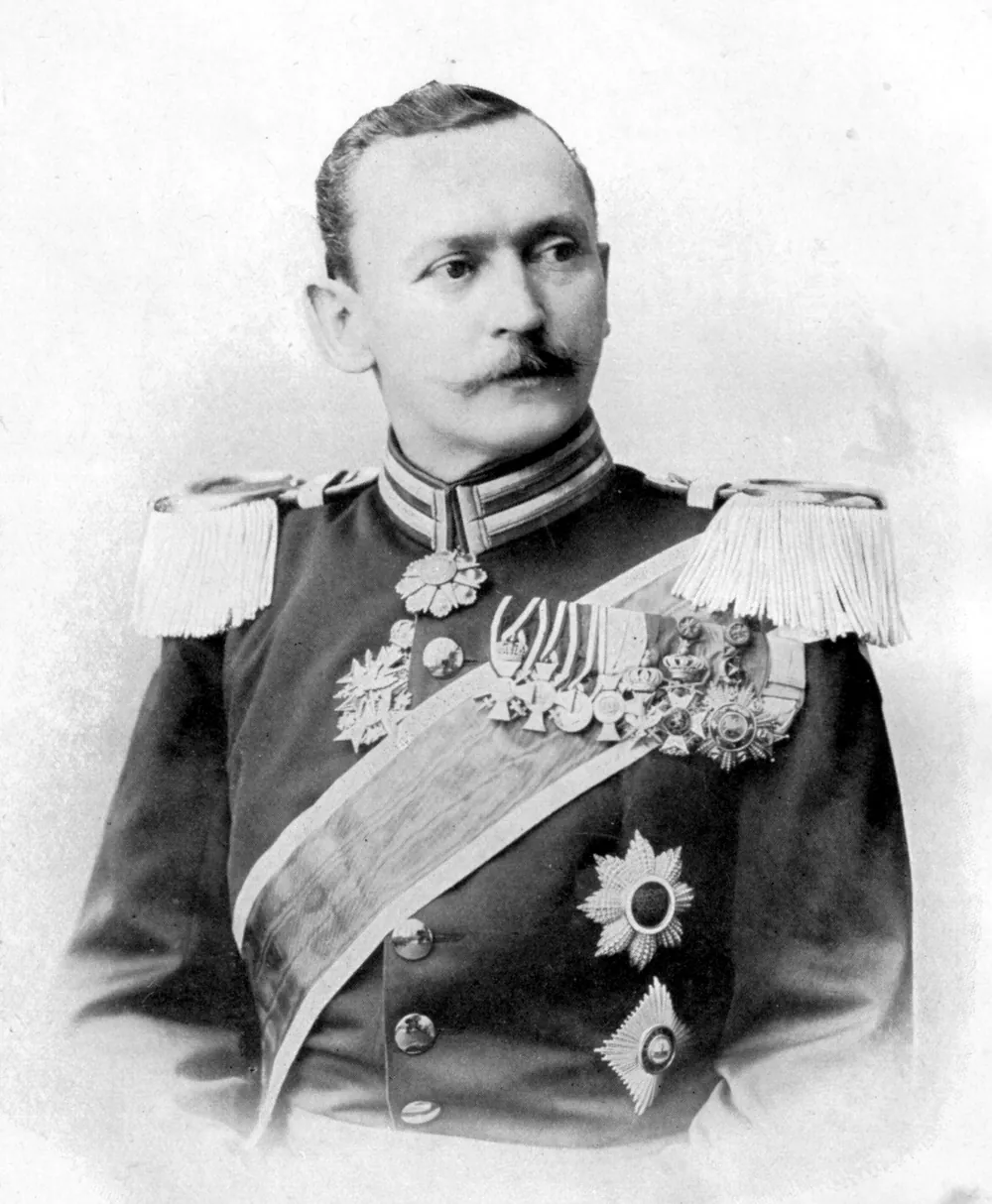
Bismarck sent Hermann Wissmann as Reichskommissar with imperial troops, and Britain and Germany jointly blockaded the coast to cut the rebels off from outside supply. Abushiri was captured in December 1889 and hanged at Pangani. The revolt had shown that a trading company could not govern the territory it claimed.
From company rule to an imperial colony
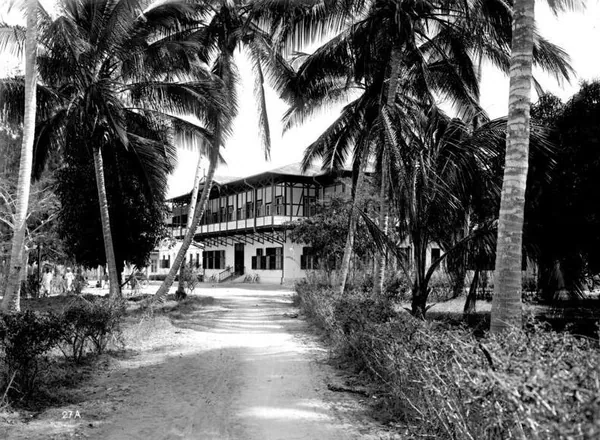
On 1 January 1891 the German imperial government took direct control of the territory from the failed company, compensating it generously, and Wissmann's force became the Kaiserliche Schutztruppe, the colonial army. The same year the capital moved from Bagamoyo to Dar es Salaam, whose deep-water harbour could take ocean steamships; Bagamoyo, without one, stopped growing almost overnight.
Mkwawa and the Hehe war
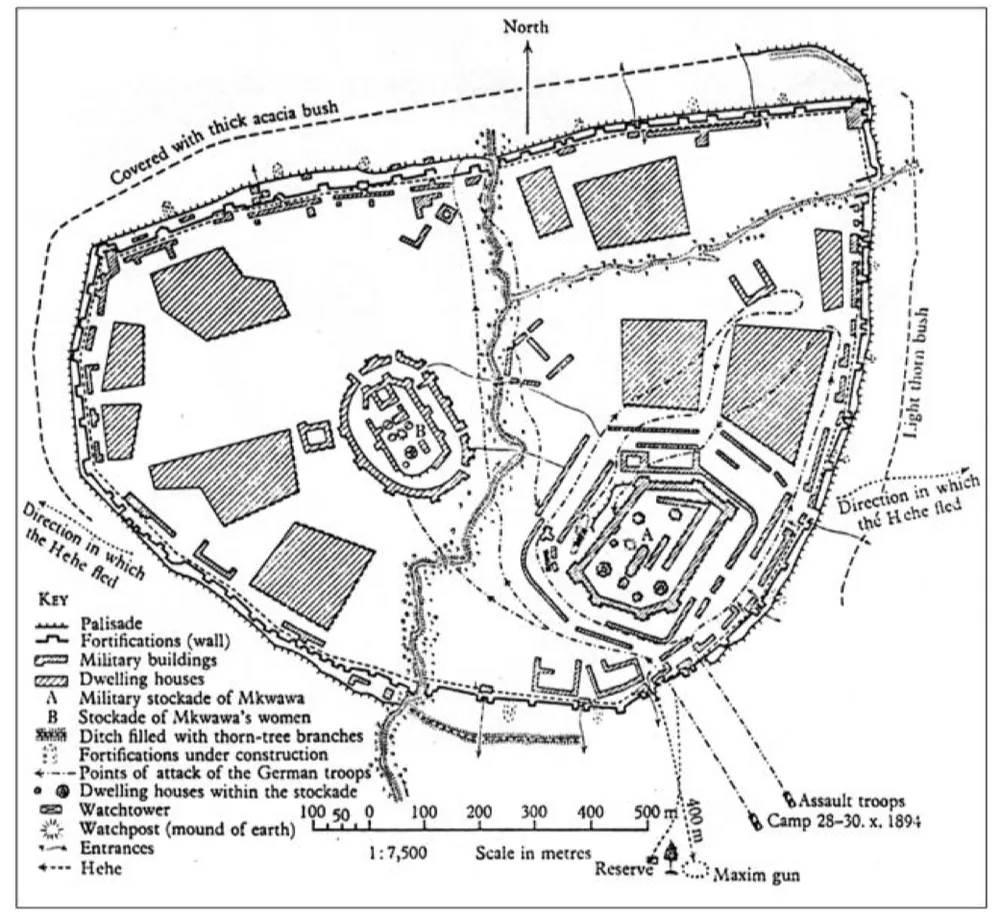
Inland, the Hehe under their chief Mkwawa fought the Germans from their stronghold at Kalenga, near present-day Iringa. In 1891 they ambushed and destroyed a German column at Lugalo, one of the heaviest defeats a European force suffered anywhere in the colonial conquest of Africa. The Germans took seven years to answer it, storming Kalenga and building a garrison town beside it, while Mkwawa fought on from the bush until his death in 1898.
What happened to Mkwawa afterwards, and to his skull, is told in full on the Iringa guide.
The Maji Maji war
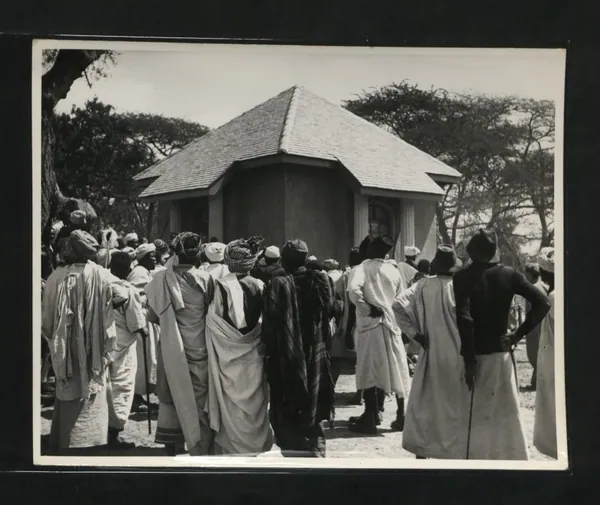
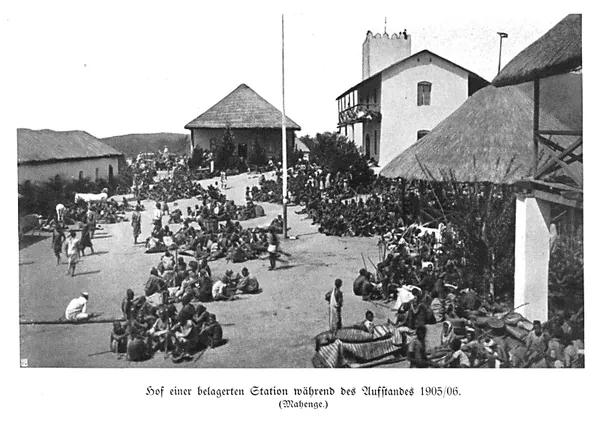
In July 1905 a rising began in the Matumbi hills of the south-east, built on the teaching of a spirit medium, Kinjikitile Ngwale, that a sacred water — maji — would turn German bullets to water. Kinjikitile was hanged within days, on 4 August 1905, but the belief and the revolt it had ignited spread far beyond him, across the south and centre of the colony, drawing in the Ngoni and many other peoples.
The Germans answered with a scorched-earth campaign that destroyed crops and villages; the famine that followed did most of the killing. Estimates of the dead across the colony range from 75,000 to 300,000. The war was over by 1907. The full story is on our page on the Maji Maji war; the memorial to the Ngoni dead is on the Songea guide.
Reform, railways and the eve of war
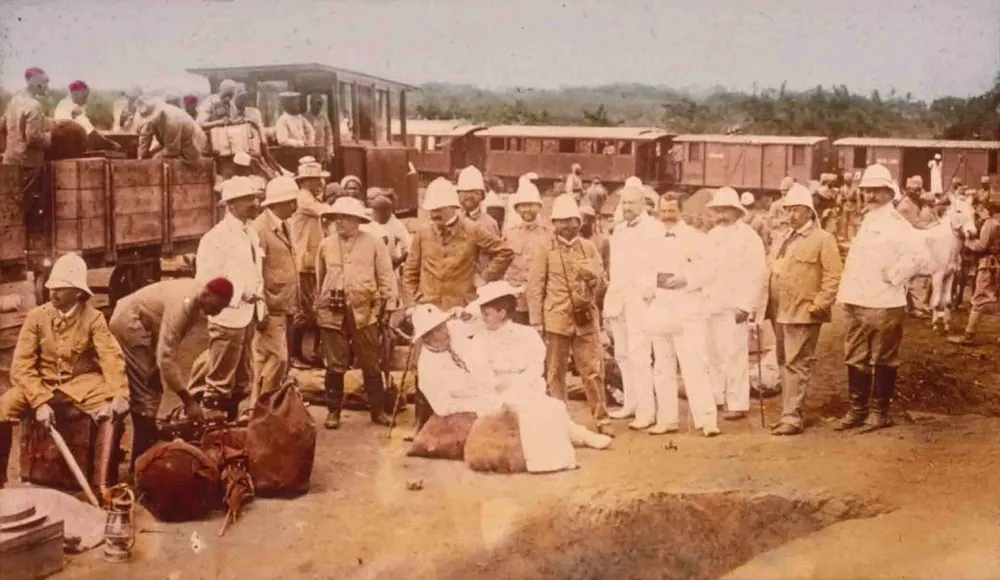
The scale of the killing shocked opinion in Germany. Albrecht von Rechenberg, the colony's first civilian governor from 1906, pushed African smallholder cash-cropping over the abuses of the European plantation system, and Berlin's colonial office under Bernhard Dernburg backed reform as imperial policy. Railway building became a priority: the Usambara railway had already been advancing inland from Tanga since June 1893 and reached Moshi in 1911, and the Central Railway from Dar es Salaam, begun in 1905, reached Tabora in 1912 and Kigoma, on Lake Tanganyika, in February 1914.
By 1914 German East Africa was a colony of railways, sisal and cotton plantations, and an administration still built on forced and contracted African labour. The war that broke out in Europe that August reached the colony within weeks: the story of the First World War in East Africa.
- How did Germany acquire East Africa?
- Carl Peters signed treaties with inland chiefs in 1884 on behalf of a private society; Bismarck granted it an imperial charter on 27 February 1885, and Peters formed the German East Africa Company to govern the territory.
- What was the Abushiri revolt?
- An 1888–89 uprising of the Arab and Swahili coastal population, led by Abushiri ibn Salim al-Harthi, against the German East Africa Company's attempt to take direct control of the coast. It was put down with imperial troops and an Anglo-German naval blockade; Abushiri was hanged in December 1889.
- When did German East Africa become a formal colony?
- On 1 January 1891, when the German imperial government took over from the failed German East Africa Company. The capital moved from Bagamoyo to Dar es Salaam the same year.
- What was the Maji Maji war?
- A rising against German rule that began in the Matumbi hills in July 1905, built on a belief that a sacred water would turn bullets to water, and spread across southern and central German East Africa. The German scorched-earth response and the famine that followed killed an estimated 75,000 to 300,000 people by the time the war ended in 1907.
- Who was Mkwawa?
- The chief of the Hehe, who destroyed a German column at Lugalo in 1891 and fought a guerrilla war from his fortress at Kalenga until his death in 1898. His story, including the return of his skull from Germany in 1954, is told on the Iringa guide.
Last reviewed 28 September 2026
Edited by Kabeer Dalvi
Checked against
- German East AfricaWikipedia
- Carl PetersWikipedia
- German East Africa CompanyWikipedia
- Abushiri revoltWikipedia
- 1889: Abushiri, German East Africa rebelExecuted Today
- Chief Mkwawa — Lugalo, 1898, and the return of the skullWikipedia
- Kinjikitile NgwaleWikipedia
- Maji Maji Rebellion — outbreak, spread, death tollWikipedia
- Albrecht von RechenbergWikipedia
- Bernhard DernburgWikipedia
- Usambara RailwayWikipedia
- Central Line (Tanzania)Wikipedia