Bagamoyo
The end of the caravan road: for a few decades the most important trading town on this coast, the first capital of German East Africa, and the place where the interior met the ocean — and where a great many people were sold.
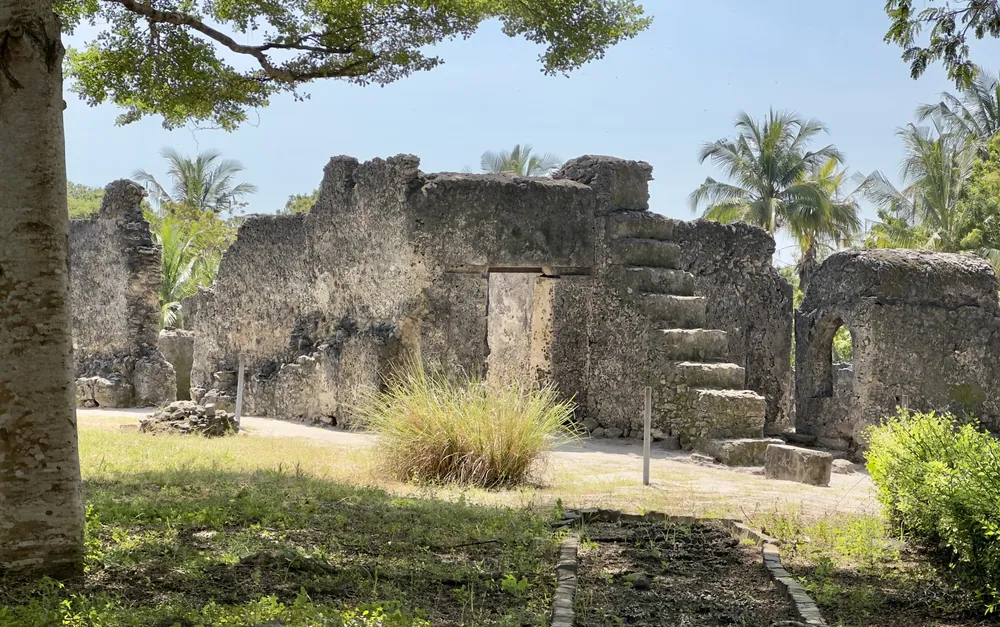
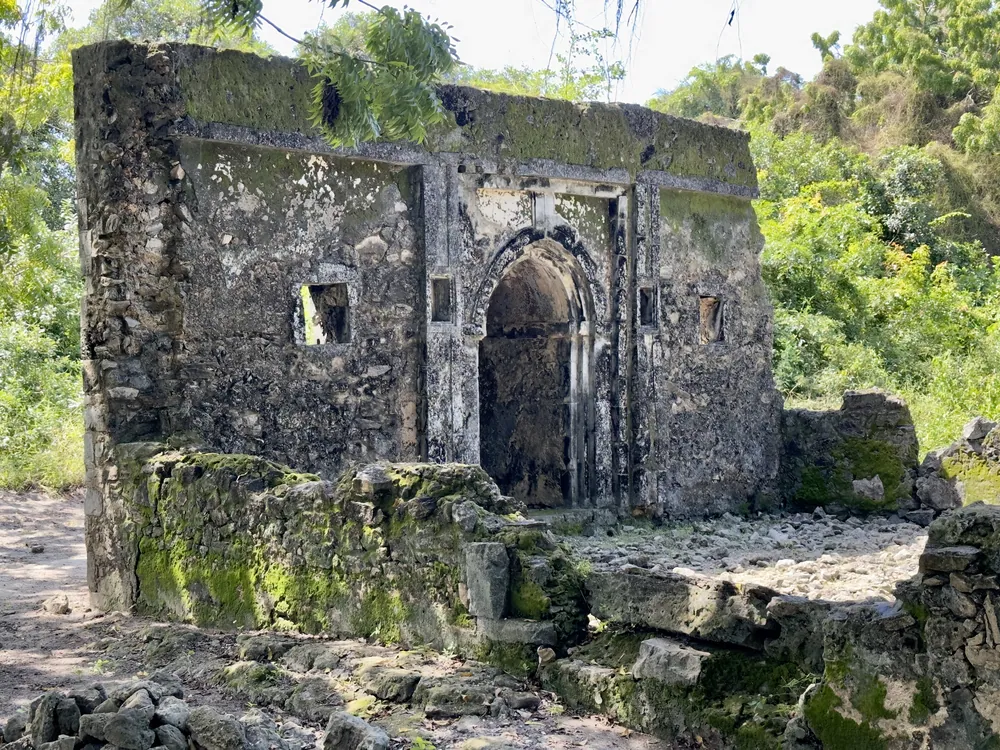
The thirteenth-century mosque at Kaole, a few kilometres south of the town. The Swahili settlement here long predates Bagamoyo itself.
- Region
- Pwani Region, 70 km north of Dar es Salaam
- Population
- 82,578 (2011)
- Name
- Kiswahili — 'lay down your heart'
- Status
- On Tanzania's UNESCO tentative list since 2006
- Founded
- Omani settlement, late 18th century
Where the caravan road reached the sea
The name is the town's history in three words. Bwaga moyo — lay down your heart. It has been read two ways, and both are probably true: relief, for porters at the end of a march of hundreds of miles carrying loads of around thirty kilos; and despair, for the people walking the same road in chains who understood that reaching the coast meant the sea and no return.
There was a Swahili settlement here long before the town. Kaole, a few kilometres south, dates to the eighth century and its surviving mosques and tombs to the thirteenth and fifteenth — a reminder that this coast was urban, literate and trading with the Gulf and India while the interior was still, to the coast, unknown country.
Bagamoyo proper grew from the late eighteenth century, settled by Omani families living on trade and taxation, developing under the sultans of Zanzibar. In the nineteenth century it became the most important trading entrepôt on this stretch of coast — the terminus of the caravan routes that ran to Lake Tanganyika and beyond, dealing in ivory, and in people. Historians still argue about which trade mattered more in volume; neither is a comfortable inheritance.
It was also the door Europeans used. Burton and Speke set out from here in 1857 on the expedition that reached Lake Tanganyika. Stanley left from here. Livingstone never set foot in the town alive — but after he died inland in 1873, his body was carried to the coast and laid in the tower of the mission church here before being shipped to England. The Catholic Fathers of the Holy Ghost had founded that mission in 1868, the first in East Africa, and it began as a settlement for children bought out of slavery.
In 1886 Bagamoyo became the first capital of German East Africa. It held the title for five years. In 1891 the administration moved to Dar es Salaam, which had the deep-water harbour that steamships needed and Bagamoyo did not — and the town simply stopped. That abrupt ending is why so much of the nineteenth century is still standing here.
Fishing, salt, dhow-building and a slow return
What the district produces
- Fishing
- Artisanal, sold on the beach at dawn
- Salt
- Evaporation pans along the coast
- Dhow-building
- Still worked by hand on the shore
- Coconut & fruit
- Smallholdings inland
- Heritage tourism
- Growing, and the town's best prospect
What replaced the caravan trade was much smaller and much older: fishing. The beach at dawn is still the town's marketplace, boats coming in and the catch sold where it lands. Salt is worked in evaporation pans along the coast, and coconut and fruit smallholdings sit behind the town.
Dhows are still built here by hand, on the sand, without plans — the same shapes that carried the trade, made by eye and adze. It is one of the few places on this coast where you can watch it being done as ordinary work rather than as demonstration.
Heritage is the town's most realistic economic future, and it is a delicate one. Bagamoyo has been on Tanzania's UNESCO tentative list since 2006, and the case is strong. But the buildings are coral rag and lime in a salt-laden climate, and conservation money has never matched the need; some of what stands is stabilised, some is being lost year by year. Visitors are part of the argument for funding it.
There have been larger plans — a major port and special economic zone at Mbegani has been proposed, negotiated and stalled repeatedly over more than a decade. Whether it happens will decide whether Bagamoyo stays a heritage town or becomes an industrial one. As of now, it is the former.
A national arts college in a nineteenth-century town
Bagamoyo is the seat of the Bagamoyo Arts and Cultural Institute — TaSUBa — the national college for music, dance, drama and fine art. It gives a small coastal town a permanent population of performers and students, and it is the reason the annual Bagamoyo Arts Festival draws companies from across the country and the region. This is where a great many Tanzanian professional performers trained.
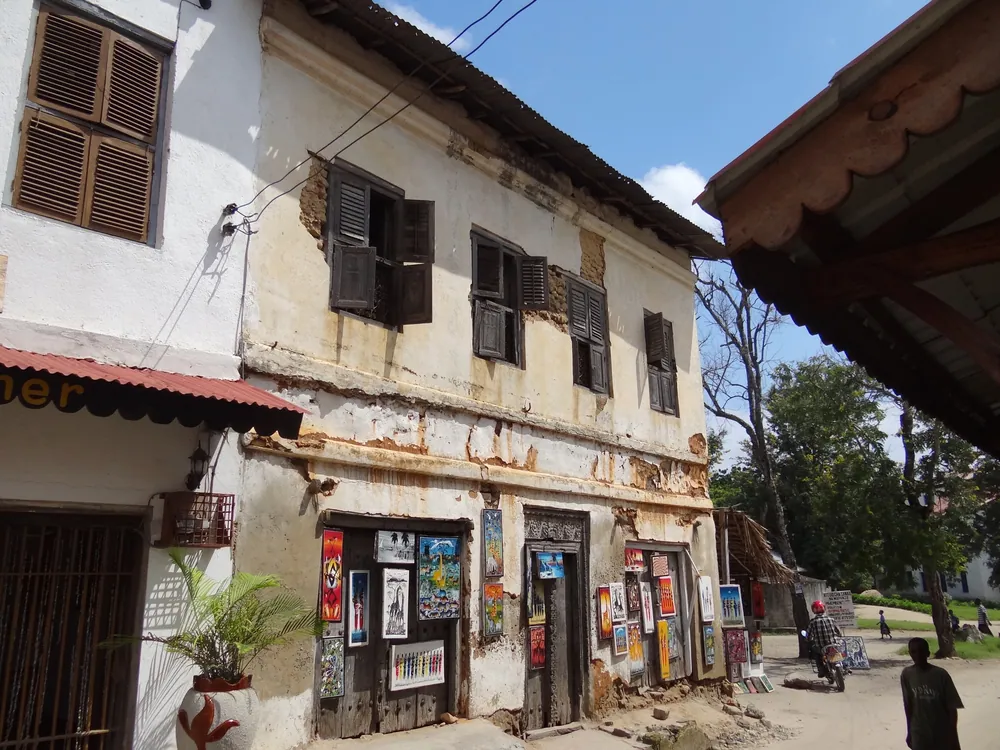
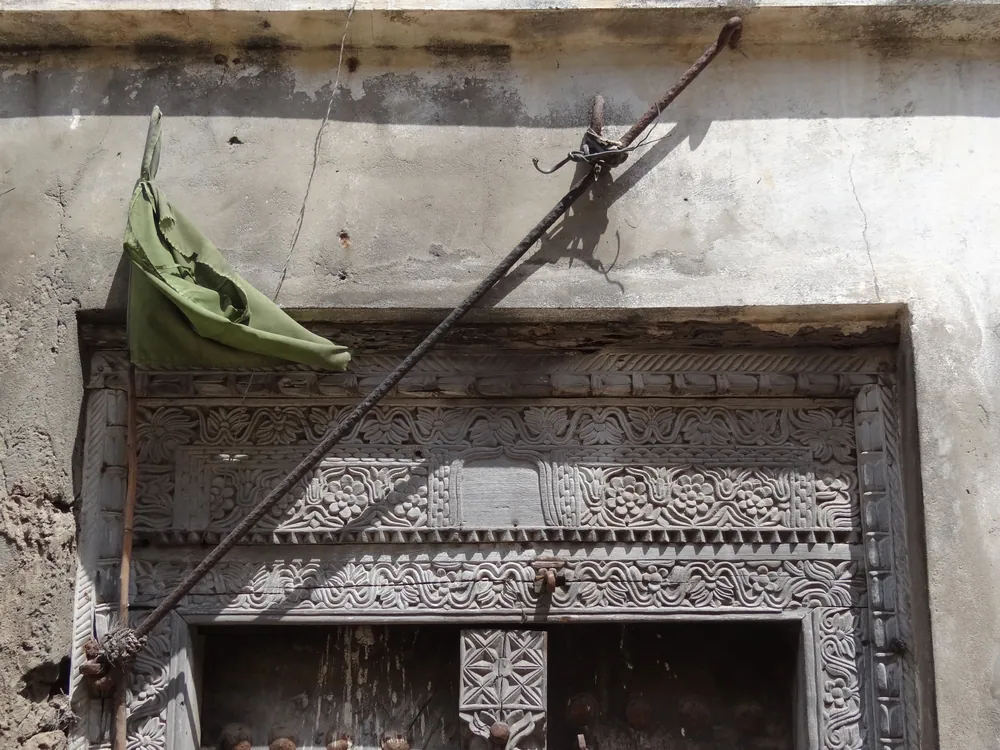
The town is Swahili and predominantly Muslim, with the coastal rhythms that implies. The architecture is the familiar coastal grammar — carved doors, coral-rag walls, deep verandas, inner courtyards — but weathered, half-restored, and lived in rather than curated. It is what Stone Town looks like without the visitor economy.
The difficult part of the history is handled directly here rather than avoided. The mission museum at the Holy Ghost Fathers' compound holds one of the more serious collections on the East African slave trade, assembled by the order that spent the nineteenth century buying people out of it. It is a small museum and a heavy one.
A note on how to be here: Bagamoyo is not a resort and does not read as one. It is a working town with extraordinary things in it, and it rewards walking slowly and asking rather than arriving on a schedule.
Informational — none of this is ticketed by us
Archaeological site
The Kaole ruins
Thirteenth- and fifteenth-century mosques and some thirty tombs, in forest by the shore. Among the oldest standing structures on the mainland coast.
Museum
The Catholic Mission Museum
Founded 1868, the first mission in East Africa. Its collection on the slave trade is the reason to come.
Monument
The Old Fort
Built in the 1860s and later used as a holding place for captives, then as a German police post and a prison.
Heritage building
The German Boma
The administrative seat of the colony's first capital, 1886–91, and long derelict before recent stabilisation.
Natural monument
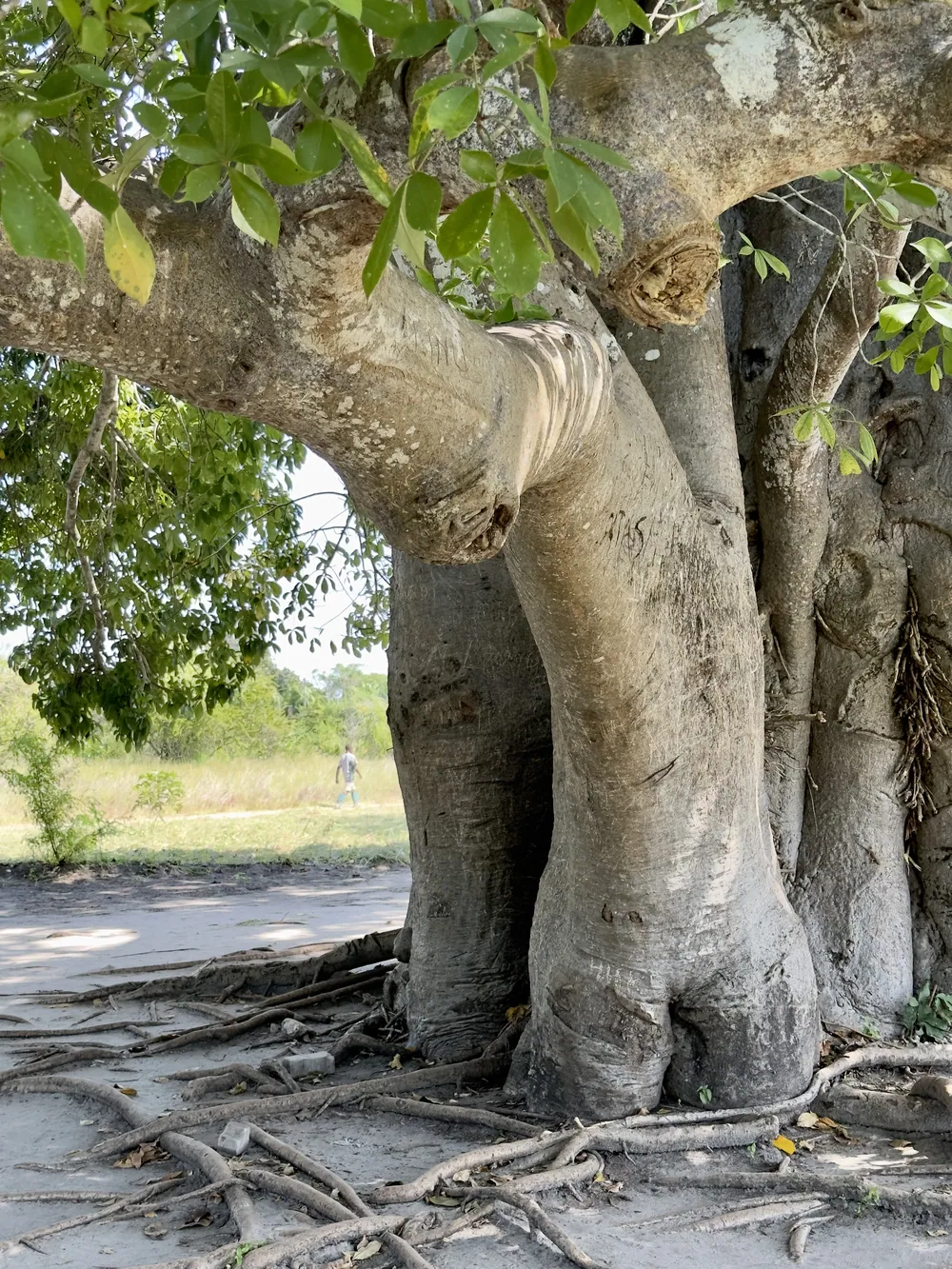
The five-hundred-year-old baobab
At Kaole, and old enough to have stood through the whole of the history described here.
Institution
TaSUBa — the arts institute
The national college for performing arts. Term-time performances are open and often excellent.
Before you go
- Getting there
- About 70 km north of Dar es Salaam — an hour and a half by road, longer if the city is heavy. An easy day trip, better as an overnight.
- Getting around
- The historic town is small and walkable. Kaole is about 5 km south; take a bajaji or walk it in the cool of the morning.
- When to come
- June to October is dry. Avoid the long rains in April and May, when unsurfaced approaches get difficult.
- Respect
- A conservative Muslim coastal town. Shoulders and knees covered away from the beach, and ask before photographing people.
- Money
- Shillings, in cash. Card acceptance is limited; draw money in Dar es Salaam before coming.
- Time
- East Africa Time, UTC+3, no daylight saving.
Last reviewed 2026-09-04
Editorial — fact-check complete
Checked against
- The Central Slave and Ivory Trade Route — tentative list submissionUNESCO World Heritage Centre
- Ruins of Kaole and the historic town of BagamoyoMinistry of Natural Resources and Tourism — Antiquities Division
- Bagamoyo — history of the caravan trade terminusEncyclopaedia Britannica
- Bagamoyo Arts and Cultural Institute (TaSUBa)TaSUBa