Moshi
A coffee town under the largest mountain in Africa — smaller, greener and considerably calmer than Arusha, and the place most Kilimanjaro climbs actually begin.
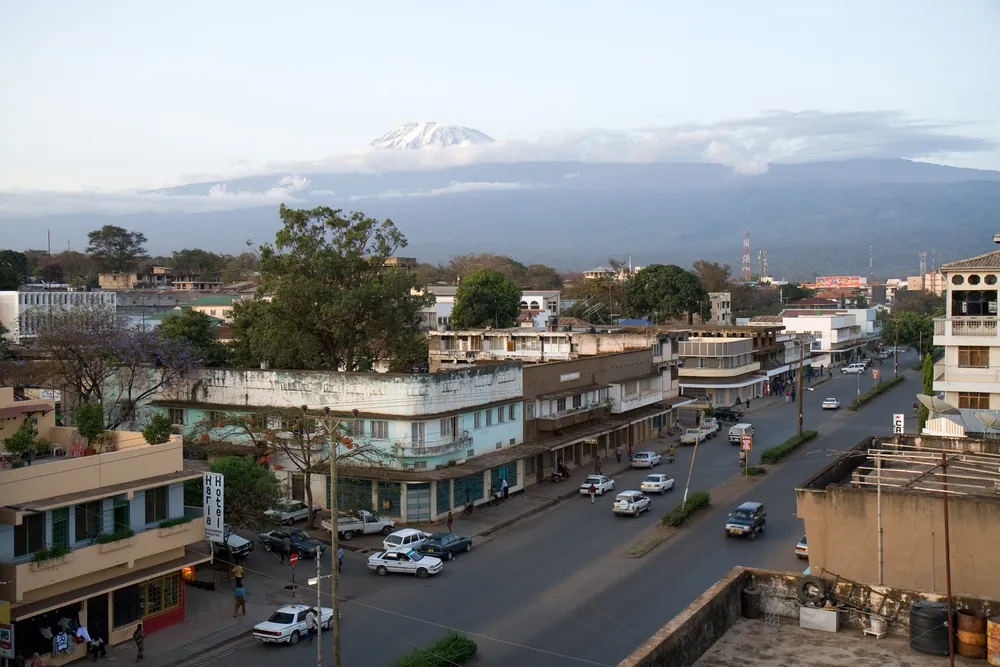
Kilimanjaro above the rooftops of Moshi. On a clear morning the mountain fills the northern end of almost every street.
- Region
- Kilimanjaro Region, northern Tanzania
- Population
- 221,733 (2022 census)
- Elevation
- 700–950 m
- Known for
- Arabica coffee, Kilimanjaro climbs
- Airport
- Kilimanjaro International (JRO), 40 km west
The mountain's kingdoms, and the camp beneath them
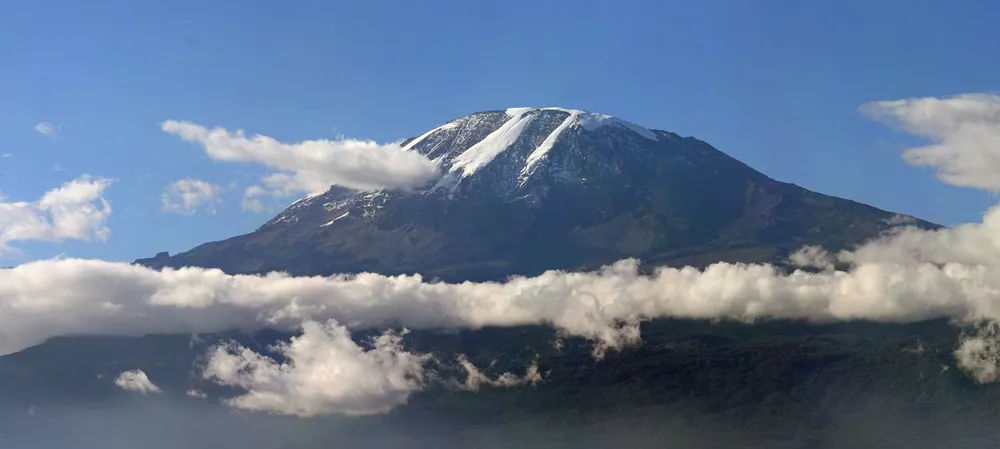
Long before there was a town, there were kingdoms. The Chagga had farmed Kilimanjaro's southern slopes for centuries in a dense patchwork of chiefdoms — Moshi and Mbokomu among them — sustained by an irrigation system of furrows cut along the contours that is genuinely remarkable engineering, and by the kihamba system of banana-and-coffee homegardens that still shapes how the mountain looks from the air.
German forces fought the Battle of Moshi in August 1892 and established a military camp, Neumoschi, below the older settlements. By 1906 it had become a commercial centre as well as a garrison. The railway arrived in 1912, linking Moshi to Tanga on the coast by the Usambara line, and that connection — not the mountain — is what made the town.
The Chagga's response to colonial rule is the more interesting history. Rather than resisting the coffee economy, they entered it and then organised it: the Kilimanjaro Native Co-operative Union, founded in 1929, was one of the earliest and most effective African-run agricultural cooperatives anywhere on the continent, and it gave Chagga farmers a degree of independence — and of education — that shaped Tanzanian politics well beyond the region.
Modern Moshi has that inheritance visible in it: an unusually high density of schools and colleges, a strong civil society, and a town that feels less improvised than its size would suggest.
Coffee, cane, and everyone who carries
What the region produces
- Arabica coffee
- Introduced by missionaries in 1893
- Sugar
- TPC estate, 20 km south of town
- Bananas
- The staple, and the shade the coffee grows under
- Tourism
- Kilimanjaro climbs and the crews that run them
- Manufacturing
- Brewing and bottling
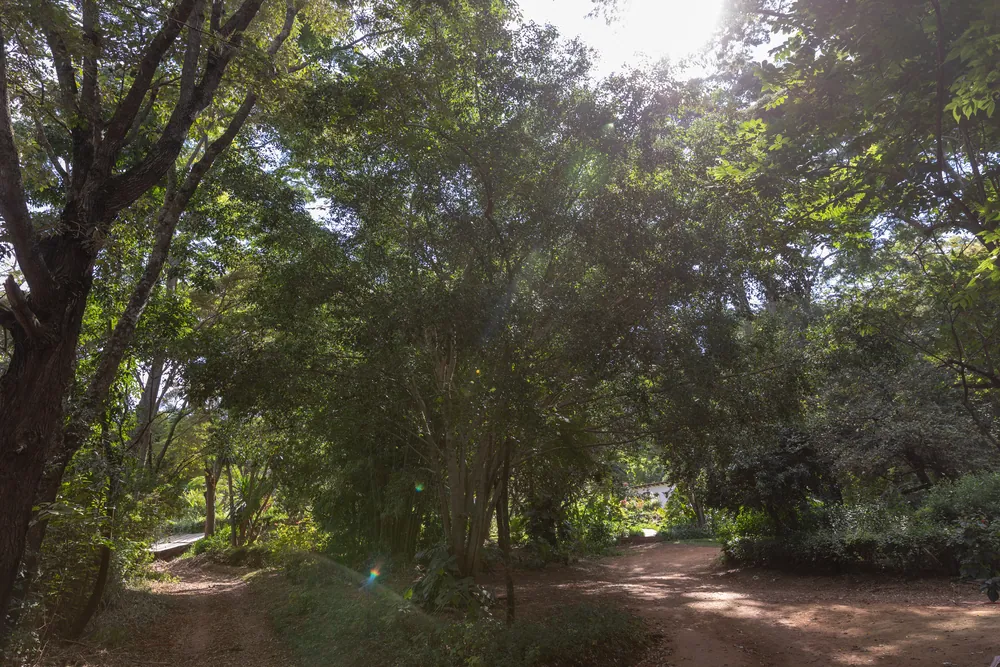
Arabica reached the mountain with missionaries in 1893, and it found close to ideal conditions: high altitude, volcanic soil, reliable rain. The KNCU still represents on the order of 150,000 smallholders and handles a large share of the region's crop. Kilimanjaro coffee is a recognised origin in specialty markets, which matters because the difference between selling commodity-grade and selling by origin is most of the farmer's income.
Twenty kilometres south, on the flat, TPC has grown sugar cane since the colonial period — a completely different agricultural world from the smallholdings above, and one of the region's largest single employers.
The mountain is the other economy, and it is worth being precise about how it works. A Kilimanjaro climb employs a large crew — guides, cooks and porters, often more than three staff per climber. The Kilimanjaro Porters Assistance Project was set up because that labour was routinely underpaid, underfed and under-equipped, and it publishes guidance on fair wages, load limits and proper kit. Operators who meet those standards cost more, and the difference goes to the people carrying the loads. It is the single most useful question a climber can ask before booking, and most never do.
Moshi's other advantage is quiet. Where Arusha is a business city, Moshi is a town you can walk across, and a growing number of visitors now base themselves here for the northern circuit for exactly that reason.
Mbege, mountains and a town that reads
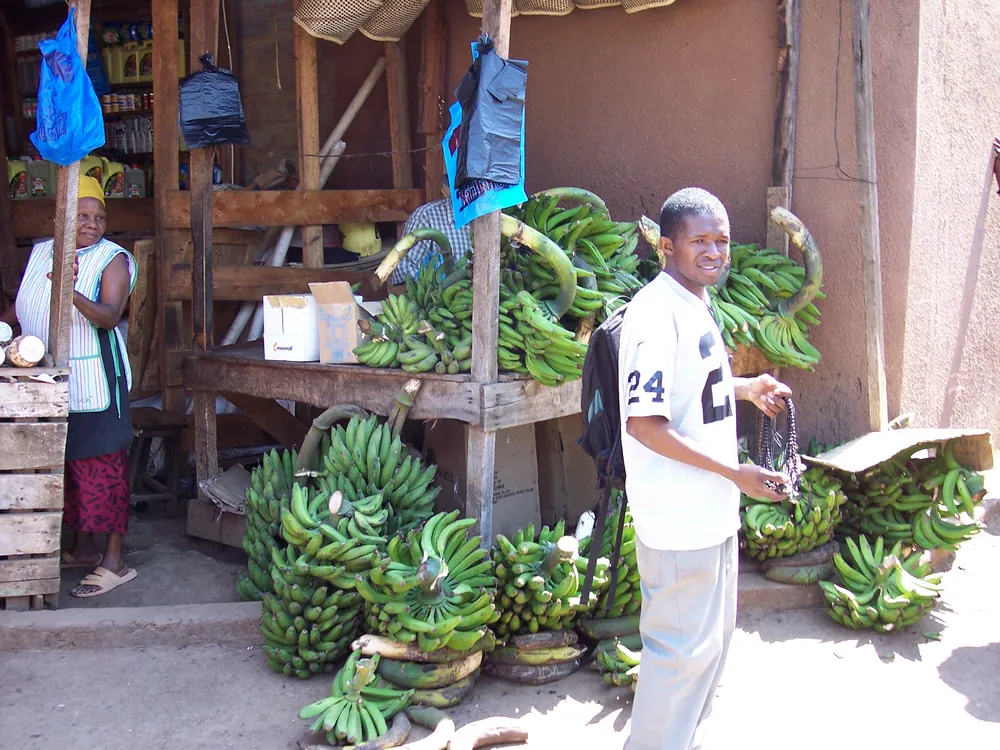
Chagga culture is agricultural, organised and famously entrepreneurial, and it centres on the kihamba — the family homegarden of bananas, coffee and fodder, inherited down generations and worked intensively. Land on the mountain is scarce and subdivided to a degree that has pushed Chagga families into business and education across the country; the stereotype of the Chagga trader is a national joke with a real economic history behind it.
Mbege, the banana beer brewed with finger millet, is the traditional drink of hospitality and negotiation, and is still made and drunk on the slopes. It is not a tourist product, and it is much better encountered by accident than sought out.
The town's religious character is mixed and visible — Lutheran and Catholic missions arrived early and built the schools that produced the region's teachers and civil servants, and their churches are among the older buildings in town. Islam has a long presence too, along the older trading streets.
The mountain itself is not a backdrop here; it is a fact of daily life. It is cloud-covered for much of the day and then, usually in the early morning, simply appears — and the town's habit of glancing north to check whether it is out is something visitors pick up within about a day.
Informational — none of this is ticketed by us
National park
Kilimanjaro National Park
Marangu and Machame gates are within an hour. The summit is a walk rather than a climb, which is exactly why it is underestimated.
Waterfall & farms
Materuni falls and the coffee walk
Up the slope behind town: a high waterfall, and a Chagga village that will take you through coffee from cherry to cup.
Crater lake
Lake Chala
A steep-sided caldera lake on the Kenyan border, an hour and a half east, and startlingly blue.
Heritage
The Chagga defensive tunnels
At Marangu and elsewhere: underground refuges dug during the nineteenth-century raiding years, and still enterable.
Market
Moshi central market
Smaller and easier to navigate than Arusha's, and the best place to understand what the mountain grows.
Springs
Kikuletwa hot springs
Also called Chemka. Clear, warm, fig-shaded water an hour west — and busy at weekends.
Before you go
- Getting there
- Kilimanjaro International (JRO) is 40 km west, about 45 minutes. Buses run from Arusha in around 90 minutes and from Dar es Salaam in eight or more.
- Getting around
- The centre is walkable. Bajaji and taxis for anything further; the slopes need a vehicle.
- When to come
- January to March and June to October are clearest for the mountain. March to May takes some 71% of the year's rain.
- Climbing
- Book with an operator that meets KPAP porter-welfare standards, and take the longer route. Eight days summit far more reliably than five.
- Altitude
- The town is low, at 700–950 m, and warm. The mountain above it is not — the summit night is well below freezing.
- Time
- East Africa Time, UTC+3, no daylight saving.
Last reviewed 2026-09-04
Editorial — fact-check complete
Checked against
- Kilimanjaro National Park — World Heritage ListUNESCO
- Kilimanjaro National ParkTanzania National Parks (TANAPA)
- Porter treatment guidelines and partner operatorsKilimanjaro Porters Assistance Project
- Kilimanjaro Native Co-operative Union — historyKNCU