Dar es Salaam
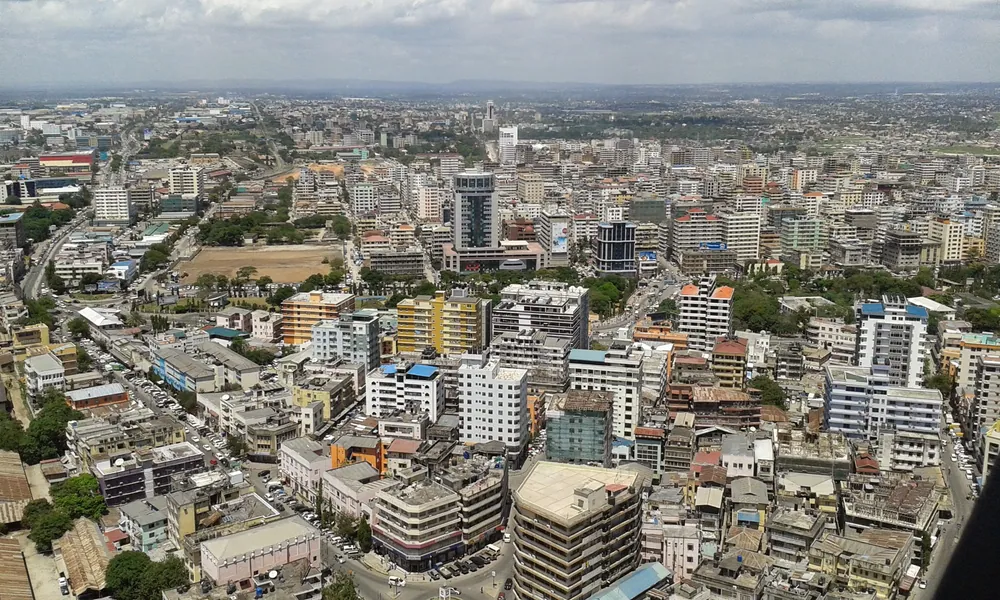
A fishing village that a sultan turned into a harbour, the Germans turned into a capital, and six million people have turned into the commercial engine of East Africa — and one of the fastest-growing cities on earth.
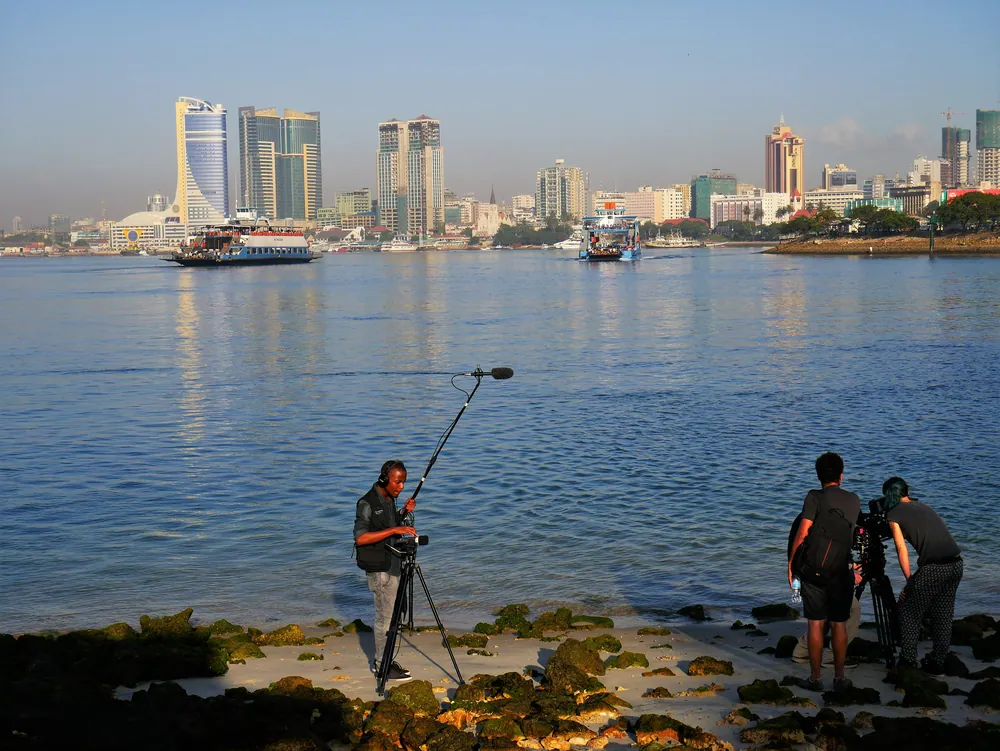
The harbour front. The natural inlet that made the city is still the reason it matters — the port handles the great majority of the country's cargo.
- Region
- Dar es Salaam Region, Indian Ocean coast
- Population
- 4.36 million (2012 census); far higher today
- Founded
- 1865–66, by Sultan Majid bin Said
- Name
- Arabic dār as-salām — 'abode of peace'
- Airport
- Julius Nyerere International (DAR)
Three capitals in a hundred years
There was a fishing settlement called Mzizima here first. The city proper begins in 1865–66, when Sultan Majid bin Said of Zanzibar decided to develop the sheltered natural inlet on the mainland opposite his islands and gave the place its name — dār as-salām, the abode of peace. He died in 1870 and the project stalled almost immediately; for a decade or so it was a half-built idea.
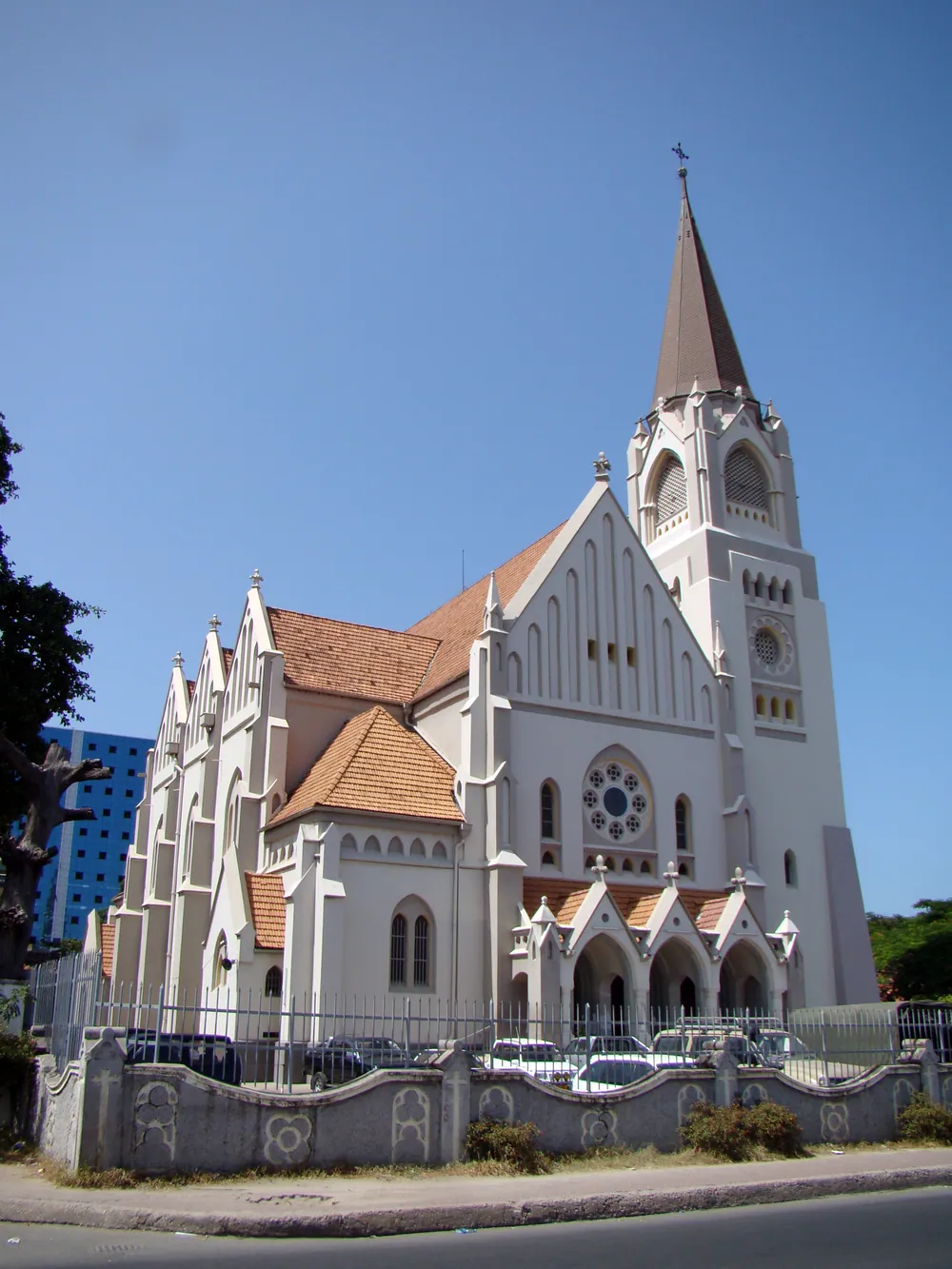
The Germans revived it. The German East Africa Company established a station in 1887, and when the colonial administration moved its capital from Bagamoyo in 1891, Dar es Salaam had what Bagamoyo lacked — a harbour deep enough for steamships. The Central Railway Line, driven inland towards Lake Tanganyika, made it the outlet for a whole interior. The buildings from that period are still standing along the front: the Old Boma of 1866–67, St Joseph's Cathedral, the old hospital.
British forces took the city on 3 September 1916 after naval bombardment, and it remained the capital through the Tanganyika Territory and into independence in 1961. In 1973 the decision was taken to move the capital inland to Dodoma — a deliberate act of the ujamaa period, intended to pull development away from the coast. The move was declared complete in 1996, though in practice much of government stayed put, and the National Assembly only fully settled in Dodoma decades after the decision.
What the city did instead was grow. From about 20,000 people in 1900 and 93,000 in 1957, to 273,000 in 1967, to over 4.3 million at the 2012 census — a rate that has put Dar es Salaam among the fastest-growing cities in the world, with projections well into the teens of millions by 2030. Losing the capital did nothing to slow it, because what drives it is not government. It is the port.
The port, and everything that follows from it
What the city does
- The port
- Handles around 90% of national cargo
- Transit trade
- Serves Zambia, DRC, Burundi, Rwanda, Malawi
- Manufacturing
- Cement, textiles, food processing, brewing
- Finance
- Banking and the Dar es Salaam Stock Exchange
- Fishing
- Artisanal fleet, sold at the Feri fish market
Everything begins with the harbour. The Port of Dar es Salaam handles the great majority of Tanzania's cargo, and — because the country sits between the ocean and a set of landlocked neighbours — it is also the sea outlet for Zambia, the DRC's copperbelt, Burundi, Rwanda and parts of Malawi. That transit role is a national strategic asset and a permanent object of investment and argument.
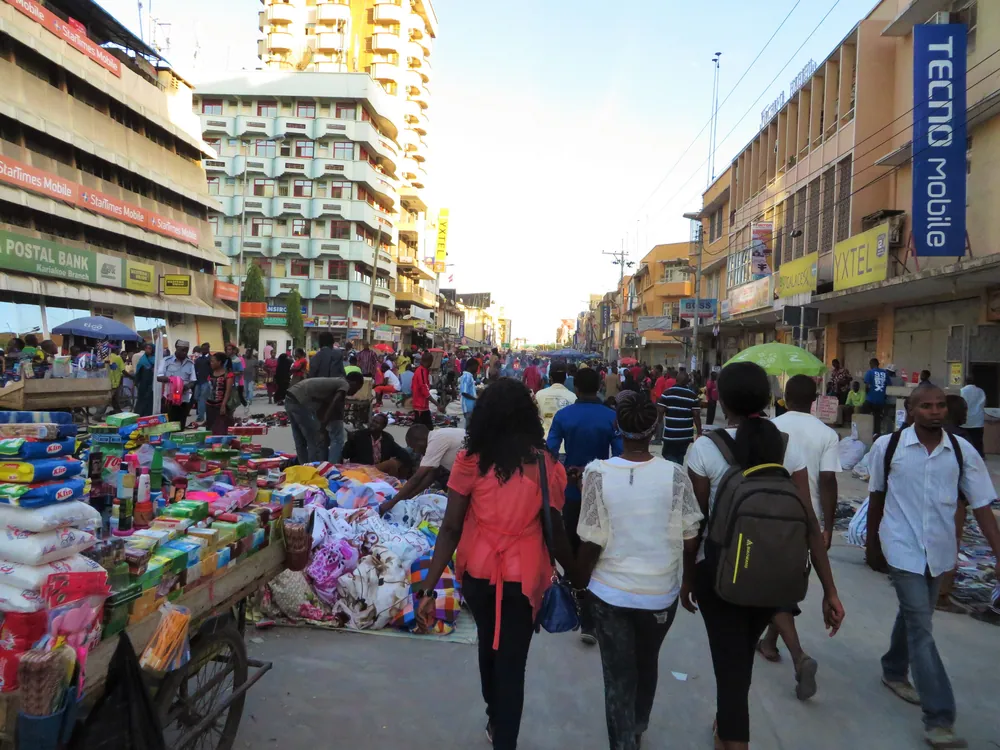
Around the port sits the industry: cement, textiles, food processing, brewing, vehicle assembly. Around the industry sits the trade, and the trade's centre is Kariakoo — a district whose name is a Swahili rendering of the British 'Carrier Corps' who were quartered there in the First World War, and which is now one of the largest markets in East Africa. Wholesalers here supply retailers a thousand kilometres inland.
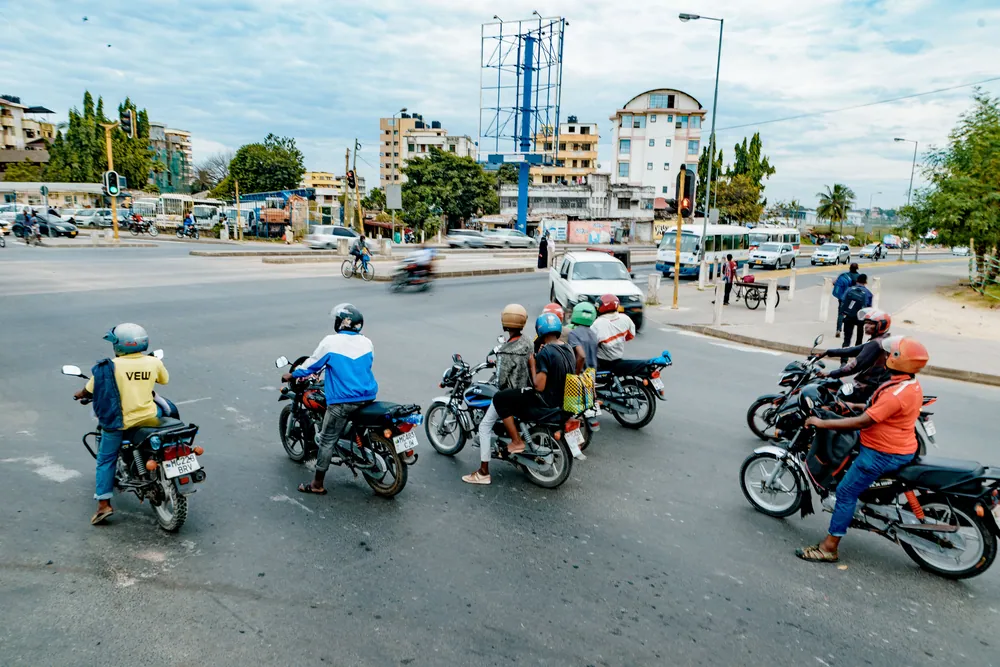
The formal economy is only part of it. Dar es Salaam runs on daladalas, bajaji and bodabodas, on street vending, on repair workshops, on an enormous informal sector that absorbs most of the people arriving from the countryside. The city's growth has outrun its infrastructure — traffic is genuinely severe, and the bus rapid transit system built to address it is one of the more successful African urban transport projects, and still not enough.
For visitors, the practical fact is that Dar is the hinge: the ferry to Zanzibar, the flights to the southern parks, the road to the coast. Most people pass through it. A few stay, and find it more interesting than its reputation.
Swahili, at the scale of a city
Dar es Salaam is a Swahili coastal city that grew into a national one. The population is majority Muslim, with a substantial Christian minority, and the calendar reflects both — Ramadan changes the rhythm of the whole city, and Eid and Christmas are equally public occasions.
The music is the most exportable thing here. Bongo Flava — the Tanzanian fusion of hip-hop, R&B and taarab-descended melody — was made in this city, and bongo is itself Dar es Salaam's nickname, from ubongo, brains: the place you need your wits about you. Before it there was dansi, the Congolese-influenced big-band music of the independence decades, and beneath both, taarab from the islands.
The food is coastal and mixed: grilled fish and octopus, pilau and biryani, cassava, the Zanzibari-descended snacks that appear on every corner after dark. The city's South Asian community — a presence of well over a century — has shaped what people eat as much as the coast has.
The two museums worth the time are the National Museum, which holds fossil material from Olduvai including Paranthropus boisei, and the Village Museum, an open-air collection of traditional dwellings from across the country. The Nyumba ya Sanaa and the Tingatinga cooperative are where to see art actually being made — Tingatinga painting, the enamel-on-board style with its flat bright animals, began here in the 1960s and has become the country's most recognisable visual export.
Towns, parks and places across Dar es Salaam Region
District & beaches
Kigamboni
Across the harbour mouth, reached by ferry or the Nyerere Bridge. It has 65 km of coastline — the longest of any district in the region — and the city's quieter beaches.
Heritage sites
Kimbiji, Mbutu Bandarini and Mbuamaji
Three national historic sites on the Kigamboni coast, south of the harbour mouth.
Heritage site
Kunduchi ruins
A national historic site on the north coast, with the ruins of a mosque among old Swahili remains.
Marine reserve
Mbudya Island
An uninhabited island off Kunduchi, part of the Dar es Salaam Marine Reserves, visited by boat for the day.
Beach
Msasani Peninsula and Coco Beach
The city's public beach at Oyster Bay — busiest at weekends and in the early evening.
Informational — none of this is ticketed by us
Museum
The National Museum
Olduvai and Laetoli material, including hominin fossils, alongside the colonial and independence collections.
Market
Kariakoo Market
Vast, loud and genuinely useful. Go in the morning, carry nothing you mind losing.
Open-air museum
The Village Museum
Traditional dwellings from across Tanzania, reconstructed full-size. Better than it sounds.
Heritage
St Joseph's Cathedral & the Old Boma
The German seafront survives in fragments along Sokoine Drive. The Boma of 1866–67 is the oldest building in the city.
Market
Kivukoni fish market
The morning auction on the harbour front. Arrive by seven or don't bother.
Marine reserve
Bongoyo Island
Half an hour by boat from Msasani. Sand, reef and grilled fish — the city's standard escape.
Before you go
- Getting there
- Julius Nyerere International (DAR) is the country's main gateway. Ferries to Zanzibar leave from the harbour front and take about two hours.
- Getting around
- Traffic is heavy and unpredictable. Allow far more time than distance suggests; the DART bus lanes are the fastest way along the corridors they serve.
- When to come
- June to October is dry and less humid. The long rains fall April–May and the short rains November–December, on roughly 1,150 mm a year.
- Safety
- Ordinary big-city care. Avoid displaying phones on the street, use arranged transport at night, and treat Kariakoo as a place to travel light.
- Money
- Shillings. ATMs everywhere; cards accepted in hotels, malls and larger restaurants.
- Time
- East Africa Time, UTC+3, no daylight saving.
Last reviewed 2026-09-04
Editorial — fact-check complete
Checked against
- Dar es Salaam — history and geographyEncyclopaedia Britannica
- Port of Dar es Salaam — cargo throughputTanzania Ports Authority
- 2022 Population and Housing Census resultsNational Bureau of Statistics, Tanzania
- National Museum of Tanzania — collectionsNational Museum of Tanzania
- Kigamboni District — coastline and historic sitesWikipedia