Pwani
The coast region wrapped around Dar es Salaam: the old caravan terminus at Bagamoyo, the mangrove maze of the Rufiji delta, the marine park at Mafia, and the only national park in the country where elephants walk onto the beach.
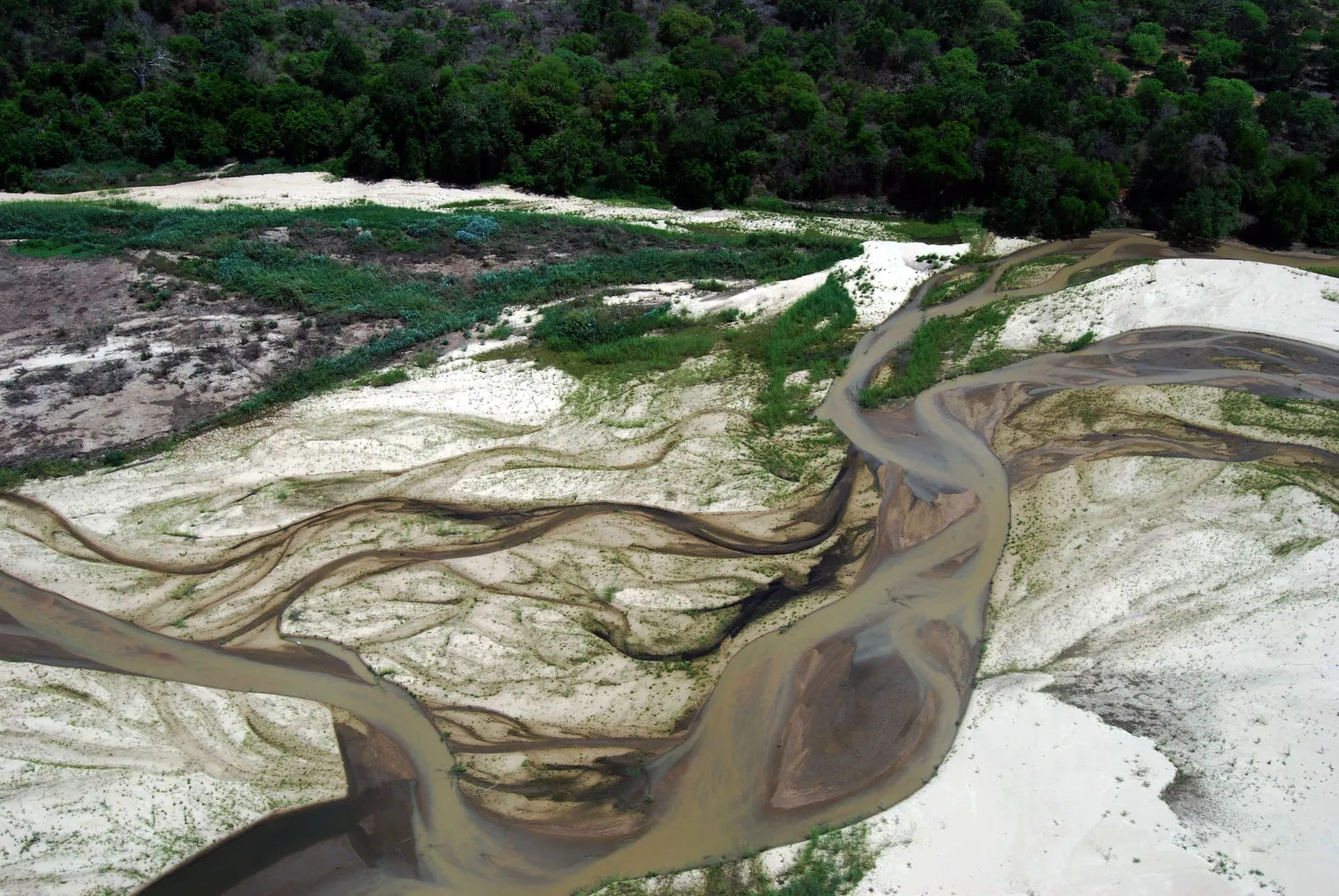
The braided channels of the Rufiji, the largest river in Tanzania, on its way to the delta.
- Region
- Pwani (Coast) Region
- Population
- 2,024,947 (2022 census)
- Area
- 32,547 km²
- Capital
- Kibaha
- Surrounds
- Dar es Salaam, on three sides
The coast before Dar es Salaam
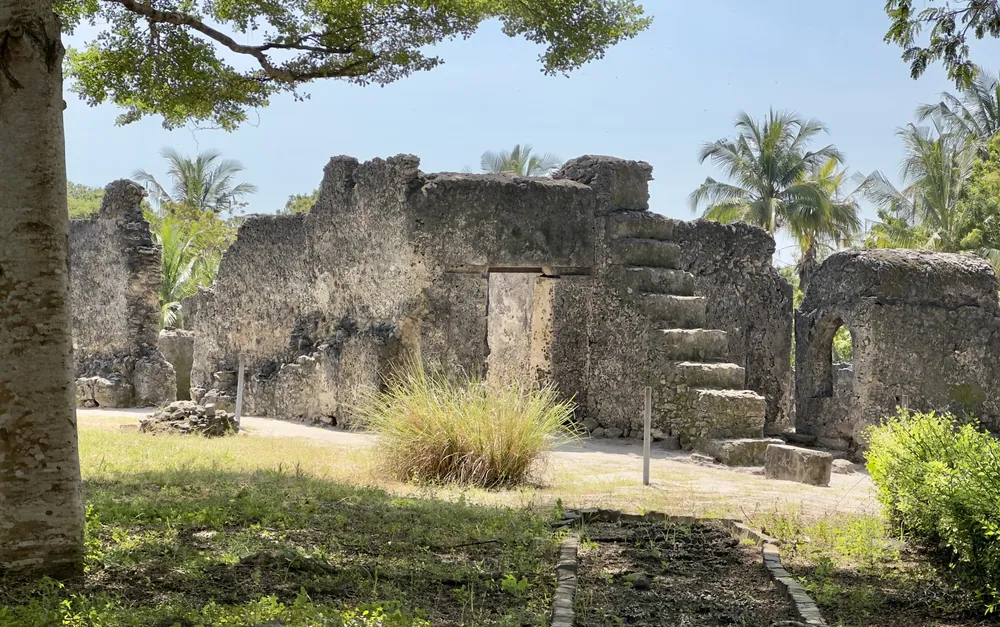
This shore was Swahili long before it was colonial. The Kaole ruins outside Bagamoyo, with their thirteenth-century mosque and pillar tombs, belong to the network of coastal towns that traded with Arabia, Persia and India across the monsoon.
In the nineteenth century Bagamoyo became the mainland terminus of the caravan routes from Lake Tanganyika, and the departure point for ivory and for enslaved people shipped to Zanzibar. It was the first capital of German East Africa, until the administration moved to Dar es Salaam in 1891 for its deeper harbour — the decision that turned Bagamoyo into a quiet town and Dar into a city.
The region that remains is the coast around that city: nine districts running from the Tanga border in the north to the Rufiji and the Lindi border in the south, and out to Mafia Island. Two Tanzanian presidents, Ali Hassan Mwinyi and Jakaya Kikwete, came from it.
Coconuts, cashew, and the spill from the city
What the region lives on
- Coconut & cashew
- The coastal cash crops
- Rice & cassava
- Staples, especially in the Rufiji floodplain
- Fishing & prawns
- The coast and the delta
- Industry
- Factories spreading out of Dar es Salaam
- Tourism
- Bagamoyo, Saadani and Mafia
Farming employs the large majority of working people: coconuts, cashew, oranges, mangoes, cassava and rice, grown on smallholdings along the coast and in the river valleys.
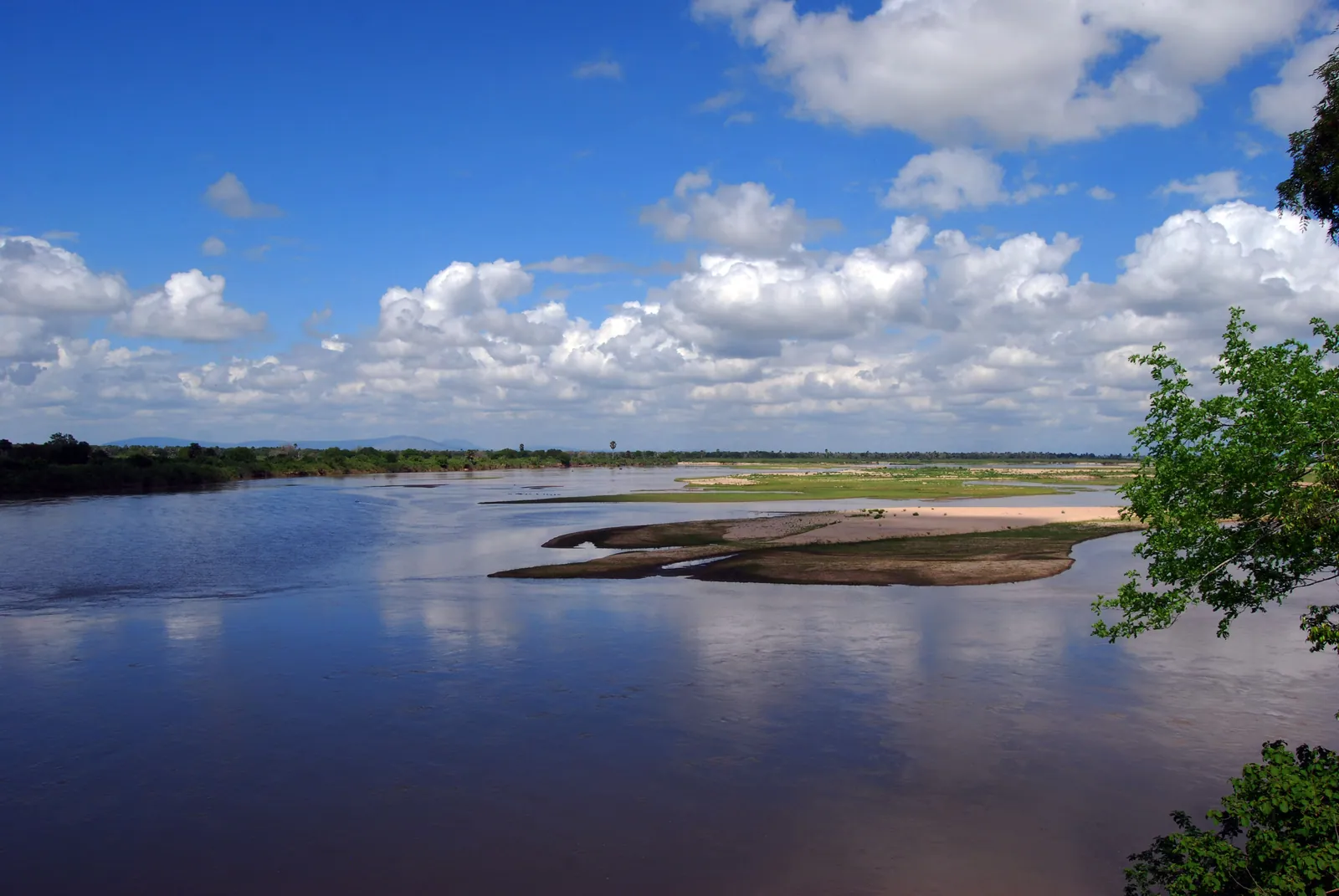
The Rufiji — Tanzania's largest river — floods a wide plain each year, and that flood is the basis of rice farming, of the delta's prawn fishery and of East Africa's largest stand of mangrove forest. Upstream, at Stiegler's Gorge, the Julius Nyerere Hydropower Station now holds much of that water back; it is the biggest single change to the river in its history, and its effects on the delta are being watched closely.
The other economy is Dar es Salaam's. Industry, warehousing and housing have spread out along the roads through Kibaha, Chalinze and Mkuranga, and a great deal of the region's growth — its population nearly doubled between the 2012 and 2022 censuses — is the city arriving.
Bush to the beach
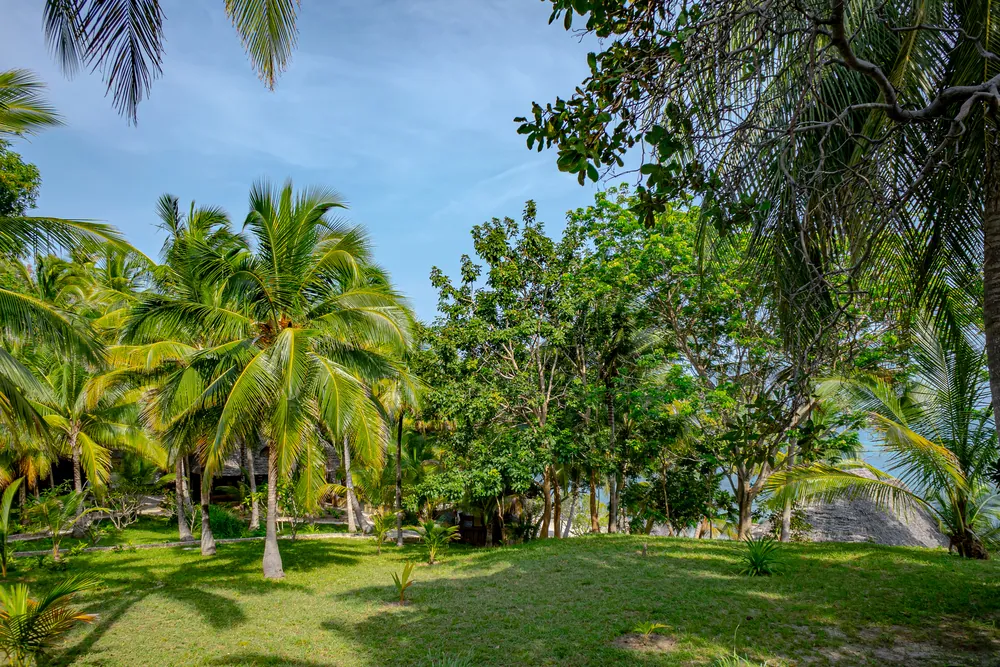
The coast is Swahili in language, food and rhythm: fishing villages, mosques, coconut and mango shade, dhows pulled up on the sand. Inland, the Zaramo, Kwere, Doe and Ndengereko farm; along the water, the culture is the one that made Swahili the language of the region.
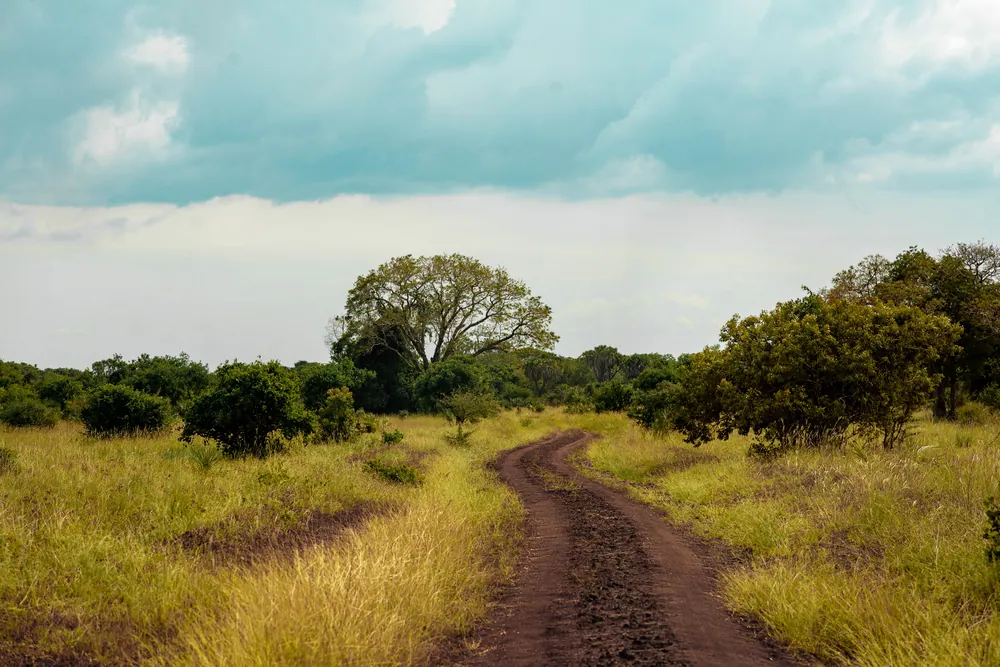
Saadani National Park, north of Bagamoyo, is the country's only coastal park: bush, river and beach in the same place, with elephant, buffalo and green turtles nesting on the shore.
Mafia Island, administratively part of this region, sits off the delta with a marine park around it — reefs, whale sharks between about October and March, and a diving reputation out of all proportion to its size. And Bagamoyo keeps its arts college, its ruins and a long, slow waterfront, an hour and a half from the capital.
Towns, parks and places across Pwani Region
Historic town
Bagamoyo
The caravan terminus and first colonial capital, with the Kaole ruins and the arts college.
Island
Mafia Island
Reefs, whale sharks and a marine park, off the mouth of the Rufiji delta.
National park
Saadani National Park
The only coastal national park in Tanzania, shared with Tanga Region.
Wetland
The Rufiji delta
East Africa's largest mangrove forest, and the prawn and rice country behind it.
National park
Nyerere National Park
The largest national park in the country reaches into the region's south-west.
Towns
Kibaha and Chalinze
The regional capital and the highway junction west of Dar — the working, industrial side of the region.
Informational — none of this is ticketed by us
Heritage
Kaole ruins
A thirteenth-century mosque and pillar tombs in the palms outside Bagamoyo.
National park
Saadani National Park
Game drives, a boat trip up the Wami, and a beach where turtles nest. Three to four hours from Dar.
Marine park
Mafia Island Marine Park
Reef diving, whale sharks in season, and a quiet alternative to Zanzibar.
Wetland
The Rufiji delta
Mangrove channels, prawn fishers and birds. Go by boat from Kibiti or Utete with a local guide.
Historic town
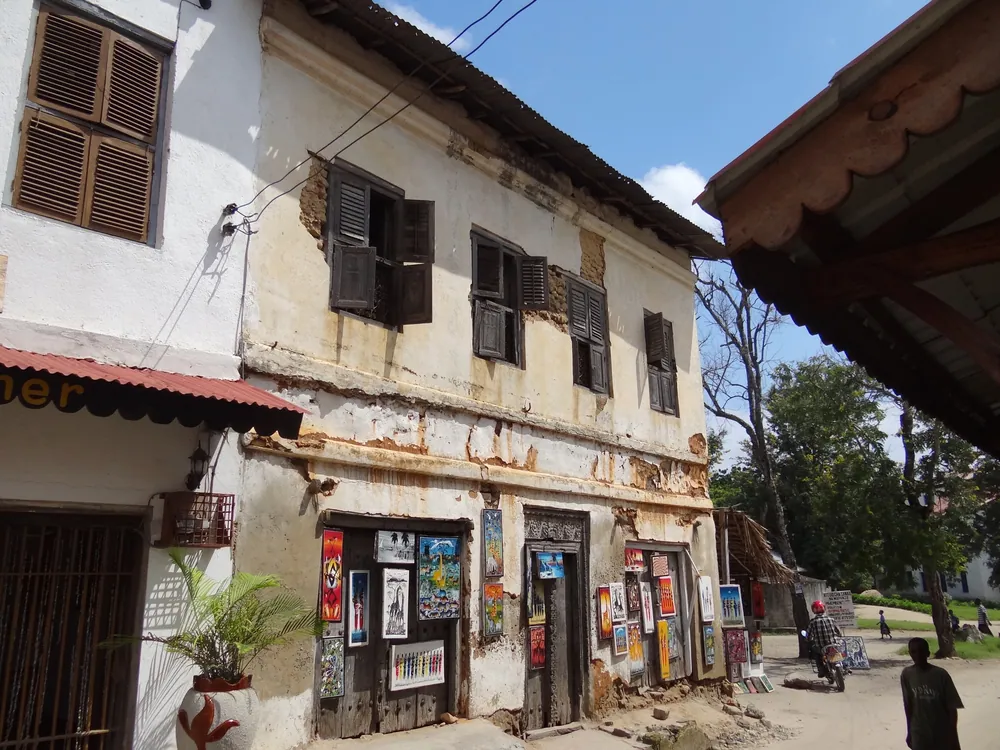
Bagamoyo waterfront
Carved doors, the old customs house and the fish market, with the arts college nearby.
Journey
The coast road south
Coconut villages and river crossings from Dar towards Kilwa — the old shore, still mostly undeveloped.
Before you go
- Getting there
- Everything here is reached from Dar es Salaam: Bagamoyo is about an hour and a half north, Saadani three to four hours, and Mafia a short flight or a ferry-and-road journey.
- Getting around
- A vehicle for the mainland; boats for the delta and the islands. The main highways are good, the side roads much less so.
- When to come
- June to October is dry and calm. The long rains, March to May, make delta travel difficult.
- Marine park
- Mafia's marine park charges an entry fee, collected per day of stay. Saadani is a TANAPA park with standard fees.
- Respect
- A conservative, largely Muslim coast. Cover shoulders and knees away from the beach.
- Money
- Shillings. ATMs in Bagamoyo, Kibaha and Mafia town; carry cash in the villages.
Last reviewed 2026-09-17
Editorial — fact-check complete
Checked against
- 2022 Population and Housing Census — administrative unitsNational Bureau of Statistics, Tanzania
- Pwani Region — area, districts, economyWikipedia
- Saadani and Nyerere national parksTanzania National Parks (TANAPA)
- Julius Nyerere Hydropower Station — Rufiji, capacity and controversyWikipedia
- Mafia Island Marine ParkMarine Parks and Reserves Unit, Tanzania