Mafia
An island of 394 square kilometres south of the Rufiji delta, wrapped in Tanzania's first marine park — and the most reliable place in the country to swim with whale sharks.
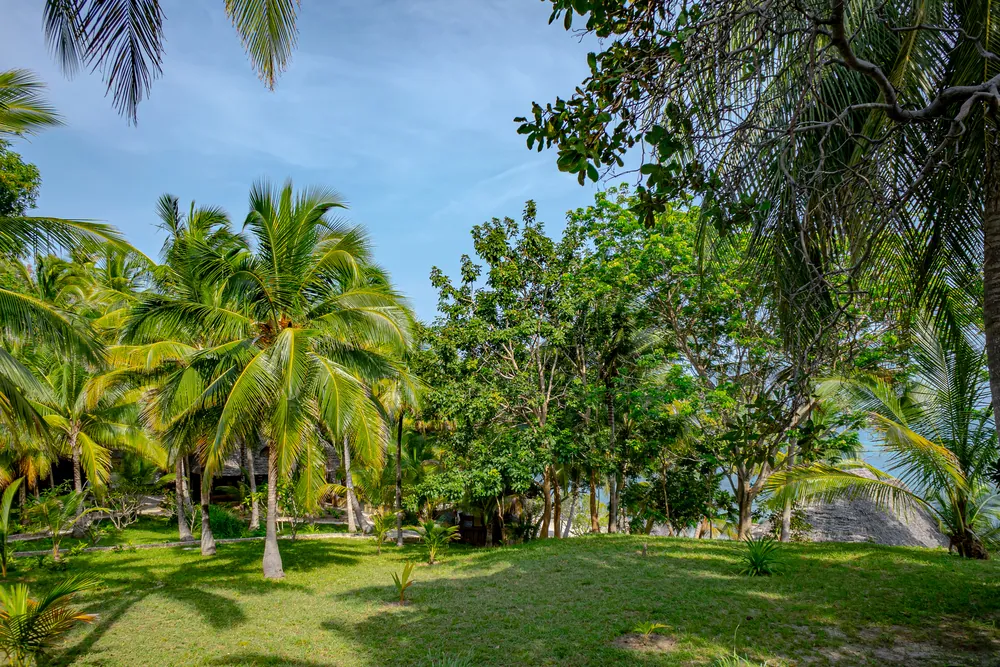
The shoreline at Mafia. The island is low, green and almost entirely undeveloped by Zanzibar's standards.
- Region
- Pwani Region, Indian Ocean
- Area
- 394 km² — 49 km long, 17 km wide
- Population
- 66,180 (2022 census)
- Marine park
- Established 1995; 115,000 hectares
- Airport
- Mafia Airport (MFA), flights from Dar
A trading island the guidebooks forgot
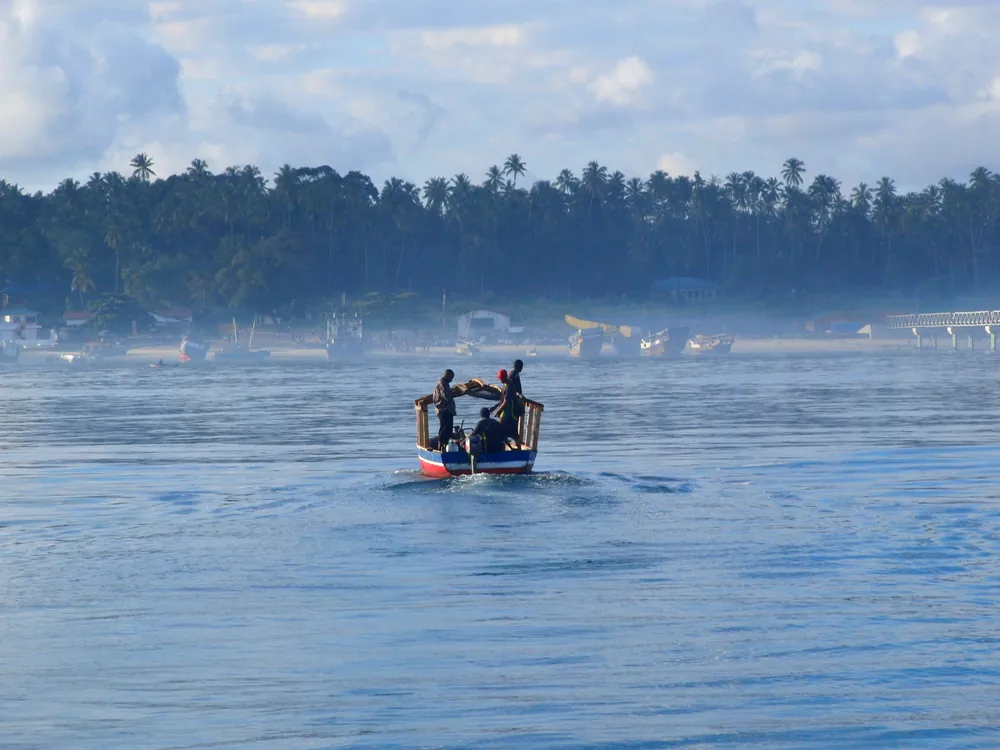
Mafia appears in the record at least as early as the 8th century, as part of the same Swahili trading world as Kilwa and Zanzibar. It sat conveniently at the mouth of the Rufiji, the river that drains a vast interior, and the ruins on the archipelago — most notably Kua on Juani Island, a substantial Shirazi-era town — show it was never a backwater.
It passed through the usual sequence: Shirazi settlement, the orbit of Kilwa, then of the Omani sultans of Zanzibar. Under an 1890 treaty Germany acquired the island from the Sultan of Zanzibar by payment, and on 12 January 1915 British forces took it — early in the East African campaign, and useful to them as a base for the air operations against the German cruiser Königsberg, which was hiding up the Rufiji delta a short distance north.
Since then it has been quiet, and that quietness is the whole character of the place. Where Zanzibar built an industry, Mafia did not — partly because access stayed difficult, partly because the reef rather than the beach is the attraction. The name, incidentally, has nothing to do with Sicily; it is most likely from the Arabic morfiyeh, an archipelago, or the Swahili mahali pa afya, a healthy place.
Fishing, coconut, and a marine park that had to negotiate
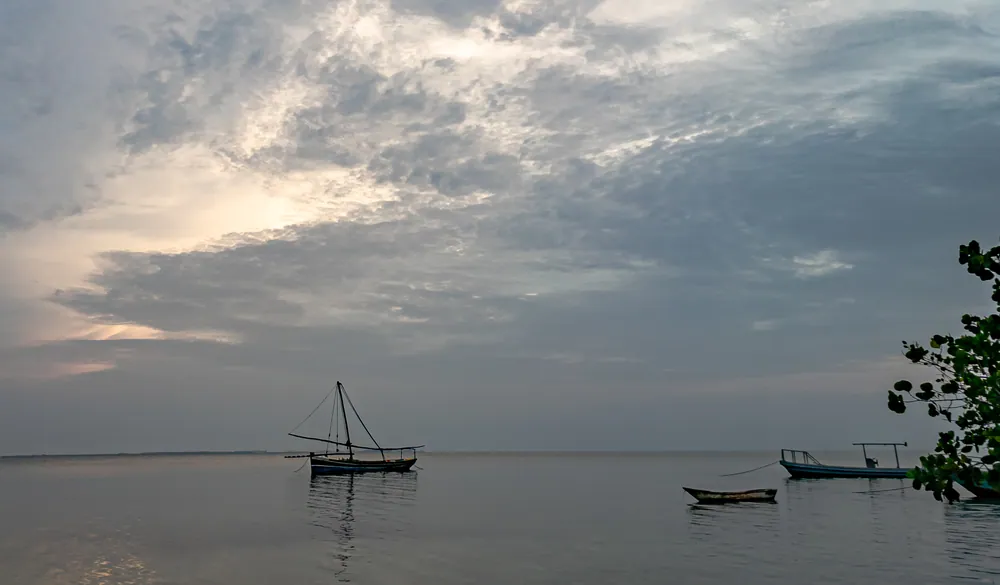
What the island lives on
- Fishing
- Artisanal, from dhows and outriggers
- Coconut
- Copra, and the shade the island grows under
- Seaweed
- Farmed in the shallows, as on Zanzibar
- Cashew & fruit
- Smallholdings inland
- Diving tourism
- Small, high-value, and seasonal
Mafia Island Marine Park was declared in 1995, the first marine protected area in Tanzania, covering some 115,000 hectares around the south of the island including Chole Bay. What makes it interesting as a model is that it was set up as a multi-user park: the fishing communities inside its boundaries were not removed, and management was meant to be negotiated with them rather than imposed.
That negotiation is ongoing and imperfect, but the principle matters. Roughly twenty thousand people live inside the park boundary. Dynamite fishing — which wrecked reefs along this coast for decades — has been pushed back hard here, and the reefs show it.
Otherwise the island lives on what islands live on: fish, coconut, seaweed farmed in the shallows by women as on Zanzibar's east coast, and a little cashew and fruit. Tourism is deliberately small — a handful of lodges, mostly dive-focused — and the island has so far avoided the trajectory that took Nungwi from fishing village to resort strip in twenty years.
Underwater, mostly
The reason most people come is in the water. Whale sharks — the largest fish in the ocean, harmless plankton feeders — gather off Kilindoni Bay on the island's west side to feed, and unusually for the species they are present in numbers and close to the surface. The season runs roughly October to March, with November to February the most reliable window. Swimming with them is snorkelling, not diving, and it is regulated: no touching, limited numbers in the water, no chasing.
The diving in Chole Bay is the other draw — a deep protected anchorage with strong tidal exchange that brings clear water and big fish through the passes. Green turtles nest on the beaches and there is a rehabilitation programme on Juani.
On land, the culture is Swahili and Muslim and quiet. Chole Island, ten minutes across the bay, is the most rewarding walk on the archipelago: a nineteenth-century settlement being swallowed by baobab and fig, with ruined customs houses and a boat-building yard still working. Kua, on Juani, is the older and larger ruin, overgrown and rarely visited.
Informational — none of this is ticketed by us
Marine wildlife
Whale sharks off Kilindoni
October to March, best November to February. Snorkelling only, and properly regulated — choose an operator that follows the rules.
Marine park
Chole Bay diving
Protected deep-water anchorage with tidal passes. Coral in far better condition than most of this coast.
Ruins
Chole Island
Ten minutes by boat. Nineteenth-century ruins under enormous fig and baobab, with a working boatyard.
Archaeology
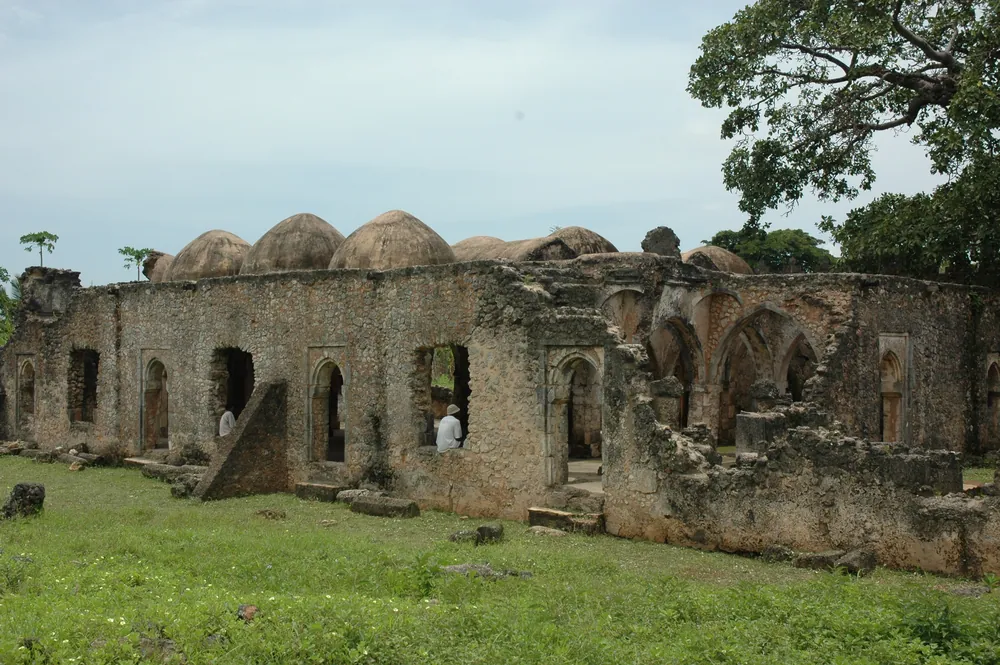
Kua ruins, Juani Island
A substantial Shirazi-era town, overgrown and atmospheric. Documented by the Zamani Project in 2018.
Conservation
Turtle nesting beaches
Green turtles nest on the island's beaches, with a monitoring and rehabilitation programme you can visit.
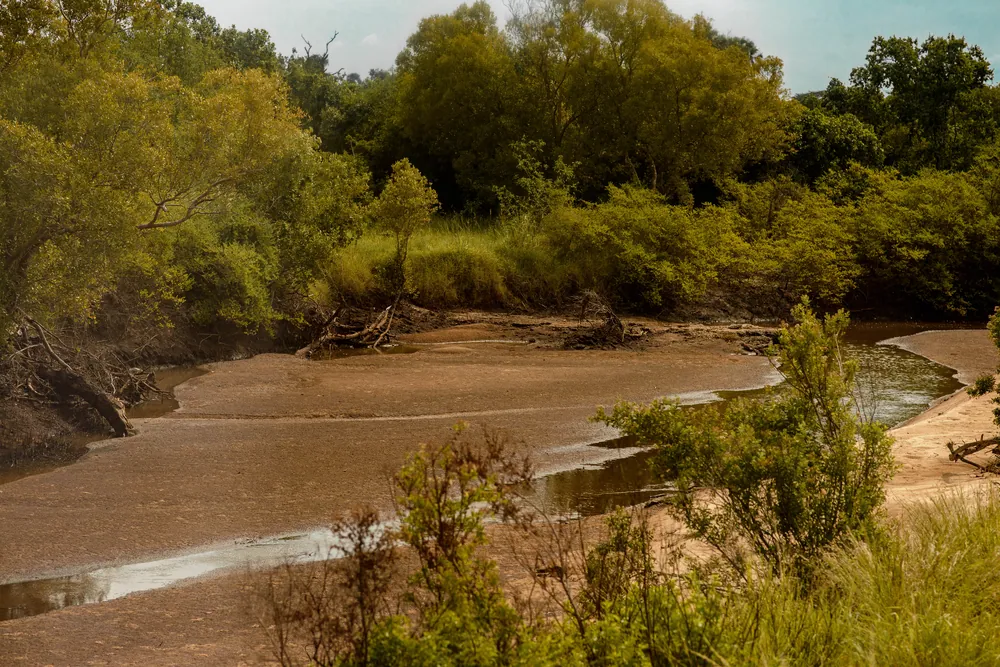
Wetland
The Rufiji delta
North of the island — East Africa's largest mangrove system, and where the Königsberg hid in 1915.
Before you go
- Getting there
- Light aircraft from Dar es Salaam in about 30 minutes — Auric, Coastal and Tropical all fly it. By sea, the boat from Nyamisati takes roughly four and a half hours.
- When to come
- Whale sharks October to March. Diving is best June to October and December to March. Avoid the long rains, late March to May, when most lodges close.
- Marine park fee
- Payable on arrival within the park boundary, per person per day, and separate from anything a lodge charges.
- Getting around
- One main road, few vehicles. Lodges arrange transfers; boats do the rest.
- Money
- Cash. There is an ATM at Kilindoni but do not depend on it.
- Respect
- A conservative Muslim island. Swimwear on the beach only.
Last reviewed 2026-09-14
Editorial — fact-check complete
Checked against
- Mafia Island Marine ParkMarine Parks and Reserves Unit, Tanzania
- Mafia Island — area, population, marine park, British capture 1915Wikipedia
- Whale shark aggregation season, Kilindoni BayMafia Island Marine Park operators' guidance
- 2022 Population and Housing Census resultsNational Bureau of Statistics, Tanzania