The Maji Maji war
In July 1905 the peoples of southern Tanzania rose together against German rule, trusting a sacred water to turn bullets harmless. The Germans answered by burning crops and villages, and the famine that followed killed between 75,000 and 300,000 people.
Edited by Kabeer Dalvi · Updated 12 October 2026
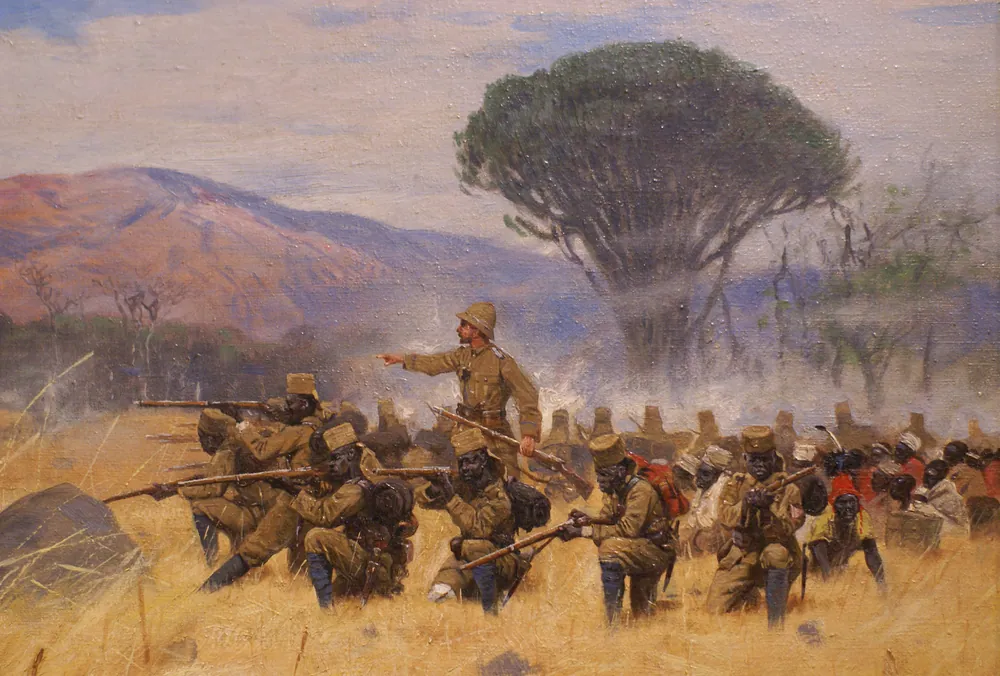
The fighting at Mahenge in August 1905, painted that year by the German artist Wilhelm Kuhnert.
- When
- July 1905 to August 1907
- Where
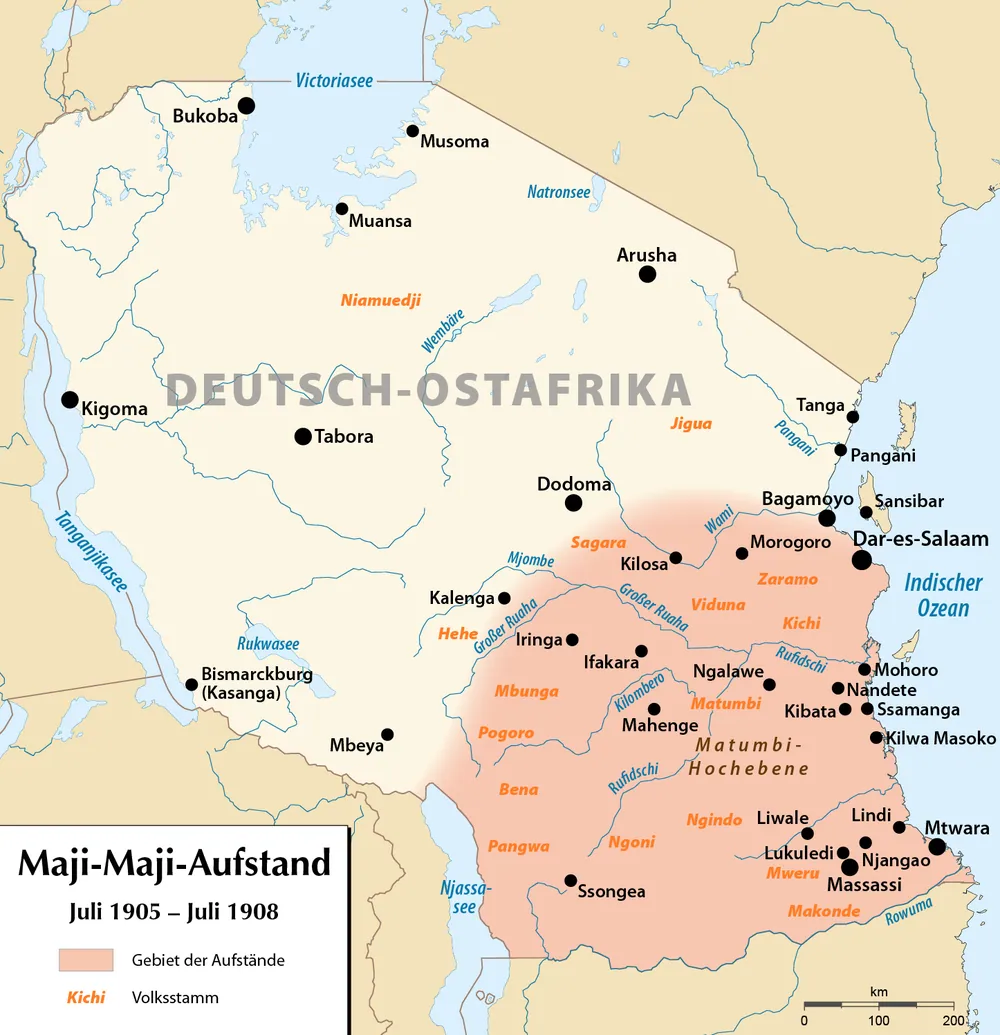
- Southern German East Africa, today's southern Tanzania
- Began at
- Nandete, in the Matumbi hills north-west of Kilwa
- The name
- Maji is Kiswahili for water
- Deaths
- Estimated 75,000 to 300,000, most from famine
Why it happened
By 1905 Germany had ruled the colony for twenty years, and the weight of that rule fell hardest on the south. A head tax had been brought in in 1898. Men were taken for forced labour on roads and other works. New hunting and forest laws stopped farmers killing the wild pigs that ate their crops.
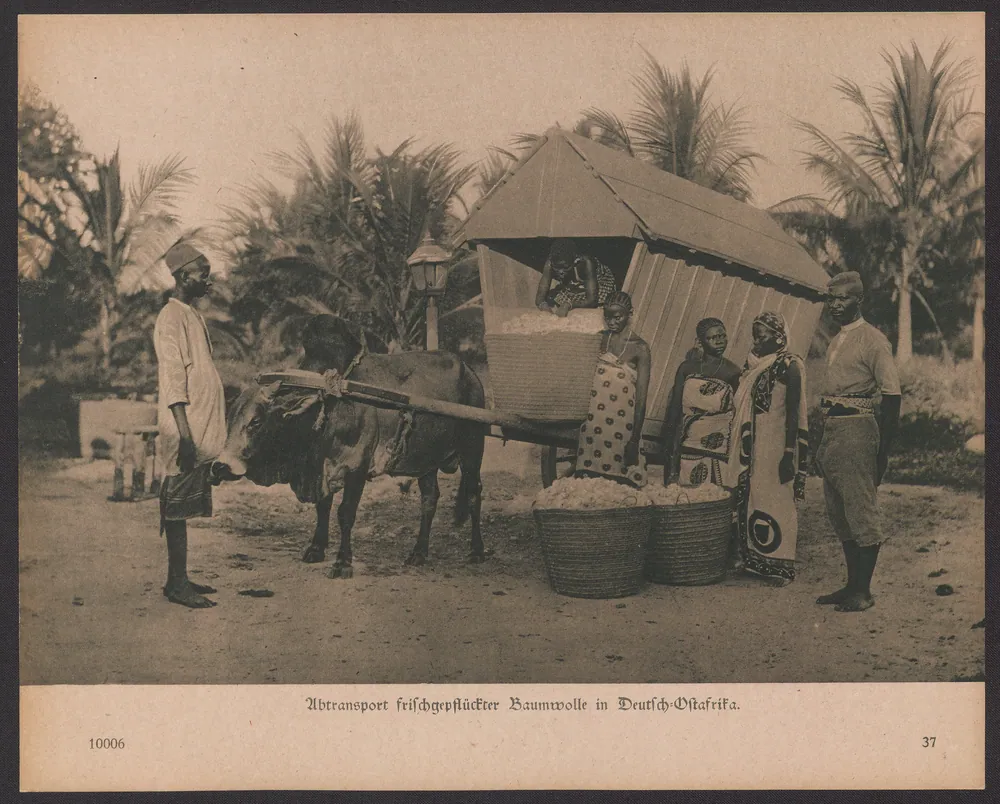
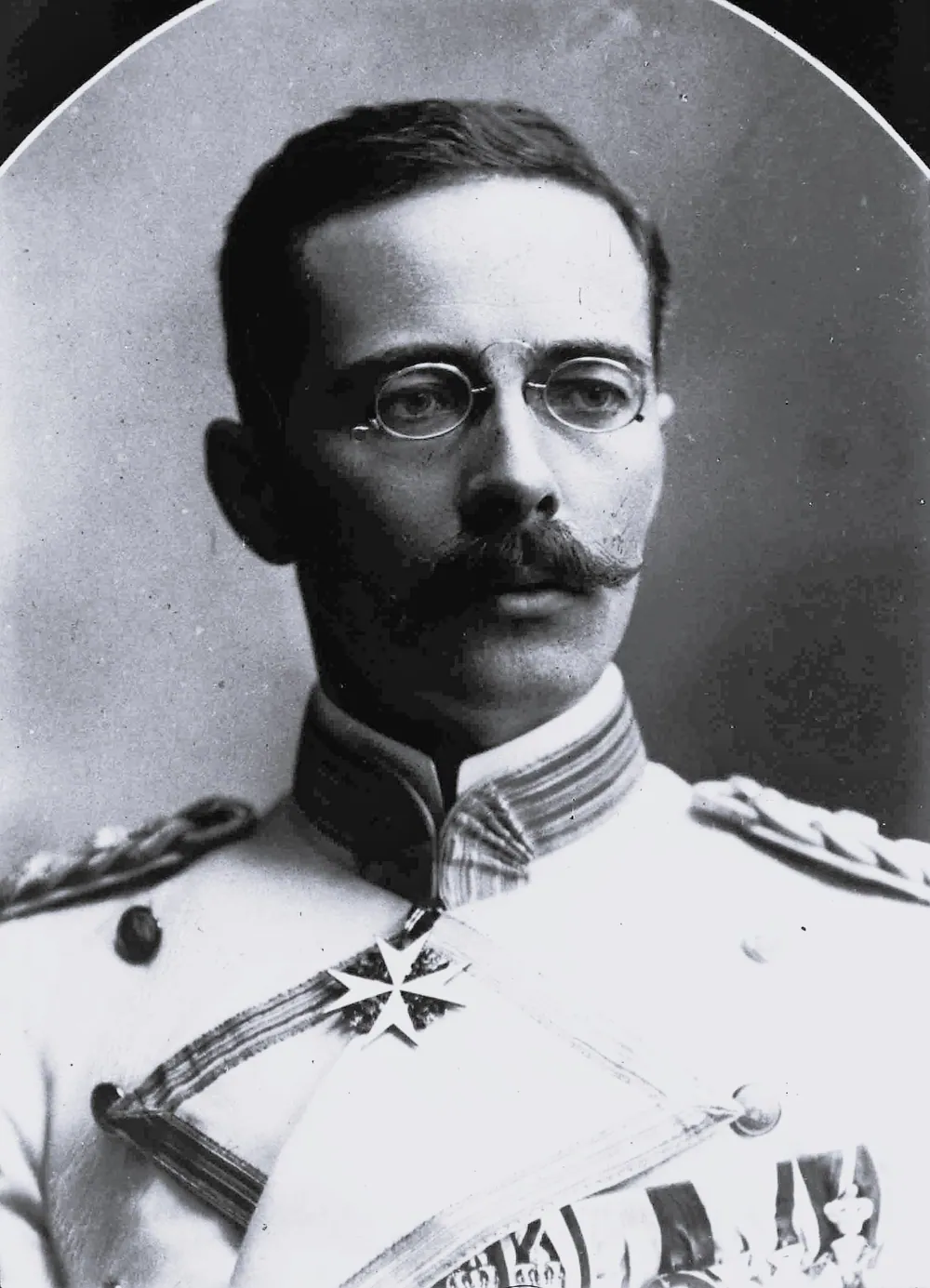
The sharpest grievance was cotton. In 1902 the governor, Gustav Adolf von Götzen, ordered villages to grow it as a cash crop, under compulsion. In 1905 a drought made everything worse.
Kinjikitile and the water
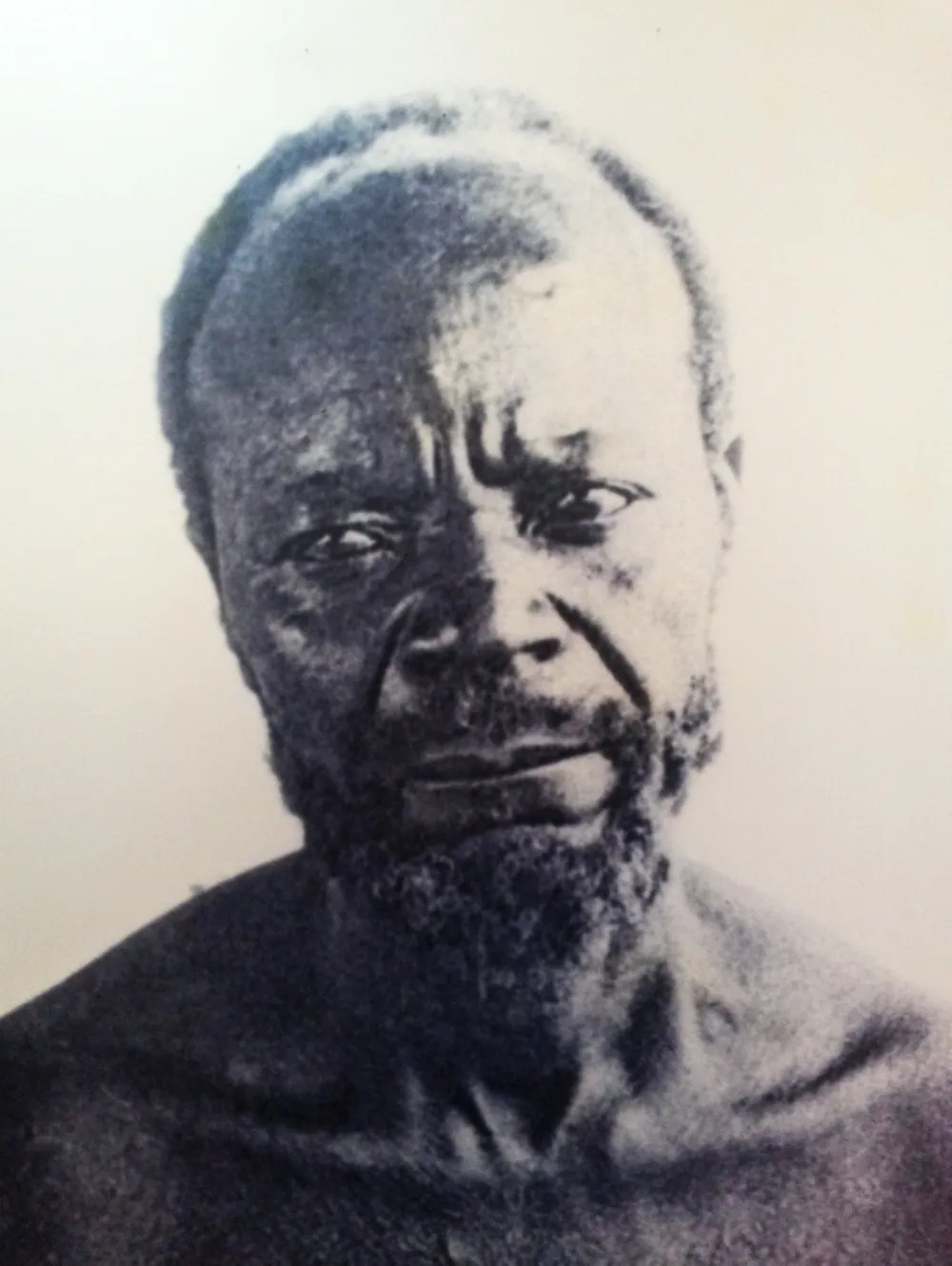
What turned anger into a rising was a message. Kinjikitile Ngwale lived at Ngarambe, in what is now Kilwa District. In 1904 he disappeared for some days and came back saying he had been possessed by Hongo, a spirit that took the form of a snake. He called himself Bokero.
Kinjikitile gave out a medicine: water, maji, mixed with castor oil and millet seeds. Those who took it, he taught, need not fear German guns, because the bullets would turn to water. People came to Ngarambe from a wide area and carried the water home, so that the message reached many different peoples.
The Germans arrested Kinjikitile as soon as the fighting began and hanged him on 4 August 1905. It made no difference. His brother carried on his work, and the movement no longer needed its founder.
July 1905: the rising spreads
It began in the Matumbi hills, north-west of Kilwa. In July 1905 the men of Nandete pulled up three cotton plants, a declaration of war. On 31 July Matumbi fighters marched on Samanga and destroyed the cotton crop and a trading post.
Within weeks the south was in arms. On 14 August Ngindo fighters killed a party of five missionaries on the road, among them the Catholic Bishop Spiss. On 16 August the small German garrison at Ifakara was destroyed. The Matumbi, the Ngindo, the Ngoni, the Yao and other peoples all joined.
Mahenge and the machine guns
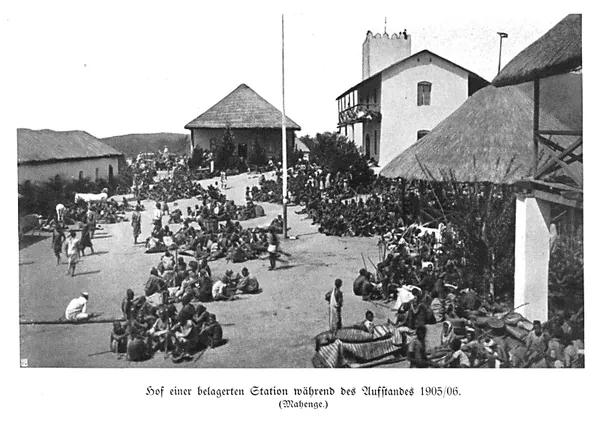
The water could not do what was promised. On 30 August 1905 several thousand fighters attacked the German post at Mahenge, which was held by Lieutenant Theodor von Hassel with sixty African soldiers, a few hundred local allies and two machine guns. The attackers walked into the fire, stood for about a quarter of an hour, and broke. The post was besieged, but it did not fall.
Götzen asked Berlin for help. Warships landed marines on the coast, and in October more troops arrived from Germany, enough for him to go on the attack. On 21 October 1905 German troops struck the camp of the Ngoni. The Ngoni retreated, and the story goes that they threw away their bottles of medicine, crying, "The maji is a lie!"
Famine as a weapon
The German command then chose a different weapon. Its columns burned villages and destroyed crops, to starve the country into giving up. A German officer, Captain Wangenheim, put the policy in a letter to the governor in 1905: "Only hunger and want can bring about a final submission. Military actions alone will remain more or less a drop in the ocean."
The famine that followed did most of the killing. The last resistance ended in August 1907.
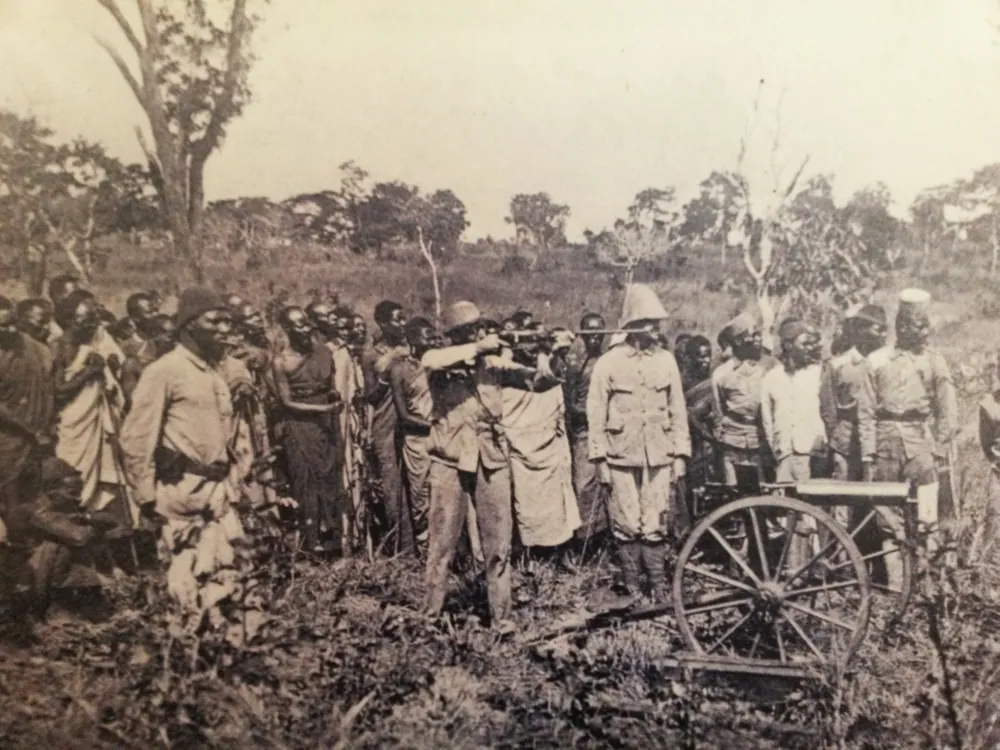
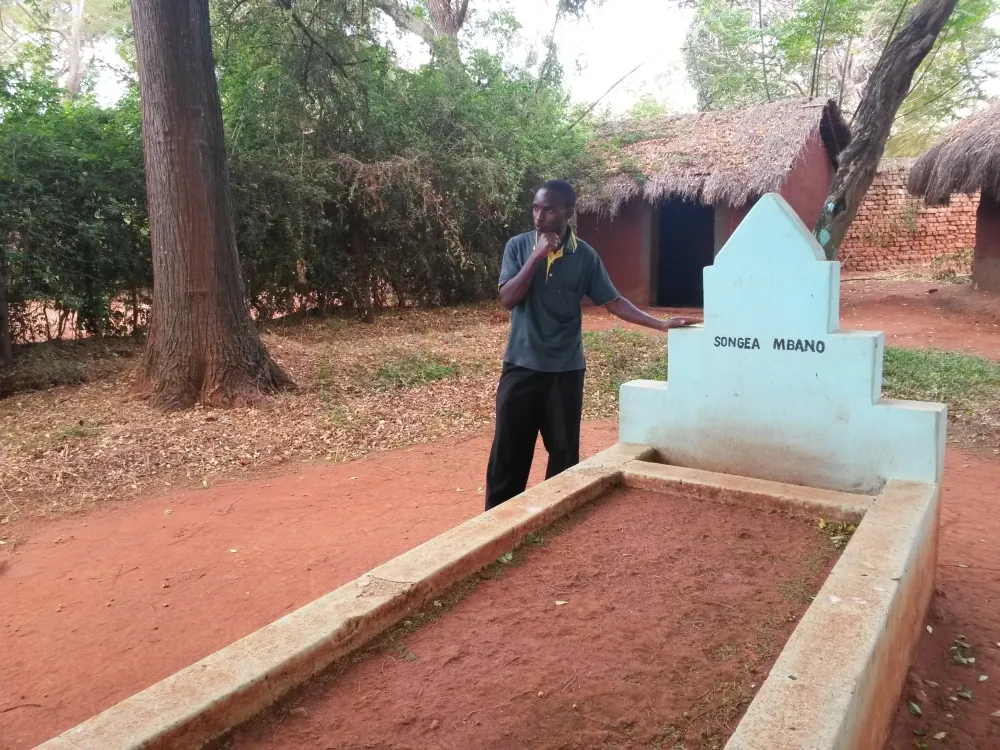
On 27 February 1906 the Germans hanged the captured Ngoni leaders at the town that now bears the name of one of them, Songea Mbano. The memorial there counts about 67 men. The museum, the graves and the yearly commemoration are described on the Songea guide.
How many died
Nobody counted, and estimates differ widely: from 75,000 at the lowest, through 100,000 to 120,000, to 300,000 at the highest. Almost all of the dead were Africans in the south, and most died of hunger, not in battle. On the German side the losses were 15 Europeans and 389 African soldiers.
As late as 1953 the American writer John Gunther could report that the Southern Province had "not fully recovered from the German terror half a century ago". Some historians describe the famine strategy as genocidal.
We give the range of estimates because no reliable count exists. Be wary of any source that states a single figure as fact.
What changed afterwards
Götzen left office in April 1906, and his successor, Albrecht von Rechenberg, brought in reforms. What followed in the colony, up to the First World War, is told on the page on German East Africa.
For Tanzanians the war came to mean something larger than its defeat. It was the first time so many different peoples of the country had fought together against foreign rule, and Tanzanian nationalists later looked back on Maji Maji as the first stirring of a nation. Kinjikitile is remembered as a national hero.
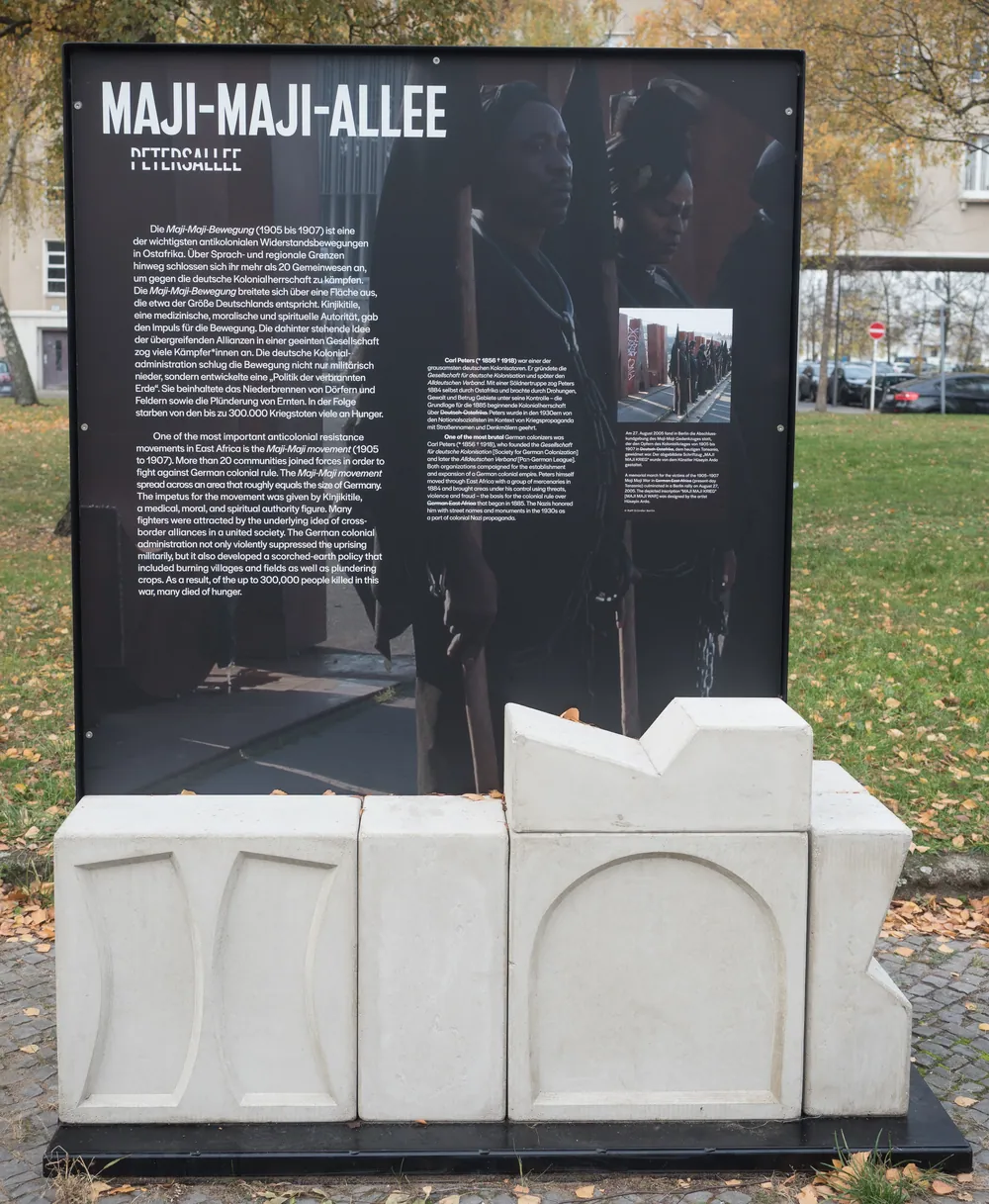
Germany has begun to face this history too. In November 2023 the German president, Frank-Walter Steinmeier, visited the memorial in Songea, met descendants of Songea Mbano and asked for forgiveness. And on 23 August 2024 Berlin renamed Petersallee, a street that had honoured the founder of the colony, Carl Peters: part of it is now Maji-Maji-Allee.
- What caused the Maji Maji war?
- German colonial rule in the south of the colony: a head tax from 1898, forced labour, and above all the order of 1902 that villages must grow cotton. A drought in 1905 and the teaching of the spirit medium Kinjikitile Ngwale turned the anger into a rising.
- Why is it called Maji Maji?
- Maji is the Kiswahili word for water. The fighters took a medicine of water mixed with castor oil and millet seeds, given out by Kinjikitile Ngwale, which they believed would turn German bullets to water.
- When was the Maji Maji war?
- It began in July 1905 in the Matumbi hills, north-west of Kilwa, and the last resistance ended in August 1907.
- How many people died in the Maji Maji war?
- Estimates range from 75,000 to 300,000, most of them from the famine caused by the German policy of burning crops and villages. No reliable count exists.
- Who was Kinjikitile Ngwale?
- A spirit medium from Ngarambe, in today's Kilwa District, whose teaching and sacred water united the peoples of the south against German rule. The Germans hanged him on 4 August 1905, days after the war began.
- Where can you learn about the Maji Maji war in Tanzania today?
- At the Maji Maji War Memorial Museum in Songea, run by the National Museum of Tanzania, where the leaders hanged on 27 February 1906 are buried. The anniversary is marked there every year.
Last reviewed 12 October 2026
Edited by Kabeer Dalvi
Checked against
- The Maji Maji rebellion, 1905–7 — A Modern History of TanganyikaCambridge University Press (John Iliffe)
- Maji Maji RebellionWikipedia
- Kinjikitile NgwaleWikipedia
- Gustav Adolf von Götzen — governorship and lossesWikipedia
- Majimaji War Memorial MuseumNational Museum of Tanzania
- Berlin's Black community celebrates renaming of street after African heroes (2024)The African Courier