Lindi
A quiet Swahili port on a deep bay, once the capital of the whole German south — and the gateway to Tendaguru, the hill that gave the world's museums the tallest mounted dinosaur ever assembled.
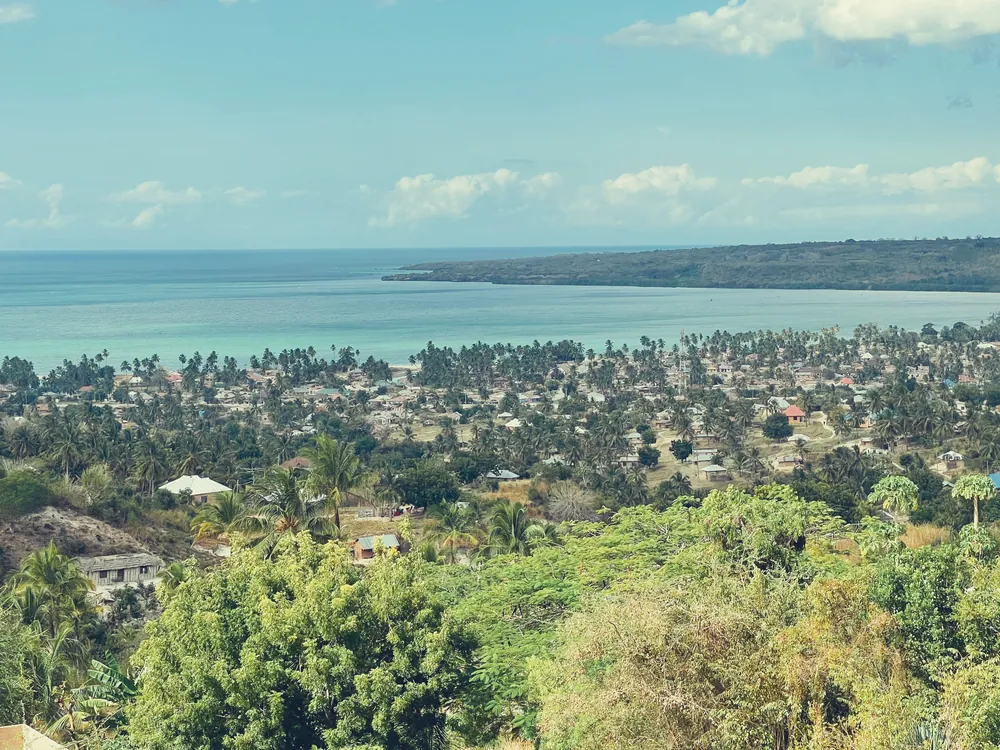
Lindi and its bay from the hills of Mwenge ward. The town sits at the mouth of the Lukuledi River.
- Region
- Lindi Region, southern coast
- Population
- 174,126, Lindi Municipal (2022 census)
- Region total
- 1.19 million people (2022 census)
- Setting
- Lindi Bay, mouth of the Lukuledi River
- Distance
- About 450 km south of Dar es Salaam
Capital of the south, then left behind
Lindi is an old town of the Swahili coast, a settlement of traders and fishermen on a deep, sheltered bay where the Lukuledi River meets the sea. Its name is usually explained as meaning deep channel. Like the rest of this coast it came under the influence of Oman before the Germans arrived.
Under German rule Lindi became the administrative centre of the entire Southern Province, and it kept that role under the British. It was the south's capital until 1952, when the administration moved to the new deep-water port at Mtwara, whose natural channel could take ocean-going ships. Lindi's harbour could not, and the town has lived quietly since. Its old centre is a national historic site.
The region carries a larger history too. The Maji Maji war began in its north: in July 1905 the men of Nandete, in the Matumbi hills north-west of Kilwa, pulled up three cotton plants grown under German compulsion as a declaration of war. The rising spread south through the Ngindo country to Lindi district and far beyond. The ruins of Kilwa Kisiwani, a World Heritage Site, are in Lindi Region as well — they have their own guide.
Cashew, coconuts, and gas waiting offshore
What the region lives on
- Cashew
- Second only to Mtwara nationally
- Coconut
- Lindi is called the coconut capital
- Roselle
- Hibiscus, a smallholder cash crop
- Fishing & salt
- Along the bay and coast
- Natural gas
- Planned LNG plant at Likong'o
Lindi Region is Tanzania's second cashew producer, after Mtwara; the two together grow the great majority of the national crop. Coconuts line the coast — the town is sometimes called the country's coconut capital — and roselle, fishing and salt-making fill out the rest of the economy.
The largest prospect lies offshore. Deep-water gas fields discovered off the southern coast underpin plans for a liquefied natural gas plant at Likong'o, just outside Lindi, estimated at around US$42 billion. Negotiations between the government and the international energy companies have run for years; construction, if it comes, would transform the town.
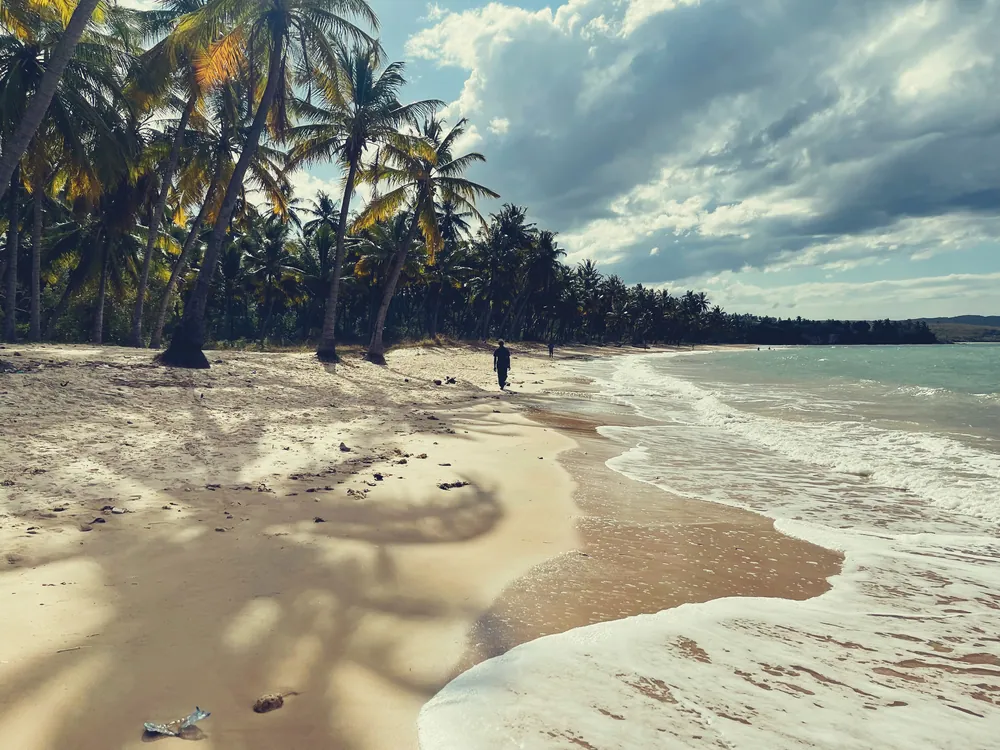
For now Lindi is one of the most unhurried towns on the coast, with long empty beaches such as Ngande, a waterfront of fishing boats, and very few visitors.
The dinosaurs of Tendaguru
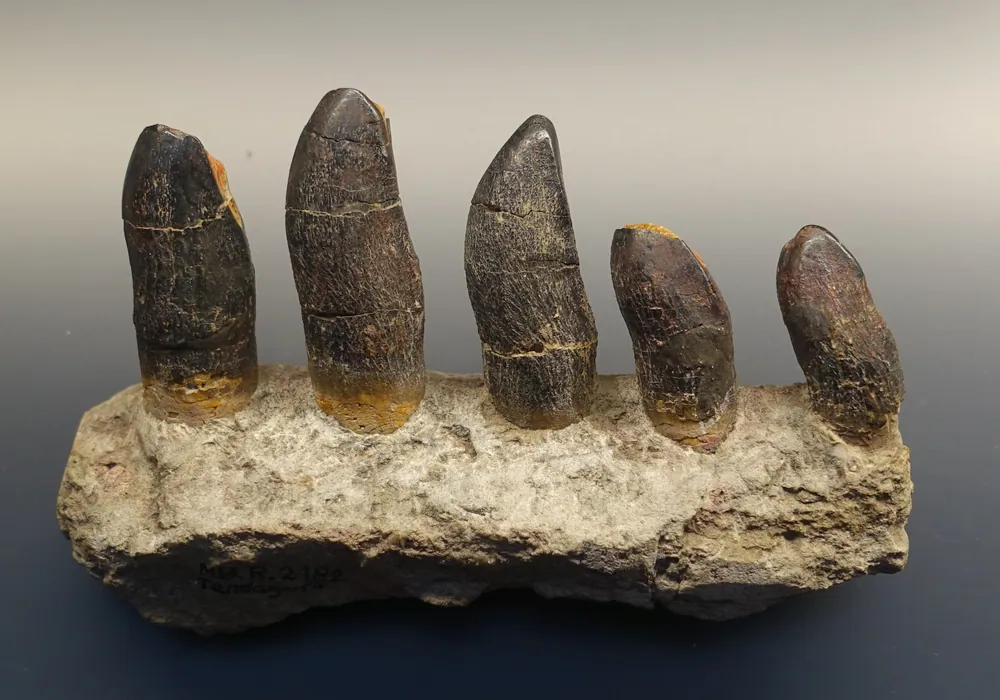
About 60 kilometres north-west of Lindi is Tendaguru Hill, one of the richest dinosaur sites on earth. Between 1909 and 1913 a German expedition led by Werner Janensch and Edwin Hennig dug here with the labour of up to 500 local workers, who also carried the crated bones four to five days on foot to Lindi. More than 200 tonnes of fossils were shipped from there to Berlin.
Among them was the skeleton now called Giraffatitan brancai. Mounted in Berlin's Museum für Naturkunde, it stands 13.27 metres tall and is recognised by Guinness World Records as the tallest mounted dinosaur skeleton in the world. British expeditions followed between 1924 and 1931. The museum now openly examines the colonial circumstances in which the bones were taken.
Inland from the coast rises the Rondo Plateau, whose forest reserve holds one of eastern Africa's most important concentrations of endemic plants, and the Rondo dwarf galago — at under 100 grams the smallest known galago, and one of the world's most endangered primates. Much of the region's interior is farmland and miombo, running west towards Nyerere National Park.
Towns, parks and places across Lindi Region
Town & World Heritage
Kilwa
Kilwa Masoko, the old town of Kilwa Kivinje, and the ruins of Kilwa Kisiwani and Songo Mnara.
Heritage site
Nandete and the Matumbi hills
Where the Maji Maji war began in July 1905, north-west of Kilwa.
Town
Nachingwea
An inland district town that was one of the centres of the groundnut scheme. It has an airport.
National park
Nyerere National Park
Part of the country's largest national park lies in the west of the region.
Informational — none of this is ticketed by us
Historic town
Lindi Bay and the old town
A national historic site: the old centre, the waterfront and the German-era buildings of the former southern capital.
Architecture
The German boma and colonial buildings
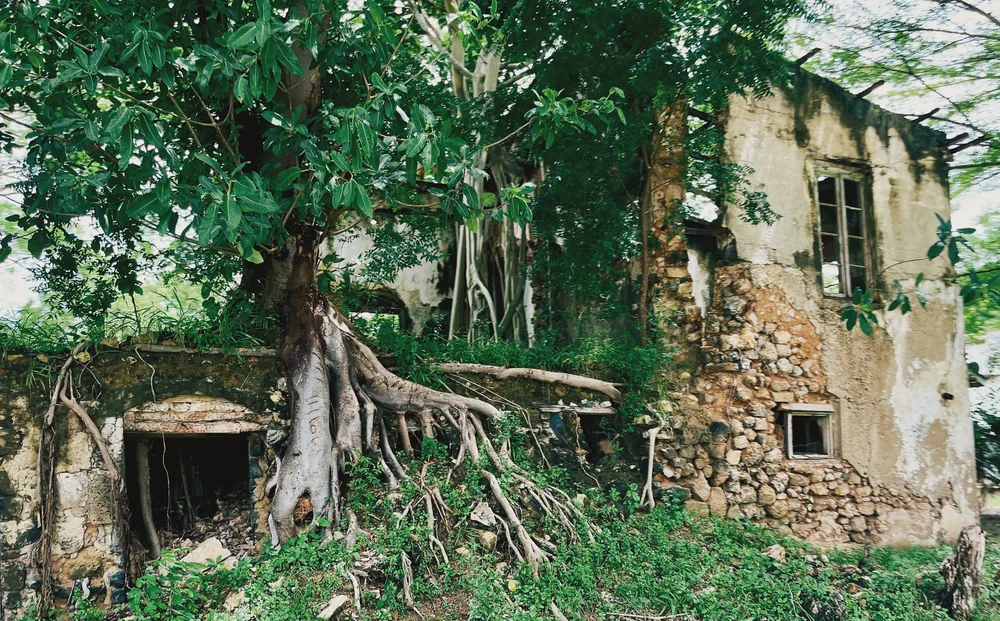
Abandoned and decaying administrative buildings of the colonial south. Look from outside; some are unsafe.
Coast
Ngande beach
A long palm-lined beach near town, usually with almost nobody on it.
Palaeontology
Tendaguru Hill
Where Giraffatitan was dug up. There is little to see on site today — go for the history, with a local guide.
Forest
Rondo Forest Reserve
Coastal forest on the Rondo Plateau, with rare plants and the tiny Rondo dwarf galago. Birders' country.
World Heritage
Kilwa Kisiwani
The ruins of the medieval sultanate, in the north of the region. See our Kilwa guide.
Before you go
- Getting there
- By road on the paved coastal route from Dar es Salaam, about 450 km. The nearest daily flights are to Mtwara, about 105 km south.
- Getting around
- Town is small. Tendaguru and Rondo need a 4x4, a driver and local guidance.
- When to come
- June to October is dry. Avoid the long rains, roughly March to May, for anything inland.
- Staying
- Accommodation is simple and limited. Book ahead, and plan the south as a combined Kilwa–Lindi–Mtwara trip.
- Respect
- A conservative, largely Muslim coast. Cover shoulders and knees away from the beach.
- Money
- Shillings. ATMs in town, but carry enough cash for inland trips.
Last reviewed 2026-09-15
Editorial — fact-check complete
Checked against
- 2022 Population and Housing Census — administrative unitsNational Bureau of Statistics, Tanzania
- The World of Dinosaurs — Giraffatitan and the Tendaguru expeditionMuseum für Naturkunde Berlin
- Tendaguru Formation — expeditions and findsWikipedia
- The Maji Maji rebellion, 1905–7 — A Modern History of TanganyikaCambridge University Press (John Iliffe)
- Contents of containers of fossils from the 1909 expedition reconstructedPhys.org / Museum für Naturkunde
- Fresh hope as Tanzania's $42bn LNG project moves to final legal frameworkThe Citizen
- Cashew farmers earn Sh1.3tr as production heads toward recordThe Citizen
- Lindi — history, economy, Lindi Historic TownWikipedia
- Rondo Plateau and the Rondo dwarf galagoWikipedia
- Nachingwea District — groundnut schemeWikipedia