Kilwa
The ruins of a sultanate that controlled the East African gold trade, minted its own coins for five centuries, and was described by Ibn Battuta in 1331 as one of the most beautiful cities in the world.
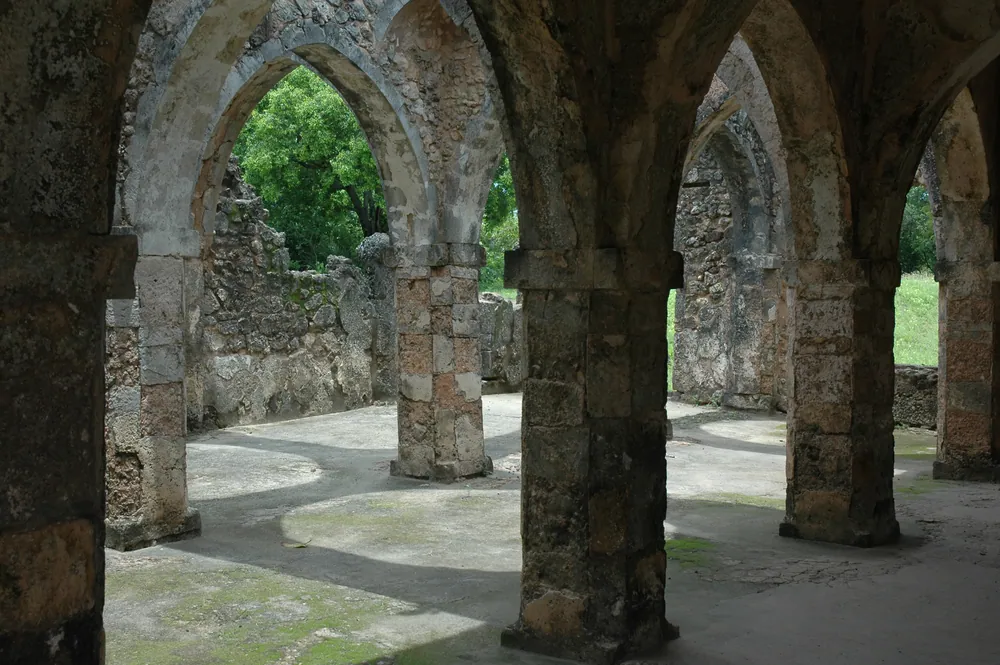
The vaulted arcades of the Great Mosque at Kilwa Kisiwani, built in coral stone and standing since the fourteenth century.
- Region
- Lindi Region, southern coast
- Founded
- Early 9th century CE
- Status
- UNESCO World Heritage Site, inscribed 1981
- Peak
- 13th–15th centuries
- Access
- Kilwa Masoko, then a short dhow crossing
The gold road ran through here
Three places share the name. Kilwa Kisiwani is the island, and the ruins — a UNESCO World Heritage Site since 1981. Kilwa Kivinje is the nineteenth-century mainland town that replaced it. Kilwa Masoko is the modern district centre where you sleep and where the boats leave from.
The island settlement was founded at the start of the 9th century, on carbon dating, and by the thirteenth had done something remarkable: it seized control of the gold trade out of Sofala, in what is now Mozambique. Gold from the Zimbabwean plateau moved down to the coast and then north through Kilwa's hands to Arabia, Persia, India and China. The town minted its own coins from around 1100 to 1600, and Kilwa coins have been excavated as far afield as Great Zimbabwe — and, more startlingly, in northern Australia.
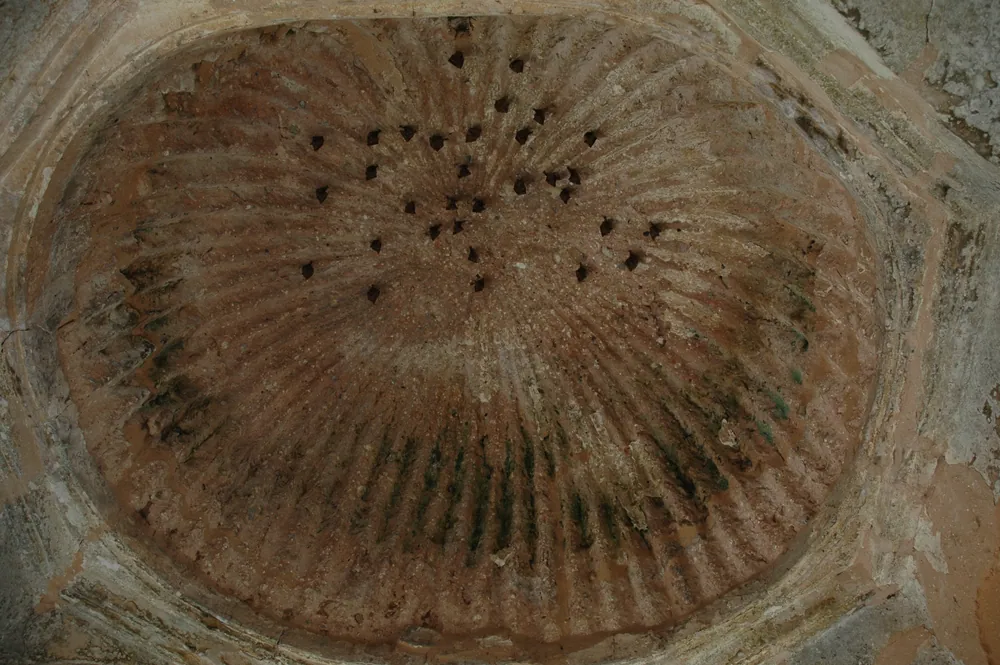
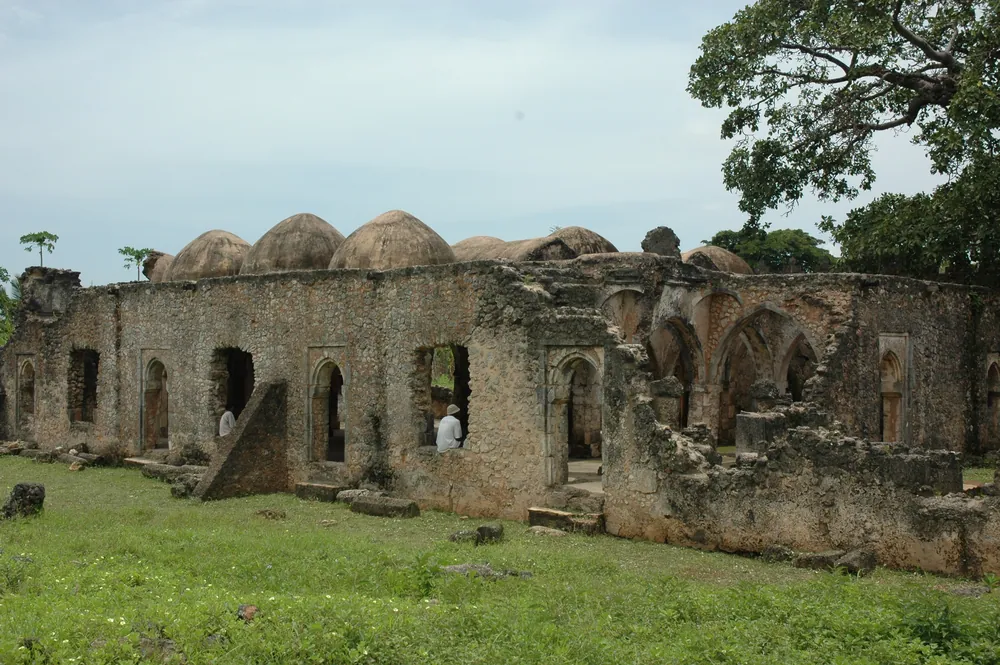
At its height the population passed ten thousand and the sultans built in coral stone on a scale nothing else on this coast matched. The Great Mosque — earliest section 1131–1170, greatly enlarged in the early fourteenth century under Sultan al-Hasan ibn Sulaiman — is the oldest standing mosque on the East African coast, its roof carried on rows of domes and vaults. The same sultan built Husuni Kubwa, a palace and trading emporium covering some two acres on the cliff above the harbour, with an octagonal bathing pool. It was abandoned before it was finished.
Ibn Battuta stopped here in 1331 and called Kilwa one of the most beautiful cities in the world, praising the sultan's generosity and piety. Less than two centuries later it was gone: a Portuguese fleet under Francisco de Almeida sacked and burned the city in July 1505, and although Portuguese occupation lasted only to 1512, the trade never returned. What stands today is what the forest and the sea left.
After the gold, the fishing
What the district lives on
- Fishing
- Artisanal, and the main livelihood
- Prawns
- The Rufiji delta grounds to the north
- Cashew
- The southern coast's cash crop
- Coconut & sesame
- Smallholdings behind the shore
- Heritage tourism
- Small, growing, and the best prospect
The modern economy has nothing to do with gold. Kilwa district lives on fishing, on the prawn grounds off the Rufiji delta to the north, and on cashew — the southern coast's cash crop, grown across Lindi and Mtwara and mostly exported raw for processing elsewhere, which is where the value is lost.
Tourism is small. Kilwa Masoko has a handful of lodges and the beaches are excellent and almost empty, but the south has never had the road or air connections that built Zanzibar. That is changing slowly as the Dar–Mtwara road improves.
The ruins themselves are the district's greatest asset and its most fragile one. Coral rag in a salt climate does not survive neglect, and the site was placed on UNESCO's List of World Heritage in Danger in 2004. Stabilisation work with UNESCO and Japanese funding was sufficient for it to be removed from the danger list in 2014 — a genuine conservation success, and one that needs continued money to hold.
A quiet coast with a long memory
Kilwa is Swahili coast in the older sense: overwhelmingly Muslim, unhurried, and organised around the tide and the fishing rather than around visitors. There is no resort strip and no tourist economy of the kind Zanzibar has built, and the difference in how you are treated is noticeable.
Visiting the island is deliberately low-key. You arrange a permit at the Antiquities office in Kilwa Masoko, cross by dhow in about twenty minutes, and walk the site with a local guide. There is rarely anyone else there. Standing inside the Great Mosque with nobody in it is an experience Zanzibar cannot offer at any price, and it is the argument for making the journey south.
Kilwa Kivinje, on the mainland twenty-five kilometres north, is the other half of the story and the sadder one: a nineteenth-century Omani and then German town that ran on the slave and ivory trades, now half-abandoned, with carved doors and collapsing balconies and a German boma on the seafront. It is being lost faster than the older ruins on the island.
Informational — none of this is ticketed by us
World Heritage
The Great Mosque, Kilwa Kisiwani
The oldest standing mosque on the East African coast. Twelfth-century core, fourteenth-century expansion, domed and vaulted throughout.
Palace ruin
Husuni Kubwa
The fourteenth-century sultan's palace and trading house on the cliff, with its octagonal bathing pool. Never finished.
Monument
Gereza — the fort
Portuguese foundations of 1505, rebuilt by the Omanis. It stands directly above the landing beach.
World Heritage
Songo Mnara
The second inscribed site, on an island further south — a fourteenth-century town with mosques and palaces, and fewer visitors still.
Historic town
Kilwa Kivinje
The nineteenth-century mainland town: carved doors, a German boma, and a caravan-trade history it has not been able to shed.
Coast
The beaches at Kilwa Masoko
Long, white and essentially empty. The reason people who come here stay longer than they planned.
Before you go
- Getting there
- About 320 km south of Dar es Salaam — six to eight hours by road depending on the surface. Light aircraft also serve Kilwa Masoko.
- Visiting the island
- A permit from the Antiquities office in Kilwa Masoko, then roughly twenty minutes by dhow. Go with a local guide; the site is large and unlabelled.
- When to come
- June to October is dry and the crossing is easiest. Avoid the long rains, March to May.
- Staying
- A small number of lodges at Kilwa Masoko. Book ahead — there is not much of it.
- Respect
- A conservative Muslim district. Cover shoulders and knees away from the beach, and ask before photographing people.
- Money
- Cash only in practice. Draw shillings in Dar es Salaam before you travel.
Last reviewed 2026-09-14
Editorial — fact-check complete
Checked against
- Ruins of Kilwa Kisiwani and Ruins of Songo Mnara — World Heritage ListUNESCO
- Removal from the List of World Heritage in Danger (2014)UNESCO World Heritage Committee
- Kilwa Kisiwani — foundation, coinage, Ibn Battuta, Portuguese sackWikipedia
- Antiquities sites and permitsMinistry of Natural Resources and Tourism — Antiquities Division