Singida
A town of granite boulders and salt lakes in the dry heart of the country — the source of Tanganyika's first gold, and today the leading sunflower region in Tanzania.
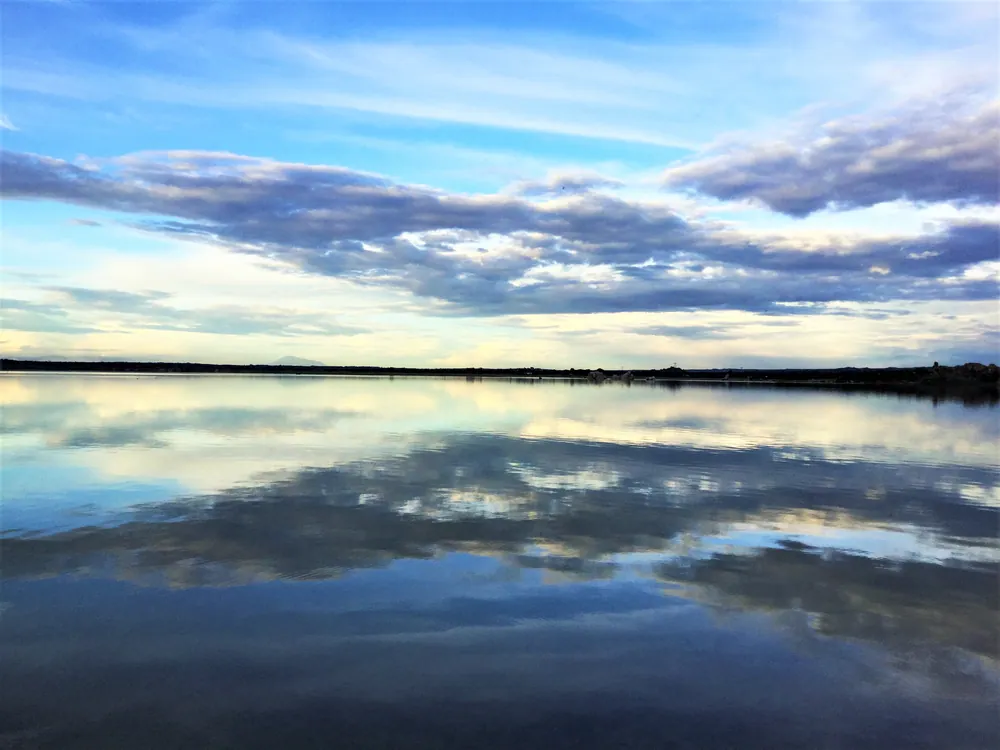
Lake Singidani, on the edge of town. It is a shallow saline lake that draws pelicans and, when the water is right, flamingos.
- Region
- Singida Region, central plateau
- Population
- 232,459, Singida Municipal (2022 census)
- Region size
- 49,340 km² — 2.01 million people
- Known for
- Sunflower, onions, granite kopjes
- Road
- On the paved trunk road west to Rwanda
Rock shelters, and the colony's first gold mine
The landscape around Singida is made of granite — whole hills of rounded boulders and inselbergs rising out of the dry plain. Those rocks have sheltered people for a very long time. Archaeological survey at Siuyu, in Singida Region, has recorded Later Stone Age rock shelters and rock paintings of animals, people and geometric figures, evidence of early human life contemporary with the far better-known rock-art landscape of Kondoa, to the east.
The modern history is shorter and stranger. Gold was found at Sekenke, in the north of the region, in 1907, and in 1909 it became the first gold mine in Tanganyika. It was the largest single producer of gold in the territory before the Second World War, and during the First World War, with exports cut off by blockade, Sekenke gold was carried to Tabora and struck into the famous 1916 fifteen-rupee coin to pay German troops. The mine closed in 1959.
Under British rule a branch railway was built north from Manyoni on the Central Line to Singida and Kinyangiri in 1931, and closed again in 1948. Singida stayed a regional centre on the road rather than the rail, and it is the paved trunk road — the route from Dodoma west towards Rwanda — that connects it today.
Sunflowers on a dry plateau
What the region produces
- Sunflower
- Tanzania's leading producing region
- Onions
- The second cash crop
- Grains
- Maize, sorghum and millet
- Livestock
- Around 1.4 million cattle
- Minerals
- Gold and gypsum
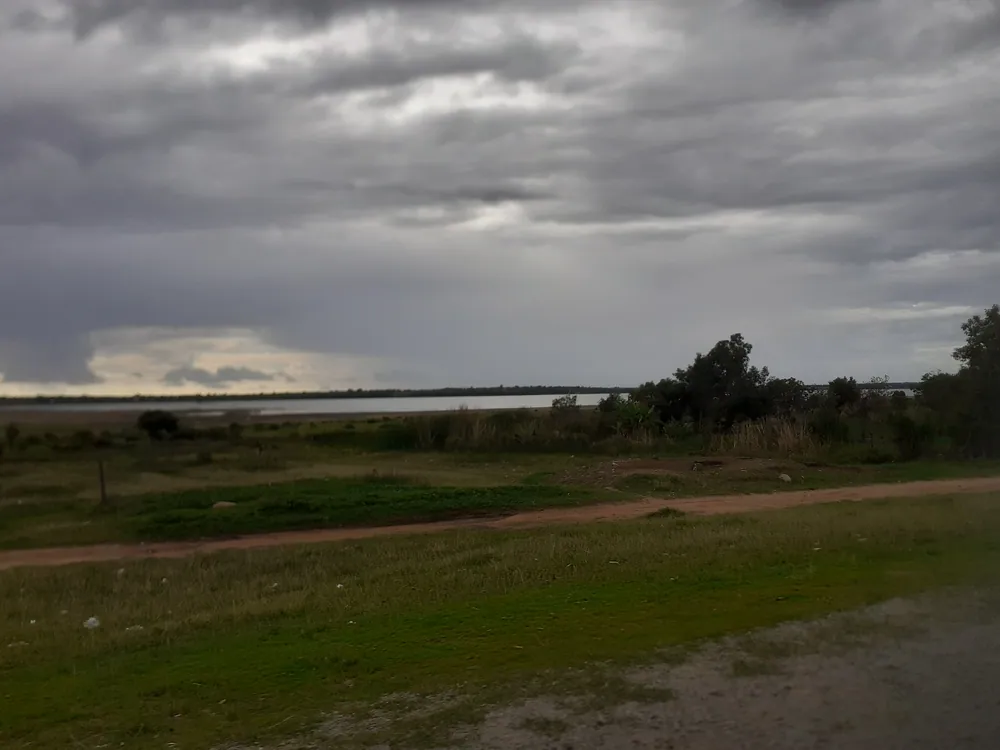
Singida is semi-arid country, and its farmers grow what tolerates little rain. The crop that has changed the region is sunflower: Singida is Tanzania's leading sunflower producer, and small oil presses in and around the town turn the seed into the cooking oil sold across the country. Tanzania as a whole is one of the largest sunflower producers in Africa, and this plateau is at the centre of it.
Onions are the other cash crop, and the region feeds itself on maize, sorghum and millet. Livestock is the second great resource — there are well over a million cattle in the region — and much of rural life is a mix of herding and dryland farming.
Gold is mined in the region again today, along with gypsum — more than a century after Sekenke opened.
The Nyaturu, and the unexpected lakes
The region's largest people are the Nyaturu, or Turu, who call themselves Arimi — a name that means farmers. Their neighbours include the Iramba, the Isanzu, and the pastoral Datooga, whose herds move across the drier plains. Traditionally the Nyaturu were governed by councils of elders rather than chiefs, and the region remains overwhelmingly rural.
What surprises visitors is water. Right beside the town lie two shallow saline lakes, Singidani and Kindai, which fill and shrink with the seasons. Singidani is recognised as an Important Bird Area: pelicans are common, and when the water level suits them, thousands of lesser flamingos arrive. Some dry seasons it disappears almost completely.
South-east of the town, around Manyoni and Itigi, grows the Itigi thicket — a dense, almost impenetrable scrub of multi-stemmed shrubs found in very few places on earth, with a high share of plant species found nowhere else. It is under pressure from clearing for farms, and ecologists regard it as one of the country's most sensitive vegetation types.
Towns, parks and places across Singida Region
Town
Manyoni
A junction town on the Central Line south-east of Singida, in the country of the Itigi thicket.
Heritage site
Sekenke
Tanganyika's first gold mine, worked from 1909 to 1959, in the north of the region.
Protected areas
Rungwa, Muhesi and Kizigo game reserves
Three game reserves covering some 15,800 km² of the region's miombo and bush.
Lake
Lake Eyasi
The shallow, seasonal lake of the rift reaches the region's northern edge.
Informational — none of this is ticketed by us
Saline lake
Lake Singidani
Beside the town. Pelicans, herons and — when the water is right — lesser flamingos. An Important Bird Area.
Saline lake
Lake Kindai
The town's second salt lake, close to Singidani, with flamingos, spoonbills and herons along the shore.
Landscape
The granite kopjes
Boulder hills and inselbergs all around the town — the best reason to arrive in daylight.
Archaeology
Siuyu rock shelters
Later Stone Age shelters and rock paintings at Siuyu. Not developed for visitors — go only with a local guide and permission.
Rare habitat
Itigi thicket
A dense, specialised scrub around Manyoni and Itigi, with plants found almost nowhere else.
Working farms
Sunflower country
Fields of sunflowers across the plateau in season, and the small presses that make the oil.
Before you go
- Getting there
- By road: Singida is on the paved trunk road west from Dodoma, and on the road north to Babati. Singida has only an airstrip, so most visitors come by road.
- Getting around
- The lakes are at the edge of town. For anything further, hire a vehicle with a driver.
- When to come
- June to October is dry and easiest for travel. The lakes are fullest after the rains, and can shrink almost to nothing late in a dry year.
- Climate
- Semi-arid and warm by day. Bring sun protection and plenty of water on the road.
- Heritage sites
- Rock-art sites are fragile and some have been vandalised. Never touch or wet paintings, and go with a guide.
- Money
- Shillings. ATMs in town; carry cash for the road.
Last reviewed 2026-09-15
Editorial — fact-check complete
Checked against
- 2022 Population and Housing Census — administrative unitsNational Bureau of Statistics, Tanzania
- Singida Region — area, peoples, sunflower, livestock, Itigi thicketWikipedia
- Sekenke Gold Mine — discovery, production, closureWikipedia
- Archaeology and Heritage Resource Management in Siuyu, Singida RegionArchaeological Discovery (SCIRP)
- Why Tanzania needs to do more to save Itigi thicketThe Citizen
- The Sunflower Sector in TanzaniaWorld Bank