Tabora
The old caravan crossroads of the interior, where Livingstone waited out the last months before his final journey, a German siege mint struck gold coins in wartime, and the young Julius Nyerere went to school and later taught.
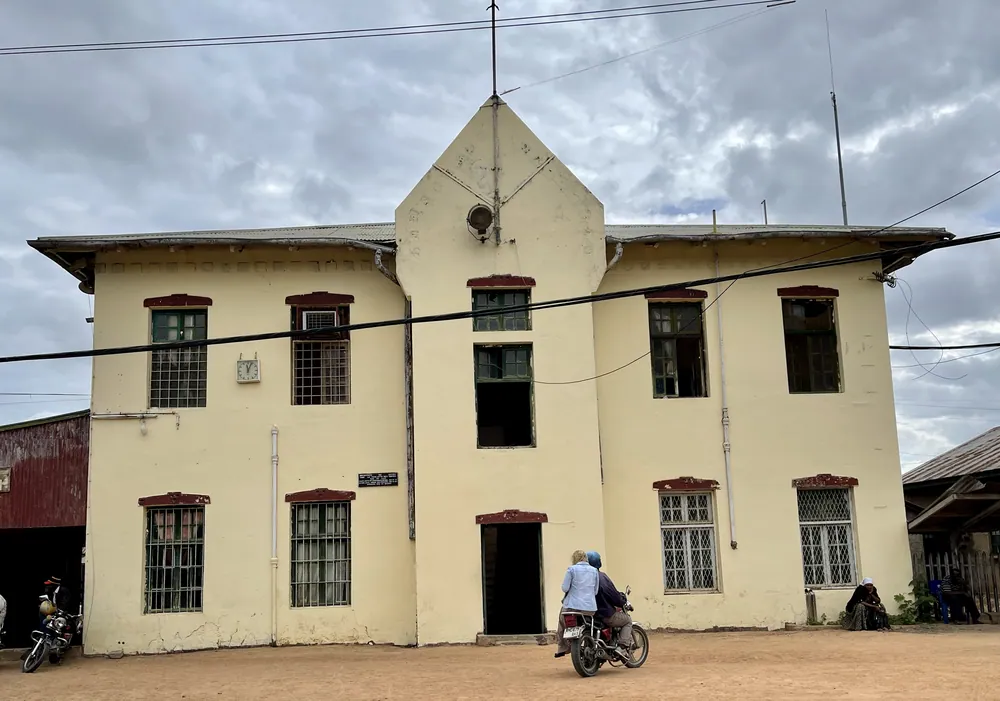
Tabora railway station. The Central Line from Dar es Salaam reached the town in 1912 and still runs through it today.
- Region
- Tabora Region, western-central plateau
- Population
- 308,741, Tabora Municipal (2022 census)
- Region size
- 76,151 km² — 3.39 million people
- Founded
- As the trading settlement of Kazeh, 1850s
- Railway
- Central Line, since 1912
Where the caravan roads met
Before there was a railway there was a road — or rather a trail, walked by caravans of porters carrying ivory, and enslaved people, from the great lakes to the coast. Coastal traders were settling in Unyanyembe, the Nyamwezi country here, by the 1830s, and in the 1850s Swahili and Omani merchants founded Kazeh, near the present town. It became the most important trading station of the interior: the point where the route from Bagamoyo divided for Ujiji on Lake Tanganyika and for the kingdoms around Lake Victoria.
It was not an easy place to hold. Mirambo, the Nyamwezi ruler who built the largest state in nineteenth-century East Africa from his base at Urambo to the west, fought the Tabora traders for control of the caravan trade, and in August 1871 his forces burned a quarter of the town. He never took it.
The same year brought Henry Morton Stanley, who waited here before marching west to find Livingstone at Ujiji. In February 1872 the two men came back together to the trader's house, or tembe, at Kwihara outside the town. Stanley left for the coast in March; Livingstone stayed on for five months waiting for the porters and supplies Stanley had promised to send, and left in August on the journey from which he did not return. The house is now a museum.
The Germans took the region in the 1890s, and the Central Line railway arrived in 1912. In the First World War, with the coast under British naval blockade, a temporary German mint here struck the 1916 fifteen-rupee gold coin — the only emergency coinage ever made in gold — from metal mined at Sekenke, in present-day Singida Region. Belgian colonial forces took the town on 19 September 1916 after ten days of fighting.
Tobacco, honey and the miombo
What the region lives on
- Tobacco
- The region's main cash crop, grown for export
- Honey & beeswax
- Roughly half the country's honey
- Food crops
- Maize, rice, cassava, groundnuts
- Livestock
- Cattle and goats
- Rail
- A junction on the Central Line
The land around Tabora is flat plateau covered, where it has not been cleared, by miombo — the dry, open woodland that stretches across much of southern and central Africa. It is poor country for most crops and good country for two: tobacco and honey.
Tobacco is the region's main cash crop, grown largely by smallholders farming a few acres each and sold through cooperatives for export. Almost all of it is sold abroad, and it is the livelihood of a very large number of rural households.
Honey is the older trade. Beekeepers in the miombo hang traditional bark and log hives high in the trees, and Tabora produces roughly half of Tanzania's honey — Sikonge in particular has become a centre for processing.
The Nyamwezi, and a school that shaped a country
Tabora is the homeland of the Nyamwezi, one of Tanzania's larger peoples. In the nineteenth century Nyamwezi men were the professional porters and traders of the caravan routes, walking to the coast and back as a matter of career, and the routes they worked carried Swahili deep into the interior.
The town's later reputation was built on education. Tabora Boys' Secondary School, founded in 1922 as a government school, counts Julius Nyerere among its pupils; he entered in 1937. After university he returned to teach at St Mary's School in Tabora from 1946 to 1949.
Tabora was also where the independence movement made one of its hardest decisions. In 1958 Nyerere persuaded a divided conference of TANU here to take part in elections that the British had designed to reserve seats by race — a compromise that led, within three years, to independence. Between the Kwihara tembe, the German-era buildings and the schools, few towns in the interior hold so much of the country's story.
Towns, parks and places across Tabora Region
Town
Urambo
The heart of Mirambo's nineteenth-century Nyamwezi kingdom, on the road and railway west towards Kigoma.
National park
Ugalla River National Park
Miombo and river grassland in the south-west of the region, gazetted in 2019.
Informational — none of this is ticketed by us
Museum
Livingstone's Tembe, Kwihara
The trader's house outside town where Stanley and Livingstone stayed in 1872, and Livingstone waited five months before his last journey.
Architecture
Tabora railway station
A station of the Central Line, which reached Tabora in 1912 and still carries passenger trains to Kigoma and Mwanza.
Townscape
The old town
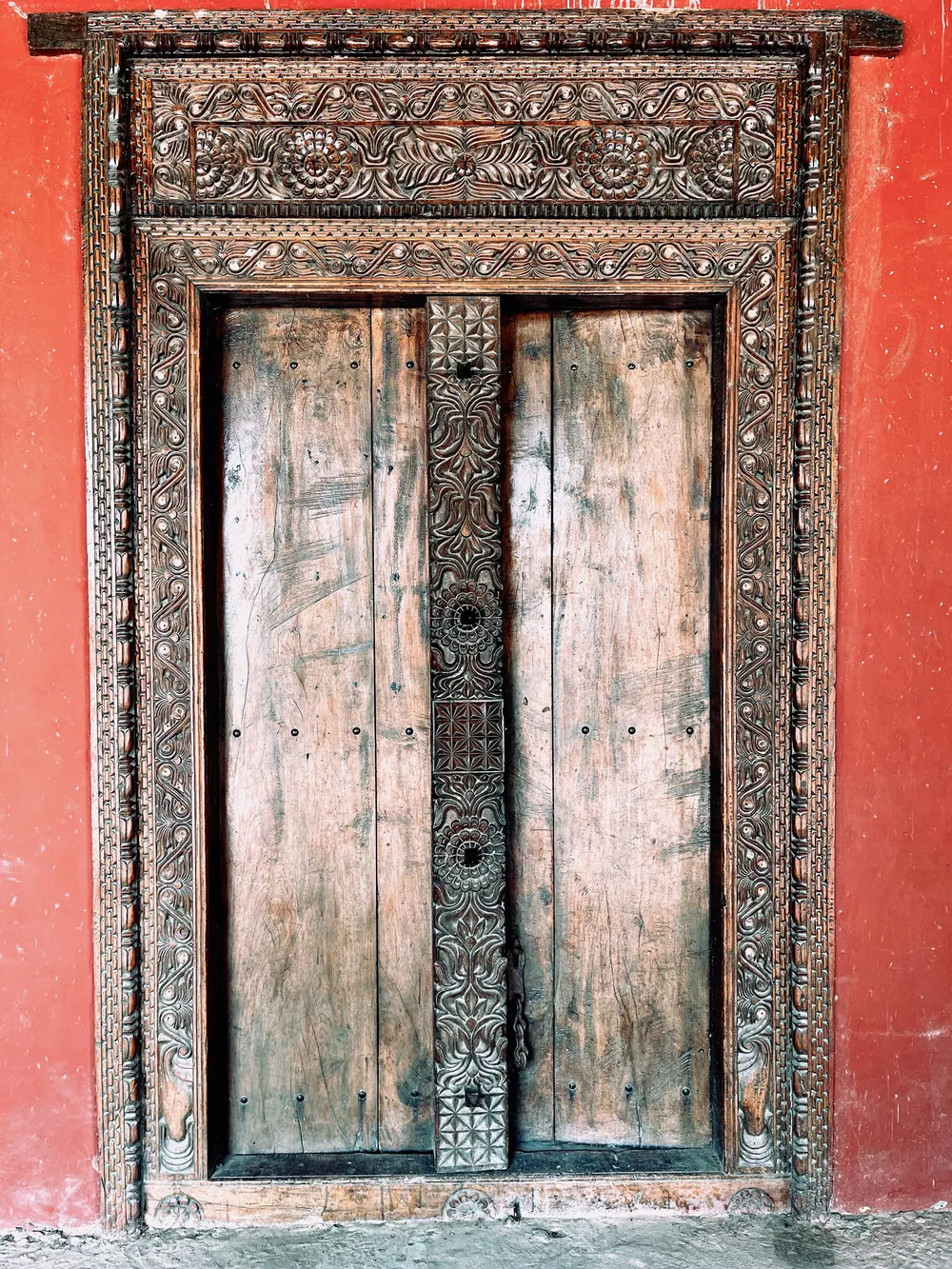
Carved Swahili doors and German-era buildings — traces of both the caravan trade and colonial rule.
National park
Ugalla River National Park
Miombo woodland and river grassland in the southwest of the region, gazetted in 2019. Remote and little visited.
Historic school
Tabora Boys' Secondary School
Founded in 1922; Julius Nyerere's school. Seen from outside — it is a working school.
Rural economy
Honey country, Sikonge
Traditional hives in the miombo south of Tabora, and the processors who have grown up around them.
Before you go
- Getting there
- Flights from Dar es Salaam to Tabora Airport. Passenger trains on the Central Line also stop here; the journey is long but historic.
- Getting around
- Town is compact. Kwihara is a short drive out of town — arrange a driver, and confirm opening before you go.
- When to come
- The dry season, roughly May to October. The rains turn rural roads to mud.
- Climate
- Hot and dry on the plateau. Nights are cooler in June and July.
- Respect
- Ask before photographing people and government buildings, including the station.
- Money
- Shillings. ATMs in town; carry cash for anywhere outside it.
Last reviewed 2026-09-15
Editorial — fact-check complete
Checked against
- 2022 Population and Housing Census — administrative unitsNational Bureau of Statistics, Tanzania
- Ugalla River National ParkTanzania National Parks (TANAPA)
- Tabora — Kazeh, Mirambo's attack of 1871, the capture of 1916Wikipedia
- The Unyanyembe Journal: an overviewLivingstone Online
- Emergency currency, 15 Rupien, 'Tabora sovereign'Imperial War Museums
- Nyerere, Julius Kambarage — Tabora schooling, St Mary's, the 1958 conferenceDictionary of African Christian Biography
- Tobacco cooperatives and production in the regionTabora Regional Administrative Secretariat
- Tabora Region — area, honey and tobaccoWikipedia
- Urambo District — Mirambo's kingdomWikipedia