Early peoples
Why Tanzania speaks more than 120 languages from four unrelated families: the hunter-gatherers who were here first, the herders who brought cattle about 3,000 years ago, the Bantu-speaking farmers who brought iron, and the Nilotic herders who came later.
Edited by Kabeer Dalvi · Updated 9 October 2026
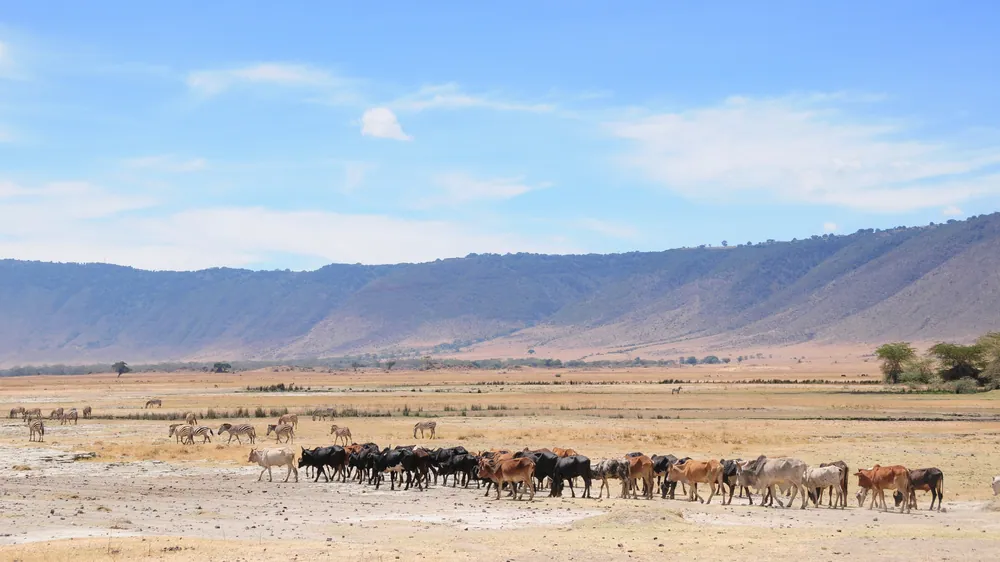
Maasai cattle crossing the floor of the Ngorongoro Crater. Herding came to northern Tanzania about 3,000 years ago.
- Languages spoken in Tanzania
- 126 (Ethnologue)
- Language families
- Bantu, Nilotic, Cushitic, and the click languages Hadza and Sandawe
- First herders
- About 3,000 years ago
- Iron and Bantu languages reach Lake Victoria
- By about 500 BC
- Engaruka farming town
- About 1400s to 1700s
Four families of languages
Ethnologue counts 126 languages spoken in Tanzania. Almost all of them belong to one of four groups that are not related to each other at all, as different as English is from Chinese. Each group is the trace of a different people arriving, or of a people who were here before everyone else.
Most Tanzanians speak a Bantu language: Sukuma, the largest, Haya, Chagga, Nyamwezi, and Kiswahili itself. In the north live speakers of Nilotic languages, the Maasai and the Datooga; and of Cushitic languages, the Iraqw and their neighbours, whose closest relatives are spoken in Ethiopia and the Horn of Africa. And around Lake Eyasi and in the hills of Kondoa live two small peoples, the Hadza and the Sandawe, who speak languages with click consonants.
| Group | Examples in Tanzania | Where they arrived from |
|---|---|---|
| Click languages | Hadza, Sandawe | Here first; ancestors of hunter-gatherers |
| Cushitic | Iraqw, Gorowa, Burunge, Alagwa | Linked to the first herders, from the north |
| Bantu | Sukuma, Haya, Chagga, Nyamwezi, Kiswahili and most others | From the west, with farming and iron |
| Nilotic | Maasai, Datooga | From the north, via South Sudan |
The hunters and gatherers
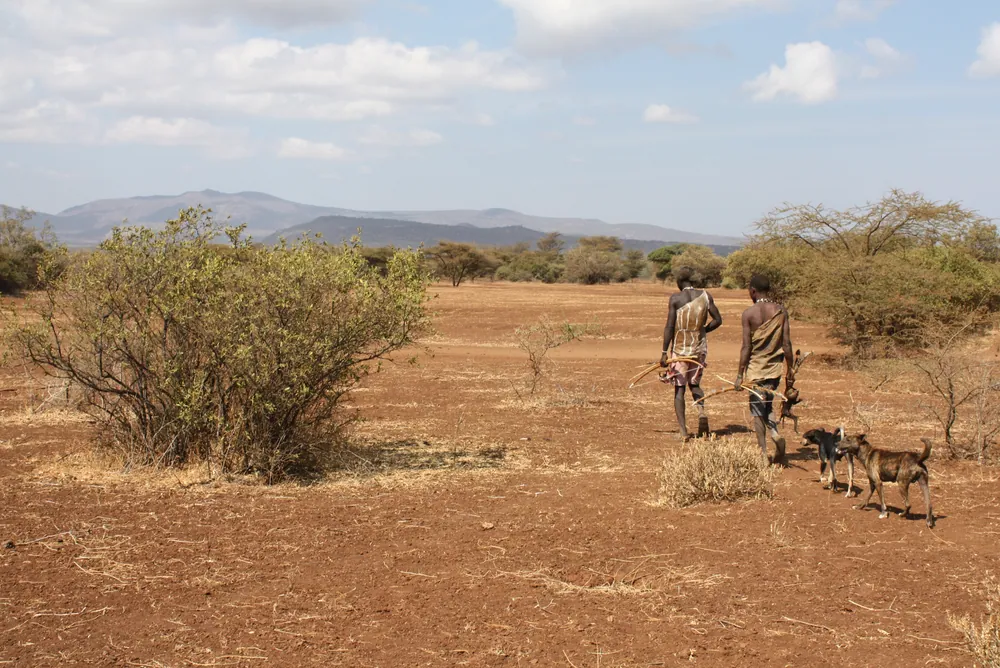
For most of human history everyone in Tanzania lived by hunting and gathering. Two peoples carry that past most directly. The Hadza, about 1,200 to 1,300 people around Lake Eyasi, speak a language that is related to no other. Only about a third of them still live entirely by hunting, gathering and collecting honey; the rest mix it with other work. Their life today, and how to visit responsibly, is on the Karatu guide.
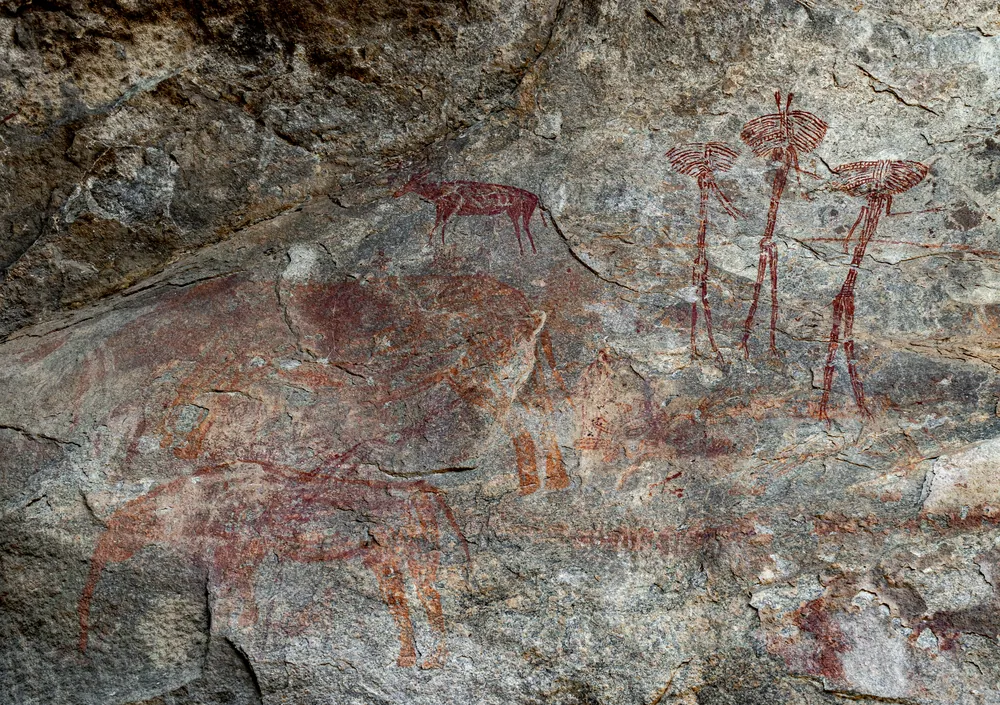
The Sandawe live about 150 km away, around Kondoa. Their language also has clicks, which once led scholars to group both with the Khoisan languages of southern Africa. Genetics and linguistics now say otherwise: the two peoples separated more than 15,000 years ago, and Hadza is a language isolate. The fine-line rock paintings of Kondoa are attributed to the Sandawe's hunter-gatherer ancestors.
The first herders
Cattle, sheep and goats came from the north. Archaeologists call the period that followed the Pastoral Neolithic: it began in Kenya and northern Tanzania about 5,000 years ago, and from about 3,000 years ago the bones of domestic animals become common at sites across the region. Herders brought pottery too, and lived for centuries alongside the hunter-gatherers already there.
The most southerly of their settlements yet found, and the largest, is Luxmanda, in Babati District of Tanzania's Manyara region. Discovered in 2012 and first occupied about 3,000 years ago, it showed that herding had spread much further south, and centuries earlier, than archaeologists had expected.
Ancient DNA has shown where these herders came from. A 2019 study found that they were a mix: about 40% ancestry related to people of the Levant, 40% related to Nilotic peoples, and 20% from local East African foragers. The living people closest to them genetically are Cushitic speakers, such as the Iraqw of the Mbulu and Karatu highlands.
Farmers and iron
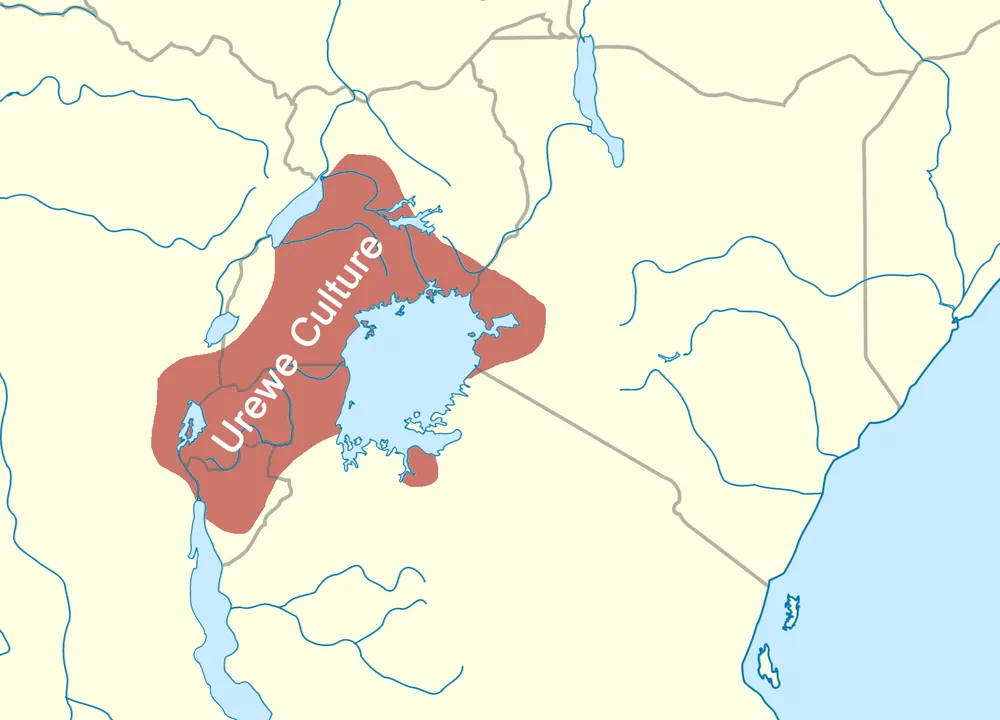
The biggest change came from the west. Over several thousand years, peoples speaking Bantu languages spread from the area of today's Nigeria-Cameroon border across much of central, eastern and southern Africa, bringing farming with them. They reached the lands west of Lake Victoria by about 500 BC.
Archaeologists know them there by their pottery, called Urewe ware, with its distinctive dimples and grooved lines, made from about the fifth century BC to the sixth century AD. The earliest dated Urewe objects come from Tanzania's Kagera region, on the western shore of the lake.
Urewe people were iron workers, and Kagera's furnaces have become famous. In 1978 the archaeologist Peter Schmidt and the engineer Donald Avery reported that the ancestors of the Haya, 1,500 to 2,000 years ago, ran furnaces that pre-heated the air blown into them and reached temperatures of at least 1,350 to 1,400 °C, higher than European furnaces of the time. They also argued the furnaces made carbon steel; that claim has since been questioned by other researchers. Old furnace remains and slag are found elsewhere too, for instance on the Fipa plateau of Rukwa.
Bantu-speaking farmers did not move into an empty land. They met the hunter-gatherers and herders who were already here, traded with them, married into their families and absorbed many of them, which is why the Bantu-speaking peoples of Tanzania differ so much from one another. Kiswahili, the coast's language, is one of them.
Engaruka: a lost farming town
Below the Rift Valley escarpment, between Mto wa Mbu and Lake Natron, lie the ruins of Engaruka, a farming settlement built in the fifteenth century and abandoned between about 1700 and 1750. Its people built stone-lined canals to carry water down from the highlands, and terraces, dams and furrows over about 20 square kilometres.
Who built it is still debated. Tradition credits the ancestors of the Iraqw, but this is not proven. Louis and Mary Leakey, who dug there in 1935, guessed at a population of 30,000; most archaeologists now think that figure far too high. Engaruka is one of Tanzania's National Historic Sites.
The Nilotic herders
The last of the four groups to arrive were Nilotic speakers, cattle herders whose languages are related to those of South Sudan. Two peoples are best known in Tanzania. The Datooga, herders and metalworkers, live around Mount Hanang and Lake Eyasi; Datooga smiths make the arrowheads the Hadza hunt with.
The Maasai speak Maa, a Nilotic language related to Dinka and Kalenjin, and came south by way of South Sudan. Their territory was at its largest in the mid-1800s, when it covered almost the whole of the Rift Valley and the lands beside it, from Mount Marsabit in Kenya to Dodoma in central Tanzania. What happened next, in the century of caravans, kingdoms and colonial conquest, is the subject of the next period.
- How many languages are spoken in Tanzania?
- Ethnologue counts 126. Almost all belong to four unrelated groups: Bantu (most Tanzanians, including Kiswahili and Sukuma), Nilotic (Maasai, Datooga), Cushitic (Iraqw and neighbours) and the click languages Hadza and Sandawe.
- Who were the first people in Tanzania?
- Hunter-gatherers. The Hadza of Lake Eyasi and the Sandawe of Kondoa are the peoples most directly descended from them, and both speak languages with click consonants. Herders arrived from the north about 3,000 years ago, and Bantu-speaking farmers from the west by about 500 BC.
- When did iron working start in Tanzania?
- With the Bantu-speaking farmers who reached the lands west of Lake Victoria by about 500 BC. The earliest dated Urewe pottery, the mark of these early iron-using farmers, comes from Kagera in north-west Tanzania.
- Are the Hadza and Sandawe languages Khoisan?
- They were once grouped with the Khoisan languages of southern Africa because they use clicks. Linguists now treat Hadza as an isolate, related to no other language, and genetic studies show the Hadza and Sandawe separated more than 15,000 years ago.
- What is Engaruka?
- The ruins of a farming settlement in northern Tanzania, built in the fifteenth century and abandoned around 1700 to 1750, with stone-lined irrigation canals and terraces over about 20 square kilometres. It is a National Historic Site.
Last reviewed 9 October 2026
Edited by Kabeer Dalvi
Checked against
- Languages of Tanzania (Ethnologue figures)Wikipedia
- Hadza peopleWikipedia
- Pastoral NeolithicWikipedia
- Pastoral Neolithic settlement at Luxmanda, Tanzania (Grillo et al., 2018)Journal of Field Archaeology, via White Rose Research Online
- Bantu expansionWikipedia
- Urewe cultureWikipedia
- Complex iron smelting and prehistoric culture in Tanzania (Schmidt and Avery, 1978)Science
- Did they or didn't they invent it? Iron in sub-Saharan AfricaHistory in Africa (Cambridge)
- EngarukaWikipedia
- Maasai peopleWikipedia