Human origins
Two sites in northern Tanzania, Olduvai Gorge and Laetoli, hold one of the longest records of human evolution anywhere: footprints of early humans walking upright 3.6 million years ago, the skull that made the Leakeys famous, and the stone tools that gave a whole era its name.
Edited by Kabeer Dalvi · Updated 7 October 2026
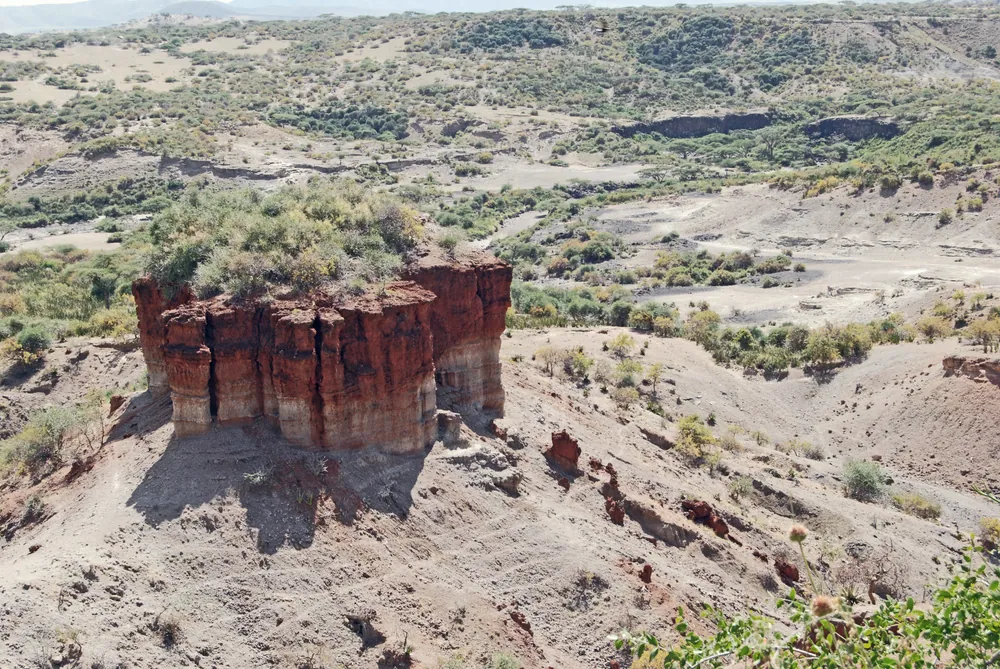
Olduvai Gorge, where two million years of sediment lie exposed in the walls of the ravine.
- Laetoli footprints
- About 3.6 million years old
- Oldest beds at Olduvai
- About 1.9 million years old
- Nutcracker Man found
- 17 July 1959, by Mary Leakey
- Homo habilis named
- 1964, from fossils found at Olduvai
- World Heritage
- Part of the Ngorongoro Conservation Area listing
Why northern Tanzania
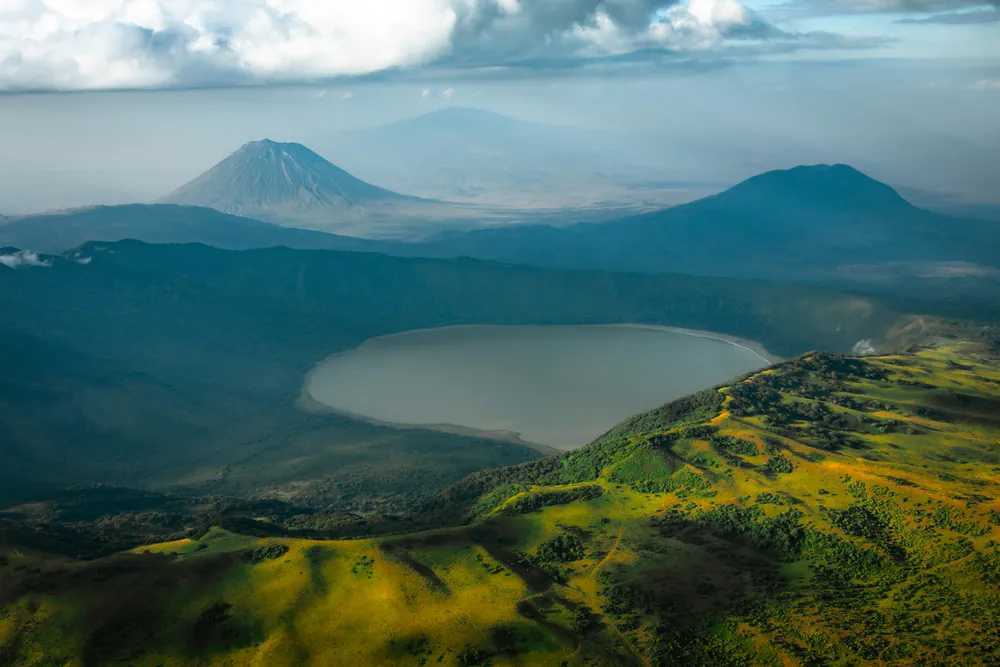
Fossils survive where they are buried quickly and later brought back to the surface. The volcanoes of the Ngorongoro highlands did the first part: for millions of years their ash and the sediment of old lakes settled over the plains, covering bones, tools and even footprints. Rivers and faults did the second, cutting down through those layers so that they now lie exposed like the pages of a book.
Two places stand out. Olduvai Gorge, on the road from the Ngorongoro Crater to the Serengeti, is a steep ravine up to about 90 metres deep whose walls run back almost two million years. Laetoli, to the south, is older still. Both lie inside the Ngorongoro Conservation Area, a World Heritage Site that UNESCO extended in 2010 to recognise this record of human evolution.
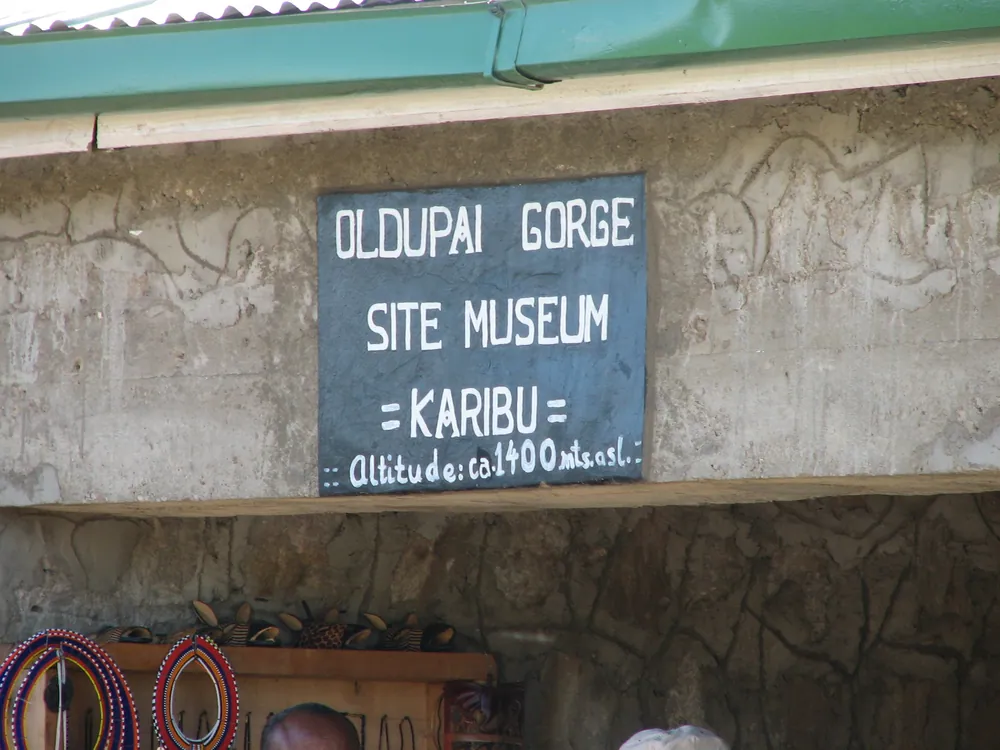
The gorge's proper name is Oldupai, the Maasai word for the wild sisal that grows along it. "Olduvai" is an early European misspelling that stuck; the museum on the rim now uses the correct form.
Laetoli: the footprints
About 3.6 million years ago, a volcano near Laetoli covered the plain with fine ash. While it was still wet, animals walked across it, and so did early humans walking upright on two legs. More ash fell, sealed the prints, and turned them to stone.
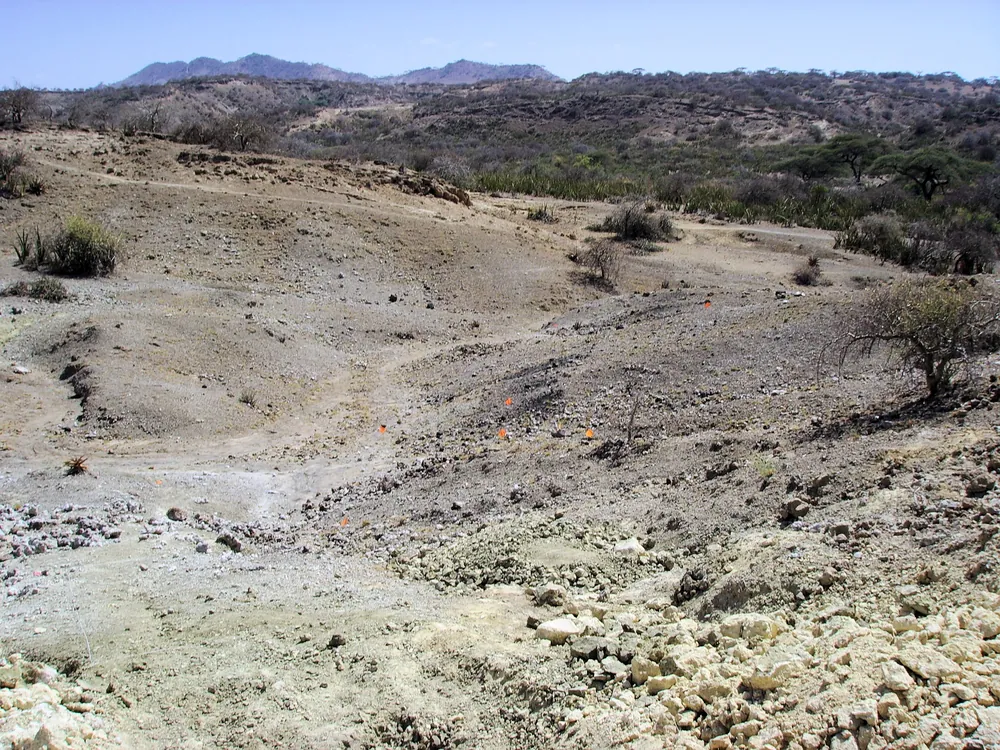
Mary Leakey's team found the first prints at Laetoli in 1976. In 1978 they uncovered the trail that made the site famous, at Site G: about 70 footprints over almost 27 metres, left by three individuals walking upright. The species most often proposed is Australopithecus afarensis, the species of the Ethiopian skeleton known as Lucy. The jawbone that formally defines that species, LH 4, comes from Laetoli itself.
The prints proved that our ancestors walked upright long before they made stone tools or grew large brains. In 2015 more prints of the same age were found at Site S, about 150 metres away. And in 2021 researchers who re-excavated a set of prints first dug at Site A in 1976, long dismissed as possibly a bear's, showed they were made by a different kind of early human with a different foot and walk. Two kinds of hominin, it seems, shared this landscape.
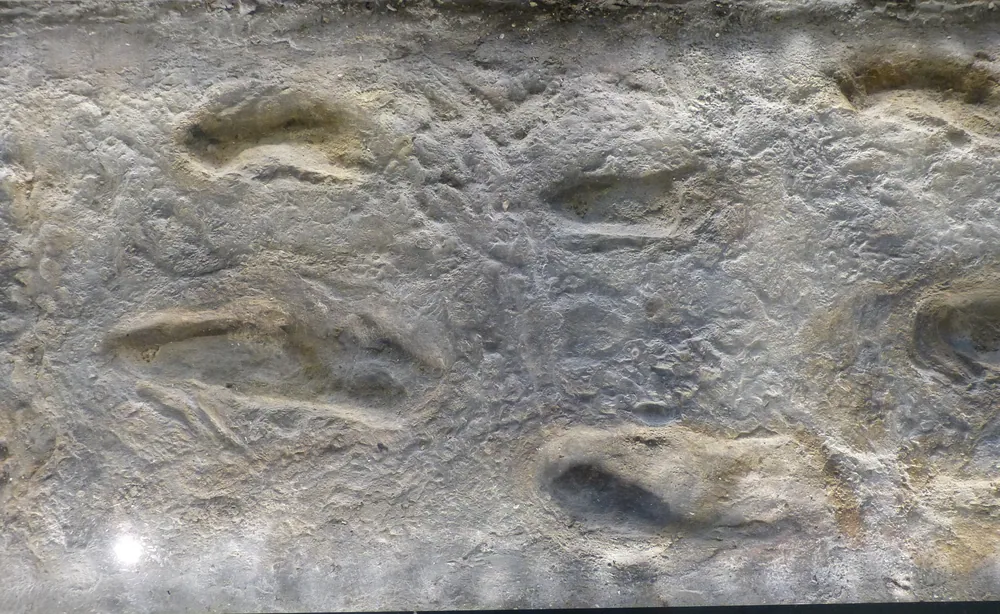
You cannot see the original footprints. They were reburied in 1979 and protected again in the 1990s; visitors to Laetoli see the setting and replicas.
Olduvai: the Leakeys and Nutcracker Man
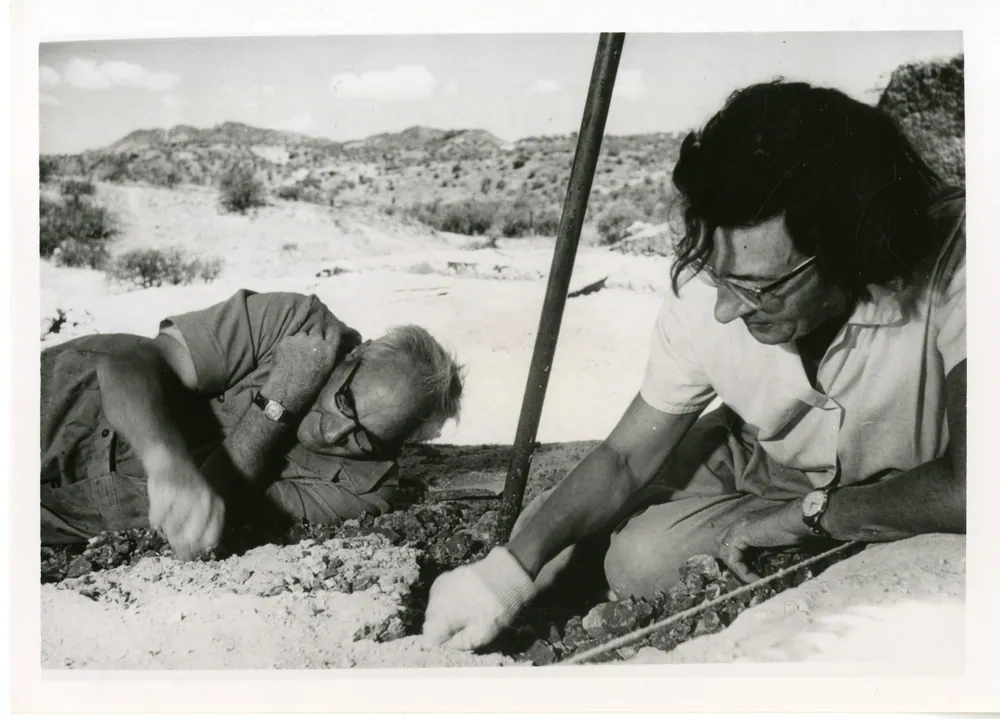
Wilhelm Kattwinkel, a German investigating sleeping sickness, came across fossils in the gorge in 1911, and the geologist Hans Reck dug there from 1913. Louis Leakey first came in 1931 and found stone hand axes; Mary Leakey joined him in 1935. They worked the gorge for decades before it gave up the find that made their name.
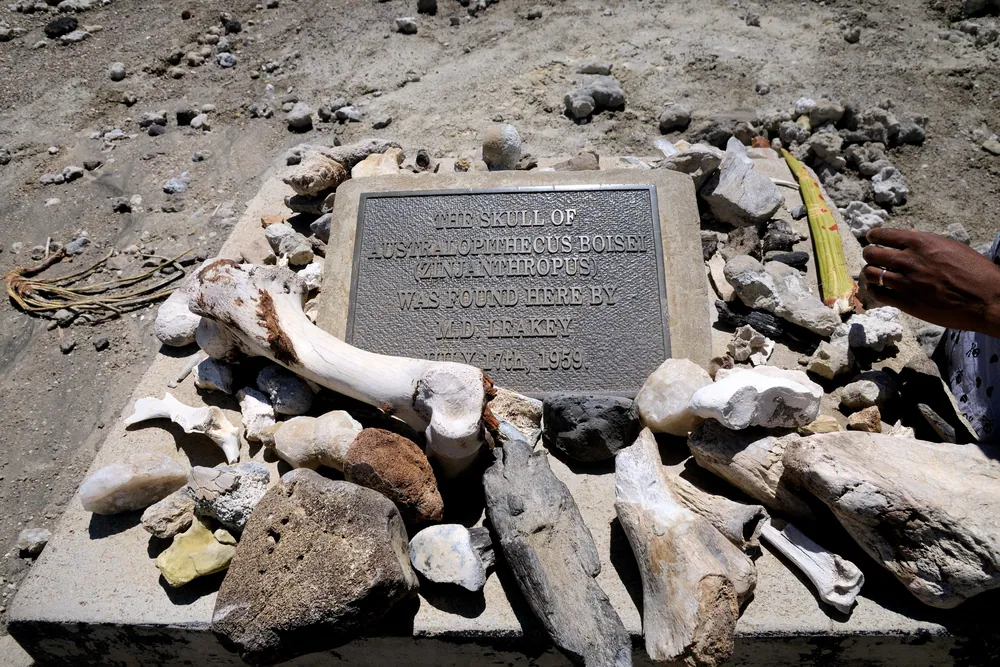
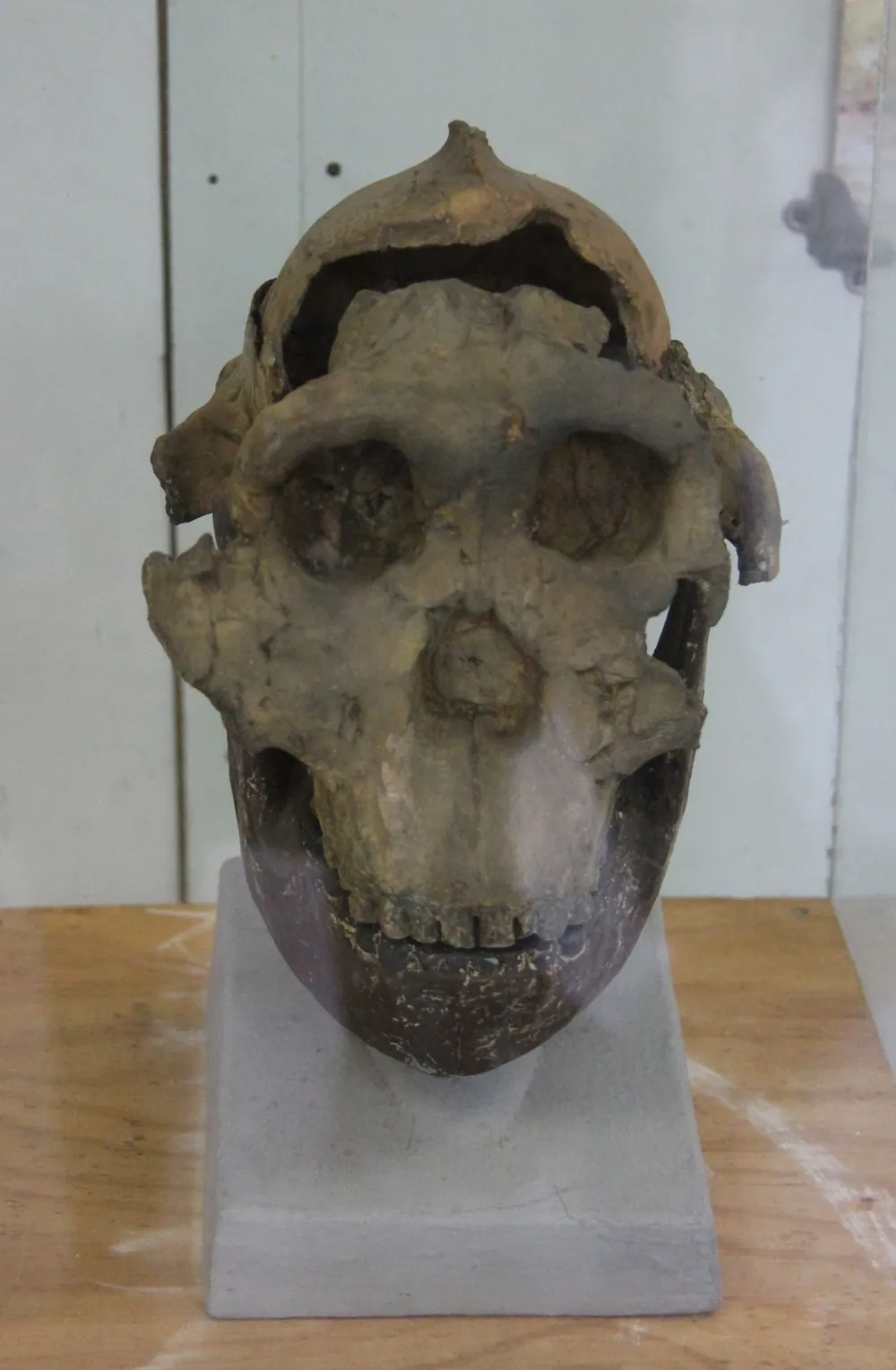
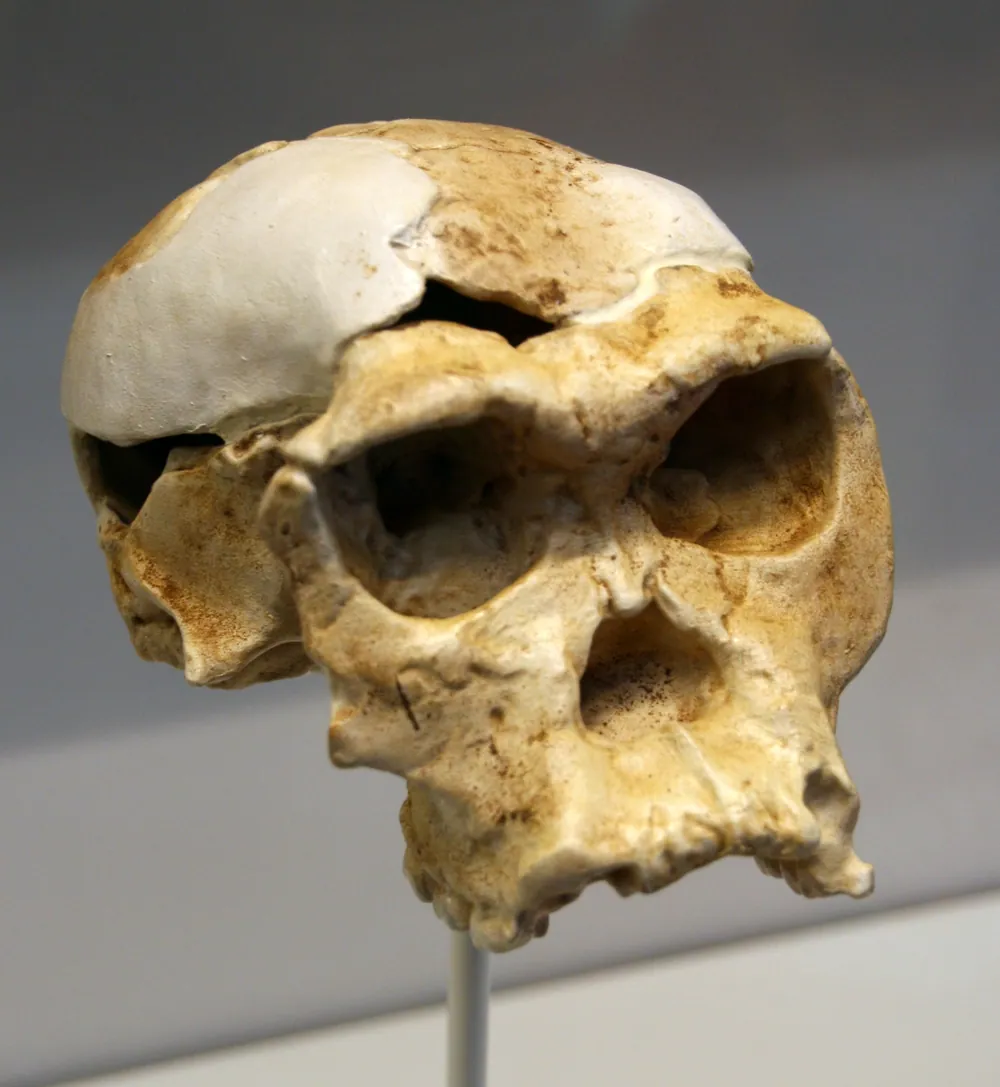
That changed on the morning of 17 July 1959, when Mary Leakey found a skull with huge flat back teeth and a crest along the top. Louis named it Zinjanthropus boisei; the newspapers called it Nutcracker Man; today it is classed as Paranthropus boisei and known to scientists as OH 5. When it was dated with the then-new potassium-argon method, it came out at about 1.75 million years, far older than anyone had expected for a human relative. The find made Olduvai, and the Leakeys, world famous.
Since January 1965 the skull has been on display at the National Museum of Tanzania in Dar es Salaam.
Handy man and upright man
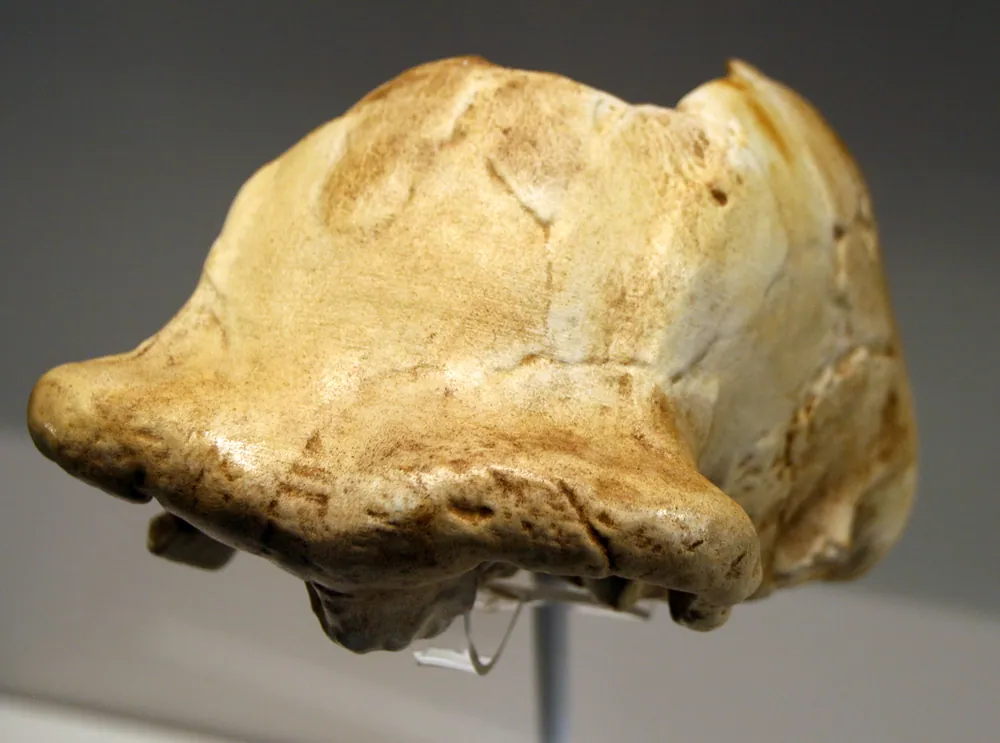
Nutcracker Man was a side branch of the family tree. The finds that followed came closer to our own line. In 1959 Heselon Mukiri, a senior member of the Leakeys' team, found a tooth that was later recognised as belonging to a new species. In 1960 the Leakeys' son Jonathan found part of the skull and hand bones of a young individual, OH 7, at a site close by.
In 1964 Louis Leakey, Phillip Tobias and John Napier named it Homo habilis, "handy man", arguing that this was the maker of Olduvai's stone tools. The name was hotly disputed for years, and is now widely accepted. Also in 1960, Louis Leakey found OH 9, a skull of Homo erectus about 1.4 million years old, one of the first of that species found in Africa.
The lowest layer of the gorge, Bed I, dates from about 1.9 to 1.7 million years ago and holds both Homo habilis and Paranthropus boisei: two quite different kinds of human relative, living in the same place at the same time.
The stone tools that named an era
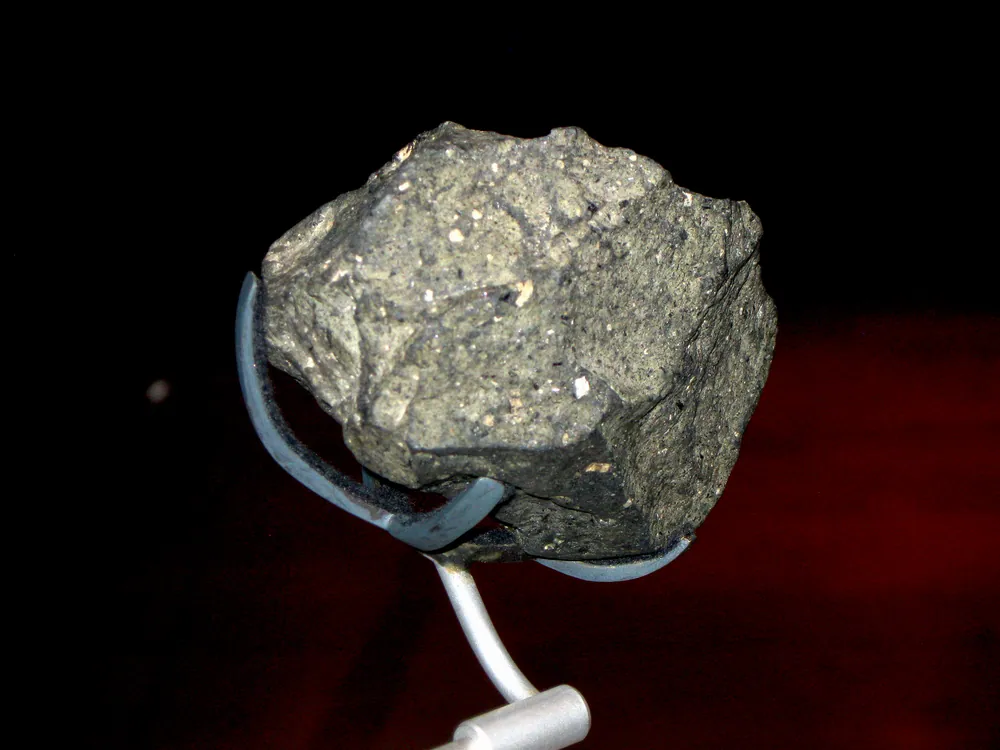
The simplest stone tools in the world, sharp flakes knocked off pebbles and the cores they came from, are called Oldowan, after Olduvai, where Louis Leakey first described them in the 1930s. Older Oldowan tools have since been found elsewhere, the oldest in Kenya at about 2.9 million years, but the name and the long, layered sequence come from this gorge.
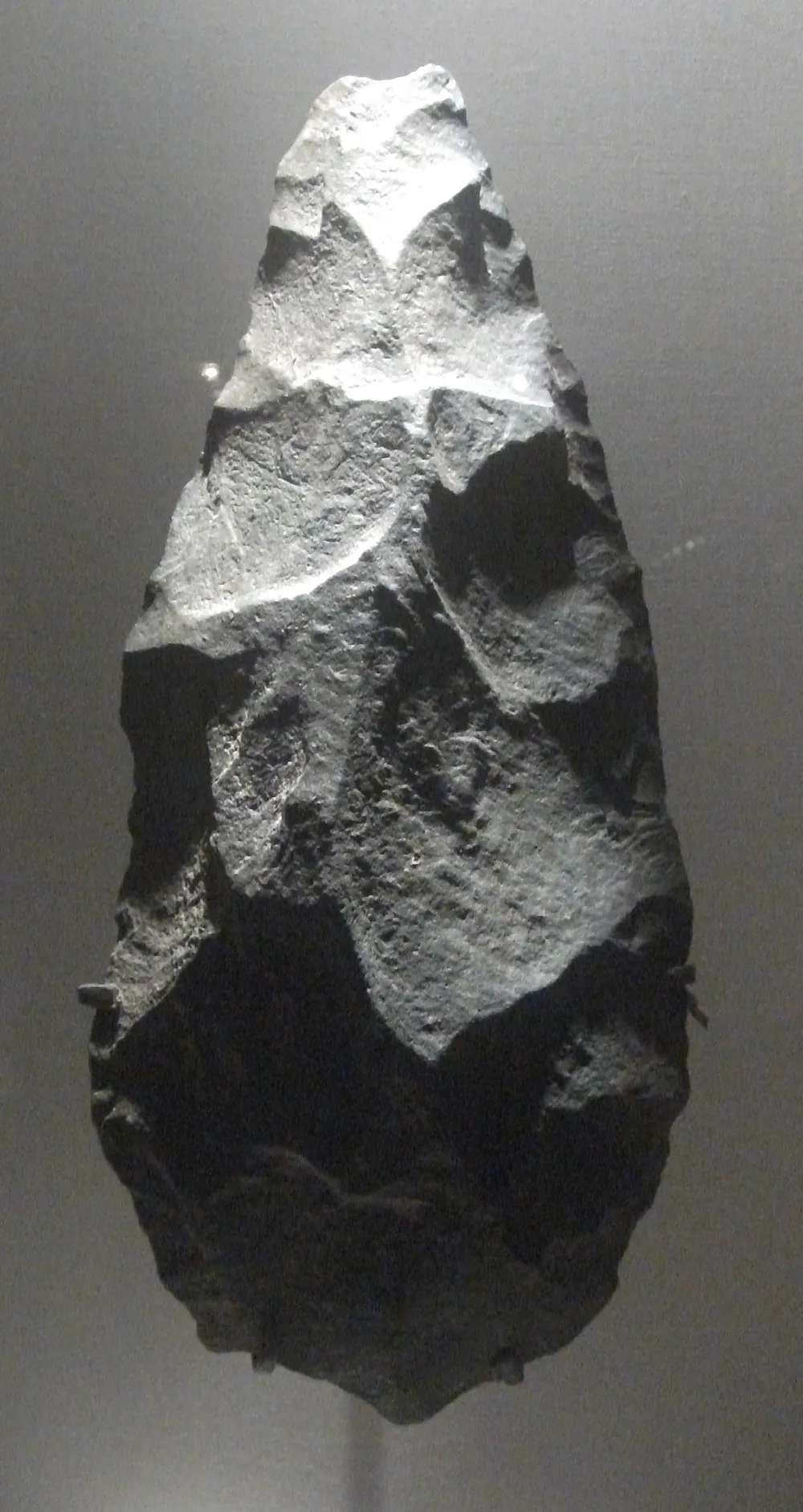
From about 1.7 million years ago a new kind of tool appears: the Acheulean hand axe, shaped on both faces into a teardrop with a cutting edge all round. For a time the two traditions were made side by side, before the hand axe took over.
Our own species
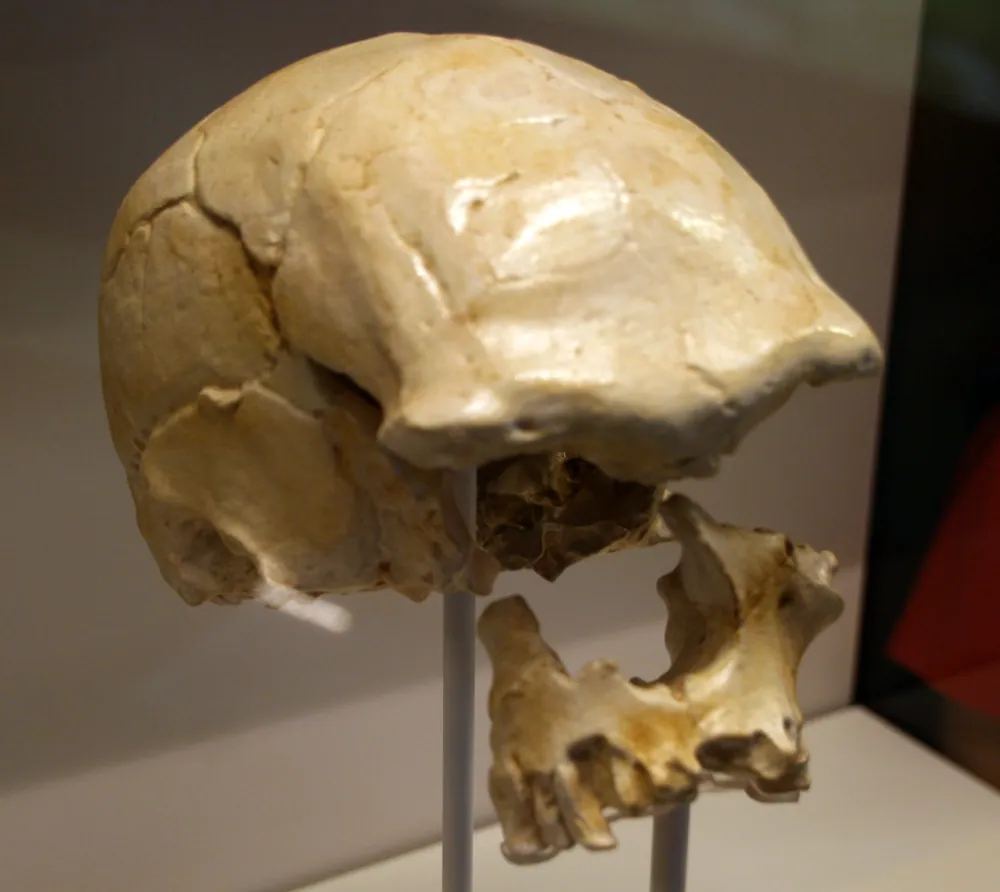
Laetoli also holds one of the earliest skulls of our own species from East Africa. LH 18, the Ngaloba skull, was found by Mary Leakey's team in 1976 and is classed by the Smithsonian as Homo sapiens, about 120,000 years old, though it keeps some older features and its date is debated.
From then on the record moves into rock shelters. At Kisese II, in the hills of Kondoa, beads made from ostrich eggshell have been dated to more than 40,000 years ago. The same escarpment holds the Kondoa rock paintings, made over at least two thousand years and still used by local communities today. Their story is on the Kondoa guide.
Seeing it for yourself
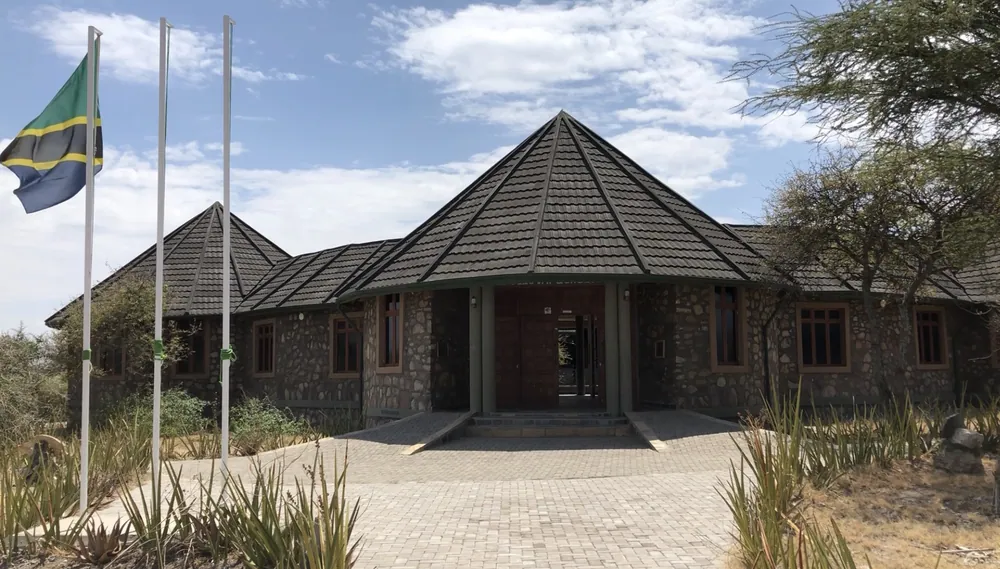
Olduvai Gorge is a short detour on the main road between the Ngorongoro Crater and the Serengeti, inside the conservation area, so most northern safaris can stop there. The Olduvai Gorge Museum sits on the rim, with casts of the main finds, and a guide can walk you down into the gorge. Practical details are on the Ngorongoro page.
Laetoli is further off the main routes, south of the crater, and what you see there is the landscape and replicas, not the original prints. To see original fossils, the National Museum of Tanzania in Dar es Salaam holds Nutcracker Man and other material from both sites.
- Why is Olduvai Gorge called the cradle of mankind?
- Because its walls expose almost two million years of layered sediment holding early human fossils and stone tools, among them Nutcracker Man (Paranthropus boisei, found by Mary Leakey in 1959) and the first fossils of Homo habilis. The simplest stone-tool tradition, the Oldowan, is named after it.
- How old are the Laetoli footprints?
- About 3.6 million years. They were left in wet volcanic ash by early humans walking upright, most likely Australopithecus afarensis. The main trail was uncovered by Mary Leakey's team in 1978.
- Can you see the Laetoli footprints?
- Not the originals. They were reburied in 1979 to protect them. Visitors see the site and replicas, and casts are shown in museums.
- Is it Olduvai or Oldupai?
- Oldupai is the correct name, from the Maasai word for the wild sisal that grows in the gorge. Olduvai is an early misspelling that is still widely used.
- Where is the Nutcracker Man skull today?
- At the National Museum of Tanzania in Dar es Salaam, where it has been on display since January 1965.
Last reviewed 7 October 2026
Edited by Kabeer Dalvi
Checked against
- Laetoli footprint trailsSmithsonian National Museum of Natural History
- OH 9Smithsonian National Museum of Natural History
- Ngaloba LH 18Smithsonian National Museum of Natural History
- Footprints from Site A at Laetoli are from early humans, not bears (2021)Dartmouth College
- Olduvai GorgeWikipedia
- LaetoliWikipedia
- OH 5Wikipedia
- Homo habilisWikipedia
- Australopithecus afarensis — the LH 4 holotypeWikipedia
- OldowanWikipedia
- Ngorongoro Conservation AreaUNESCO World Heritage Centre