The Arusha Declaration
In January 1967 the ruling party met in Arusha and adopted Julius Nyerere's plan for a socialist, self-reliant Tanzania. Within days the banks were nationalised. Ujamaa, the leadership code and the villages that followed shaped the country for the next twenty years.
Edited by Kabeer Dalvi · Updated 19 October 2026
- Adopted
- 26–29 January 1967, Arusha
- Dated
- 5 February 1967
- By
- TANU's National Executive Committee
- Written by
- Julius Nyerere
- In Swahili
- Azimio la Arusha
A party meeting in Arusha
Six years after independence, Tanzania was poor, and the way it had planned to grow was not working. The country's first five-year plan had counted on private investors for almost half of all investment, and little came. Several of its farming targets were missed by wide margins.
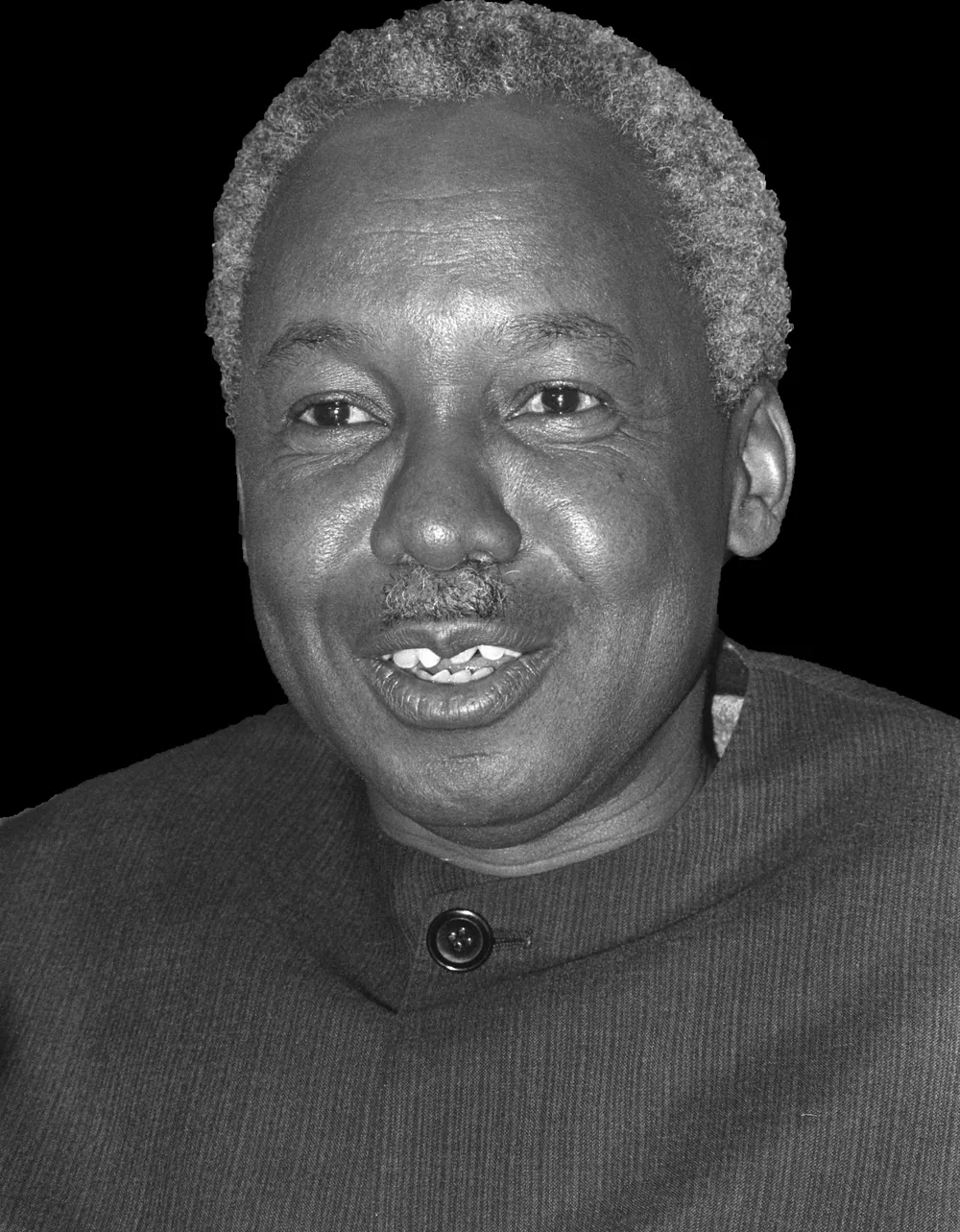
Julius Nyerere's answer was a change of direction. The National Executive Committee of his party, the Tanganyika African National Union (TANU), met at the Community Centre in Arusha from 26 to 29 January 1967 and adopted a statement he had written. It is dated 5 February 1967, and it was discussed and published first in Swahili, as Azimio la Arusha, the Arusha Declaration.
What the Declaration says
The Declaration is short. It has five parts.
Its core is self-reliance. Tanzania, Nyerere wrote, had been trying to develop with money it did not have: "We made a mistake in choosing money, something we do not have, to be the big instrument of our development." Gifts, loans and foreign investment could never be enough, and depending on them put independence at risk. Instead: "The development of a country is brought about by people, not by money." It named four things development needs: people, land, good policies and good leadership, and it put farming before industry.
The other core is socialism, or ujamaa, "familyhood". The major means of production, from land and minerals to banking and big industry, were to be owned or controlled by peasants and workers, through the government and co-operatives. But state ownership alone was not enough, the Declaration said: "A state is not socialist simply because its means of production and exchange are controlled or owned by the government." It also had to be democratic, and socialism had to be believed in and lived.

| Part | What it covers |
|---|---|
| 1. The TANU Creed | The party's beliefs: all people are equal; citizens hold the country's natural resources in trust; the state must control the principal means of production |
| 2. The Policy of Socialism | No exploitation; control by peasants and workers; democracy; socialism as a belief |
| 3. The Policy of Self-Reliance | Development by people and land, not money; farming first; good policies and leadership |
| 4. TANU Membership | Members must accept the party's beliefs; TANU is a party of peasants and workers |
| 5. The Arusha Resolution | The leadership code, and a call on the government to go further towards socialism |
The leadership code
The last part, the Arusha Resolution, set rules for everyone in a position of leadership, from party committee members, ministers and MPs to the heads of public bodies and senior civil servants. A leader had to be a peasant or a worker, with no part in capitalism or feudalism. In the Declaration's words:
"No TANU or Government leader should hold shares in any company." No leader could be a director of a private company, receive "two or more salaries", or "own houses which he rents to others".
The aim was to keep public office and private wealth apart. These rules became known as the leadership code. The ruling party reviewed them in 1991.
Nationalisation within days
The Declaration did not name companies, but the government moved at once. On 6 February 1967, the day after it was published, all private commercial banks were nationalised. Over the next days the state took over or bought into the most important businesses, and parliament passed the laws in mid-February.
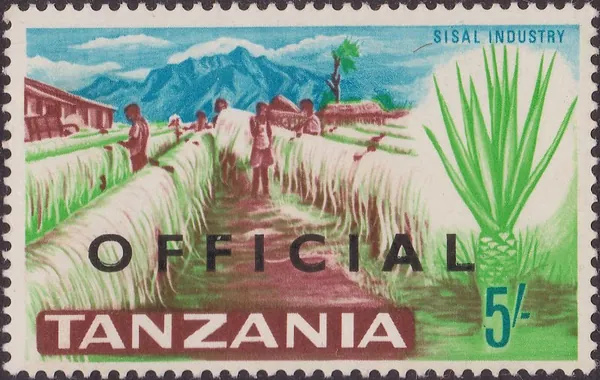
Act No. 1 of 15 February nationalised all nine commercial banks and created the National Bank of Commerce, which then held a monopoly of banking. Act No. 3 of 16 February took over nine milling and import-export companies. Act No. 4 nationalised insurance. Act No. 5 allowed the government to take up to 60% of a number of large companies, among them breweries, cement works, shoe factories, mining and tobacco companies. The sisal plantations, including the estates around Tanga, came under state control too.

Ujamaa in practice
About a month later Nyerere followed it with Education for Self-Reliance, which set out what schools were for under the new policy. The party issued further statements in the same spirit, including the Iringa Declaration of 1971 on farming and the Musoma Resolution of 1974 on education.
In the countryside, ujamaa meant villages. Farmers were first encouraged to move into planned villages and farm together, and few did. From 1973 to 1976, in what became known as Operation Vijiji, the government moved millions of rural people into villages, many of them by force. The aim was to bring schools, clinics and clean water within reach of everyone. Farm output did not grow as promised.
Nyerere reviewed the policy himself in The Arusha Declaration Ten Years After (1977), setting out what had worked and what had not.
What became of it
By the late 1970s the economy was in deep trouble. State companies made losses, goods of every kind ran short, and a black market grew. Nyerere stepped down in 1985.
Under his successor, Ali Hassan Mwinyi, Tanzania reached an agreement with the International Monetary Fund in 1986, devalued the shilling by 57% and began to dismantle controls on the economy. In 1990 the party allowed its members to take part in "any other legal income generating activity", and a meeting of its National Executive Committee in Zanzibar, 15 to 18 February 1991, reviewed the leadership code. Mwinyi said the Zanzibar statement clarified the Arusha Declaration without scrapping it. What followed is told on the multi-party era.
The monument in Arusha
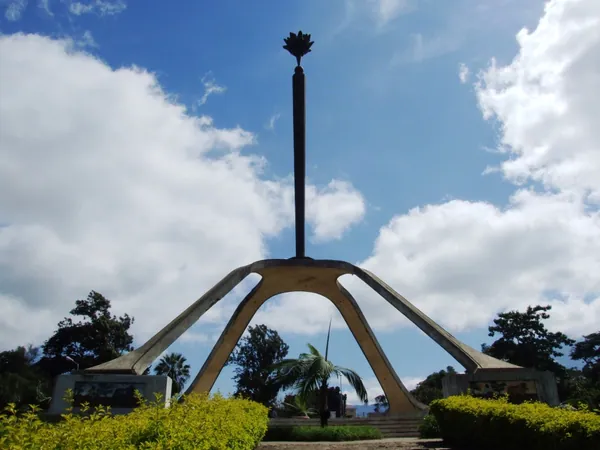
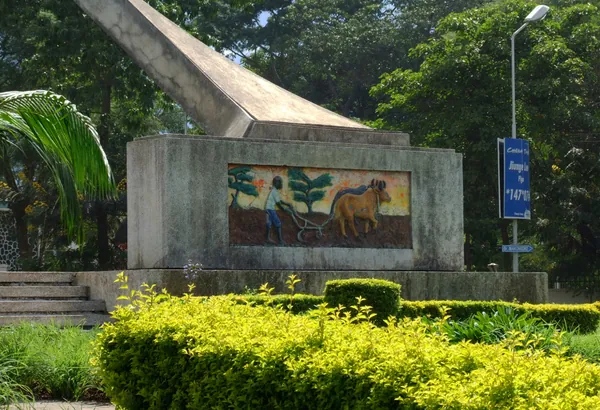
The Arusha Declaration Monument stands in the centre of Arusha: a torch raised on four curved legs, with murals of working people around its base. The city itself is described on the Arusha guide.
- What was the Arusha Declaration?
- A statement written by Julius Nyerere and adopted by the ruling party, TANU, at a meeting in Arusha on 26–29 January 1967. Dated 5 February 1967, it committed Tanzania to socialism (ujamaa) and self-reliance, and set a code of conduct for leaders.
- What happened after the Arusha Declaration?
- On 6 February 1967 all private commercial banks were nationalised. Laws passed in mid-February nationalised insurance and nine milling and import-export firms, and let the state take up to 60% of large companies. From 1973 to 1976 millions of rural people were moved into ujamaa villages.
- What was the leadership code?
- Rules in the Arusha Resolution, the last part of the Declaration: no party or government leader could hold shares in a company, be a director of a private company, receive two or more salaries, or own houses rented to others.
- Is the Arusha Declaration still in force?
- Not as policy. From 1986 Tanzania reformed its economy with the IMF, and in February 1991 the ruling party, meeting in Zanzibar, reviewed the leadership code. President Mwinyi said this clarified the Declaration without scrapping it.
Last reviewed 19 October 2026
Edited by Kabeer Dalvi
Checked against
- The Arusha Declaration (1967), full textMarxists Internet Archive
- The Arusha Declaration Ten Years After (1977)Mwalimu Julius K. Nyerere Foundation
- Is Tanzania a success story? A long term analysis (Sebastian Edwards, 2012)National Bureau of Economic Research
- How Arusha, Zanzibar declarations shook Mwinyi presidency (2024)Daily News
- Azimio la Elimu: a reflection on Education for Self-ReliancePambazuka News
- Agency and the Arusha Declaration: Nyerere, NUTA, and political discourse in Tanzania, 1966–7Journal of African History