Julius Nyerere
The teacher from Butiama who led Tanganyika to independence in 1961, united it with Zanzibar in 1964, and governed for twenty-three years before giving up power of his own accord. Tanzanians call him Mwalimu, the teacher, and Baba wa Taifa, the father of the nation.
Edited by Kabeer Dalvi · Updated 13 October 2026
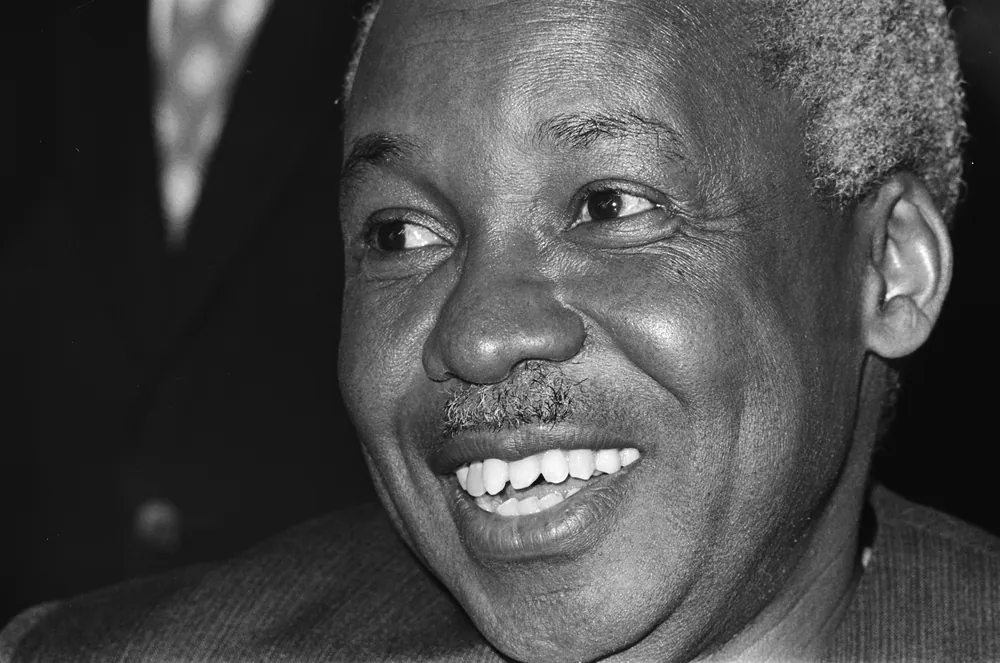
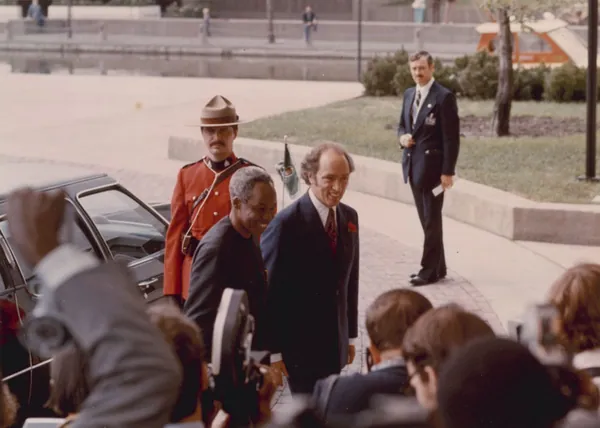
Julius Nyerere in November 1975.
- Born
- 13 April 1922, Butiama
- President
- 9 December 1962 – 5 November 1985
- Order
- First president
- Party
- TANU, then CCM
- Died
- 14 October 1999, London
Early life and education
Julius Kambarage Nyerere was born on 13 April 1922 at Butiama, near Lake Victoria in today's Mara Region. His father, Nyerere Burito, was a chief of the Zanaki, one of the country's smaller peoples.
He went to school in Tabora, then to Makerere College in Uganda from 1943 to 1947, where he qualified as a teacher. After two years teaching at St Mary's in Tabora he won a place at the University of Edinburgh, and came home in 1952 with a master's degree. He taught at St Francis' College, Pugu, outside Dar es Salaam, until politics took over. The title Mwalimu, teacher, stayed with him for life.
From teacher to president
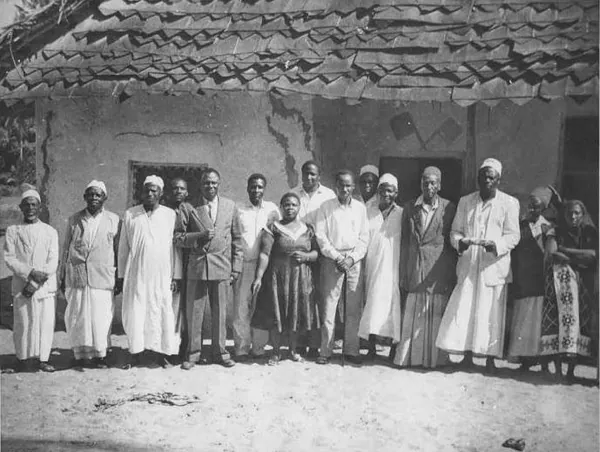
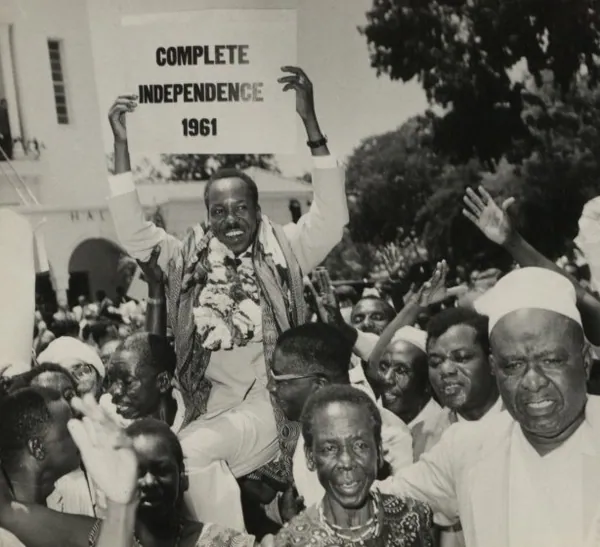
On 7 July 1954 Nyerere and his colleagues founded the Tanganyika African National Union (TANU), and he gave up teaching to lead it. He became chief minister on 2 September 1960 and prime minister on 1 May 1961, and led Tanganyika to independence on 9 December 1961.
A year later, on 9 December 1962, Tanganyika became a republic with Nyerere as its first president. When Tanganyika and Zanzibar united in April 1964 he became president of the new United Republic. How independence was won is told on Independence and the Nyerere years.
As president
Nyerere's presidency shaped the country more than any other. He made Kiswahili the national language, set out his policy of socialism and self-reliance in the Arusha Declaration of 1967, moved rural people into ujamaa villages, decided to move the capital to Dodoma, and in 1978–79 fought the war that removed Idi Amin from Uganda.
All of that is told, with its successes and its failures, on Independence and the Nyerere years.
Stepping down, and after
Nyerere chose not to stand again, and left the presidency on 5 November 1985, handing over to Ali Hassan Mwinyi. He stayed on as chairman of the ruling party, CCM, until 1990.
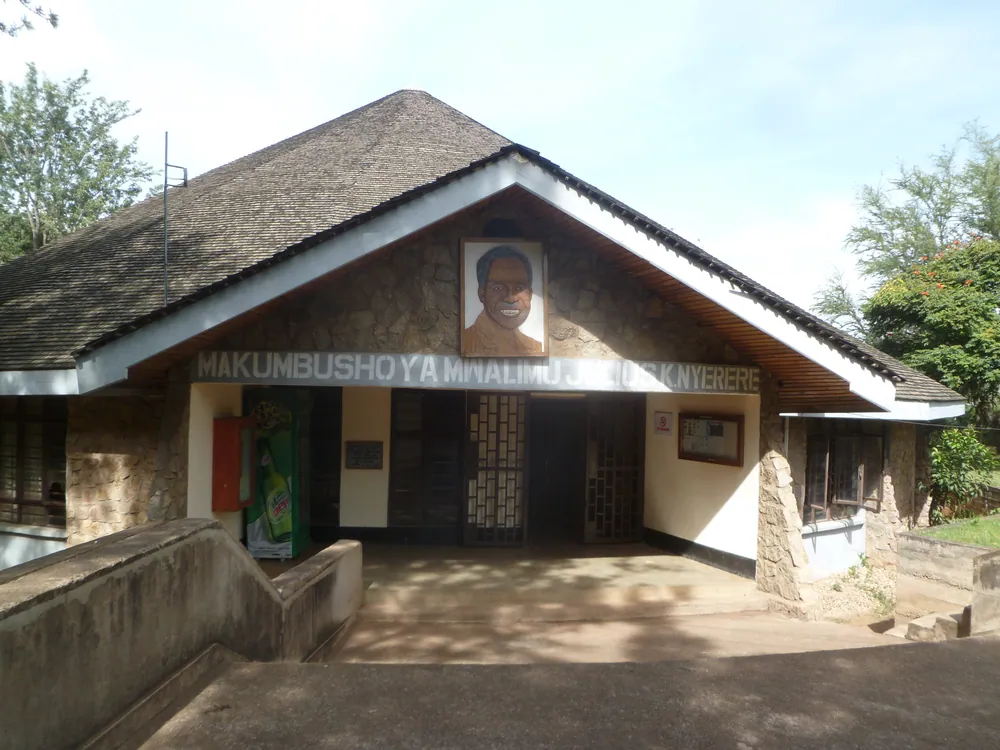
In retirement he worked on the South Commission, and in his last years acted as mediator in the peace talks to end Burundi's civil war. He died in London on 14 October 1999 and is buried at Butiama, where a museum tells his story (see the Musoma guide). The anniversary of his death, Nyerere Day, is a public holiday.
- Who was the first president of Tanzania?
- Julius Kambarage Nyerere. He became president of Tanganyika on 9 December 1962 and president of the United Republic of Tanzania when it was formed in 1964, and stayed in office until 5 November 1985.
- Why is Nyerere called Mwalimu?
- Mwalimu is Kiswahili for teacher. Nyerere trained as a teacher at Makerere and taught at Tabora and Pugu before he went into politics, and the title stayed with him.
- When did Julius Nyerere die?
- On 14 October 1999, in London. He is buried at Butiama, his home village in Mara Region. The date is a public holiday in Tanzania, Nyerere Day.
- How long was Nyerere president?
- Almost twenty-three years, from 9 December 1962 to 5 November 1985. He stepped down voluntarily.
Last reviewed 13 October 2026
Edited by Kabeer Dalvi
Checked against
- Julius Nyerere — life, presidency and deathEncyclopaedia Britannica
- Mwalimu Julius Kambarage Nyerere — biographyEast African Community
- Julius NyerereWikipedia