Rubondo Island
National Park · TANAPA
A forested island in Lake Victoria, and a chimpanzee experiment that worked.
Edited by Kabeer Dalvi
- Area
- 456.8 km²
- Established
- 1977
- Region
- Geita Region, Lake Victoria
- Best time
- June–September, between the rains
Wildlife
- Chimpanzee
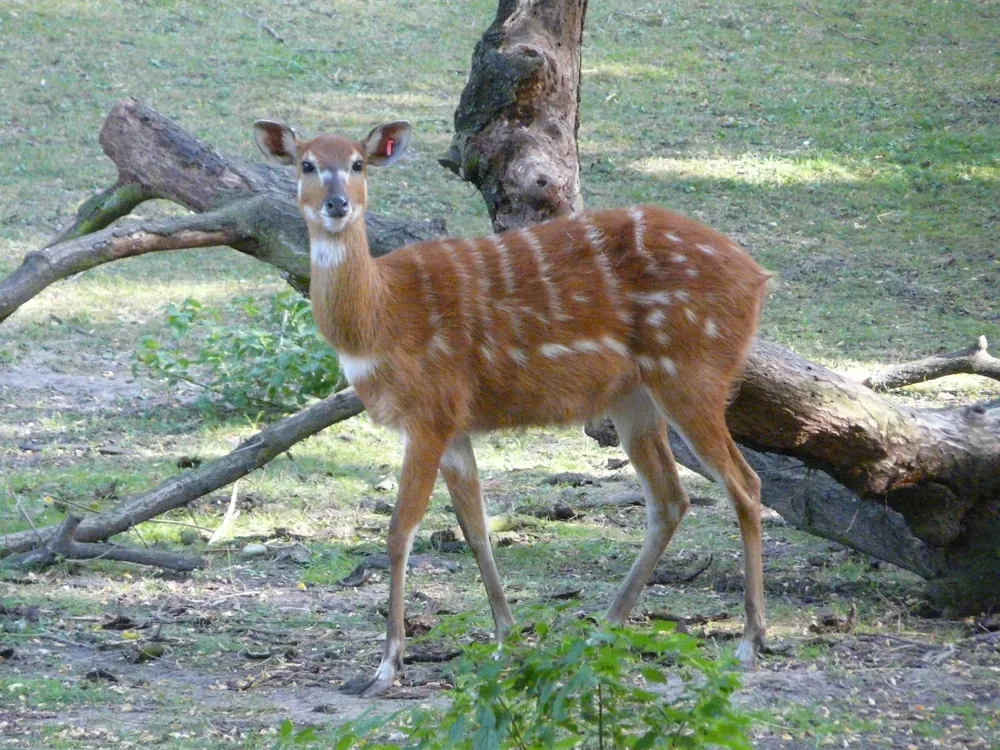
- Sitatunga
- Hippo
- African grey parrot
- Fish eagle
- Nile perch
Rubondo is an island national park in the south-western corner of Lake Victoria — 456.8 square kilometres of forest, papyrus swamp and freshwater beach. It was set up as a game reserve in 1965 and became a national park in 1977. Its forest is a remnant of Congolese lowland rainforest, and guided walking safaris are part of the visit, which changes the whole texture of it.
Its unusual history is a chimpanzee release programme: between 1966 and 1969 the Frankfurt Zoological Society, under Bernhard Grzimek, released 16 chimpanzees from European zoos onto the island. Their descendants live wild here, but they are shy, and tracking them is harder than at Mahale or Gombe.
The island is also excellent for birds, with fish eagles in numbers, introduced African grey parrots and Eurasian migrants, and catch-and-release fishing for Nile perch is well known. The shy sitatunga antelope lives in the swamp margins.
Chimpanzee tracking
Descendants of zoo chimpanzees released in the 1960s, now wild.
Guided walks
Forest and shoreline on foot, with a ranger.
Sitatunga in the papyrus
The swamp antelope, in its element.
Lake Victoria fishing
Nile perch, catch-and-release, from the island shore.
Scheduled and charter flights to the island airstrip, or by boat — from Mwanza, or from Muganza on the mainland, 270 km from Mwanza by road.
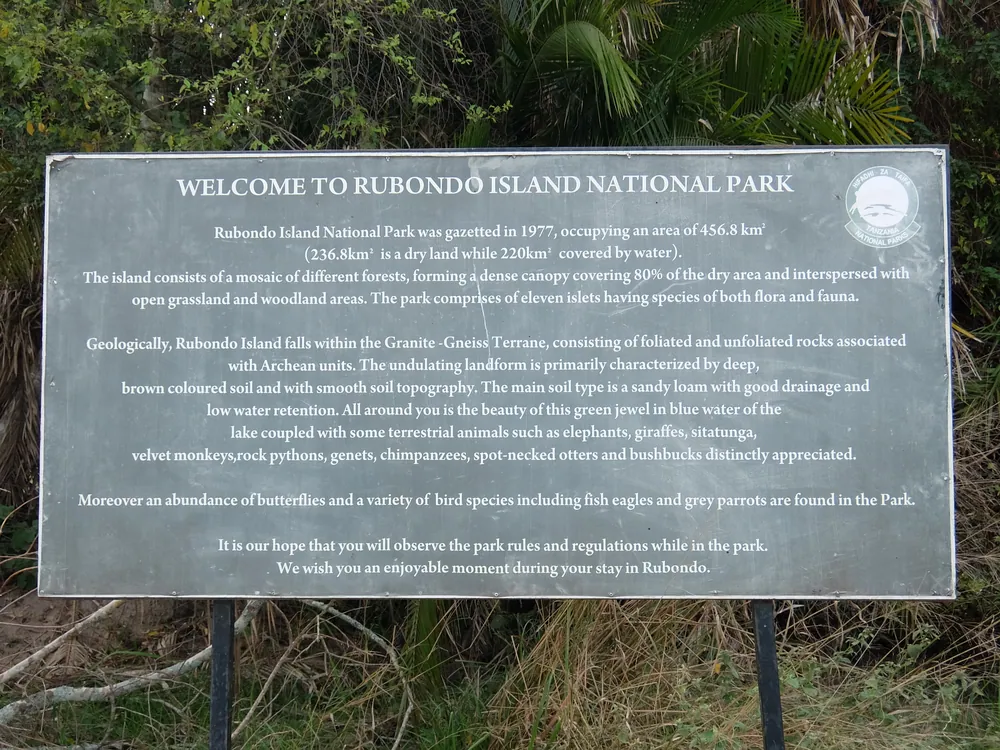
Rubondo lies in the south-western corner of Lake Victoria, about 150 km west of Mwanza, in Geita Region. The park covers 456.8 km². TANAPA's sign on the island says 236.8 km² of that is land and 220 km² is water: the main island, eleven smaller islets, and the lake between them. The main island is about 28 km long and 3 to 10 km wide.
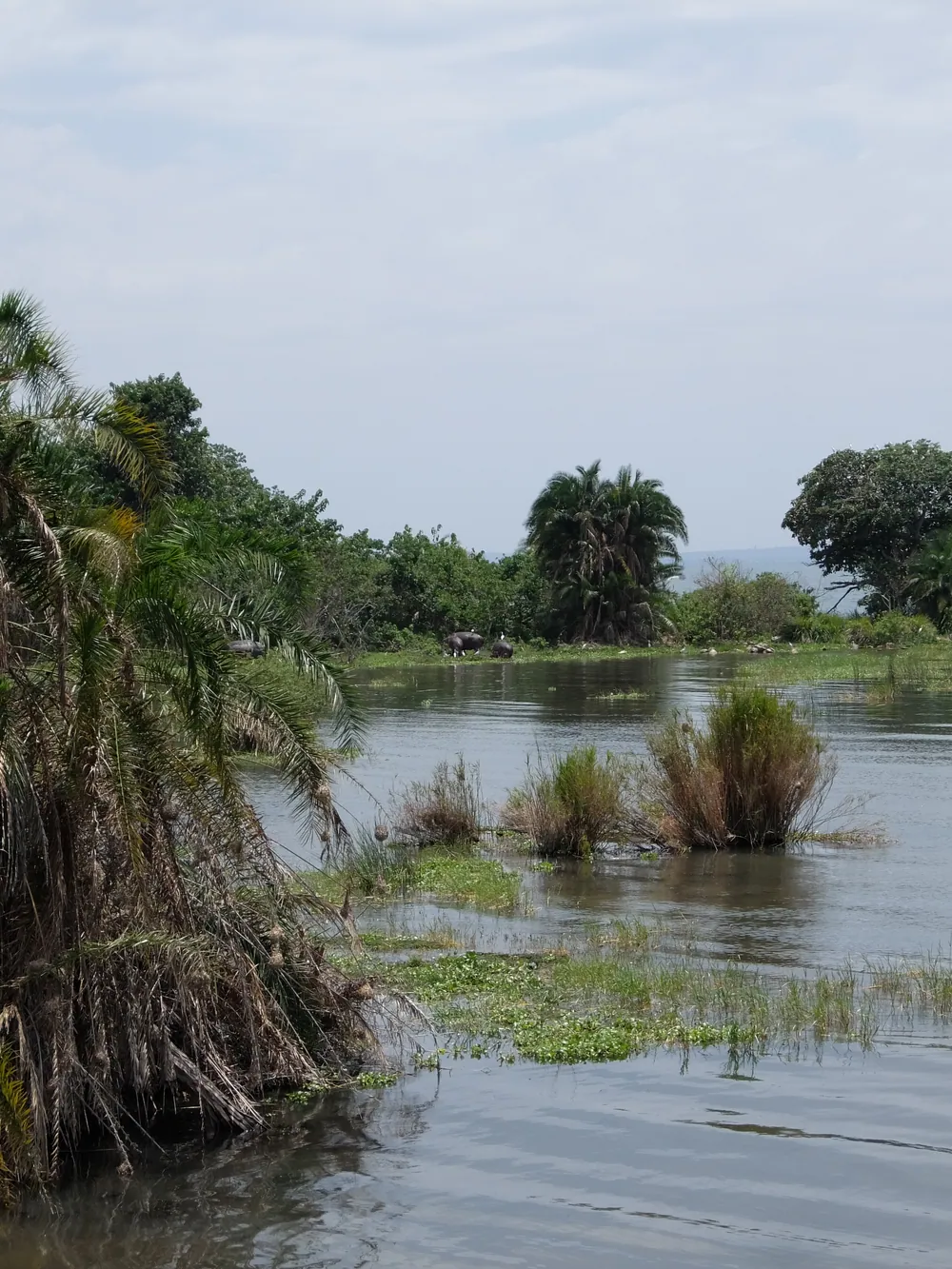
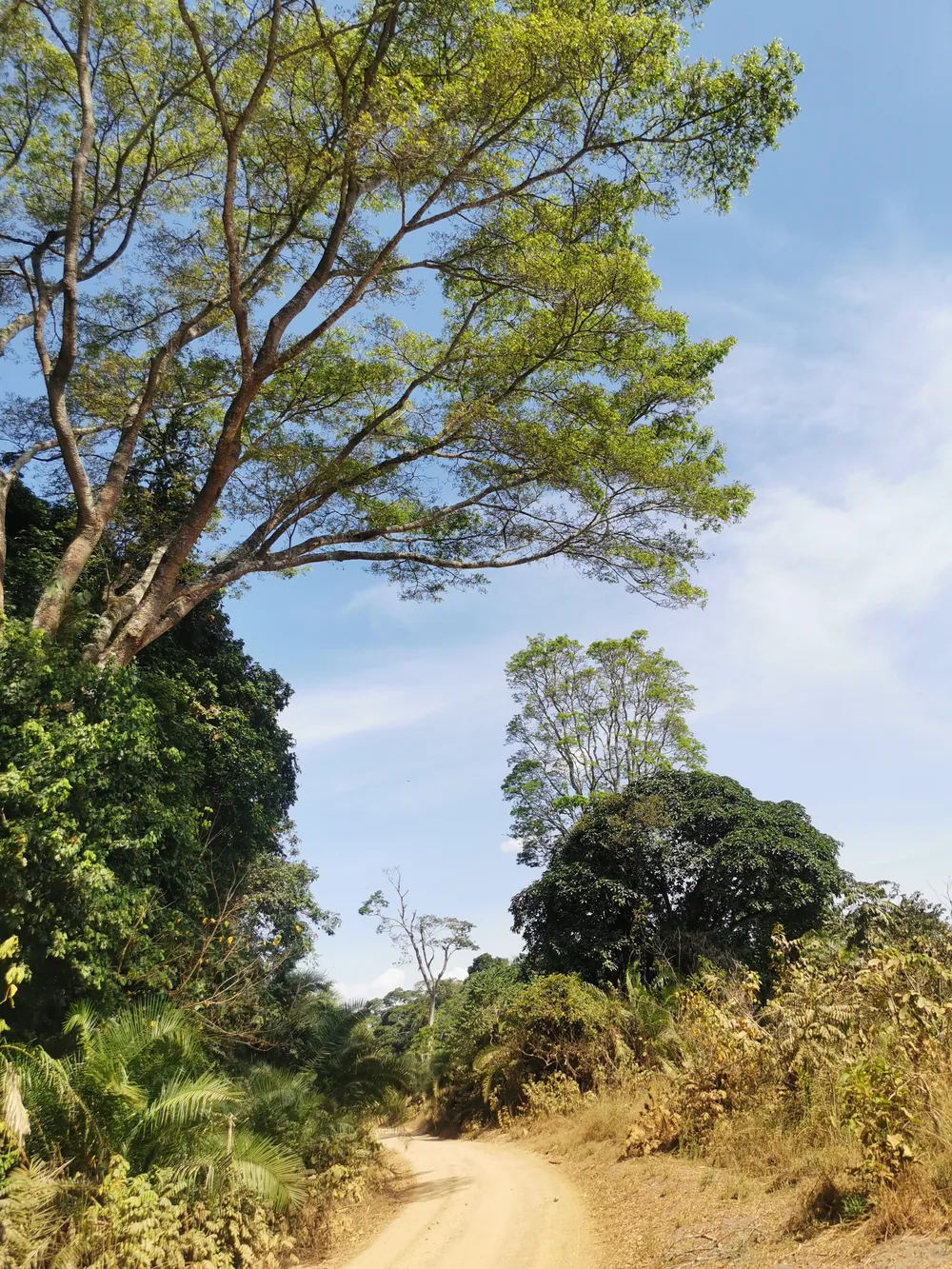
Forest covers about 80 per cent of the land. The rest is patches of grassland and woodland. TANAPA calls the forest a remnant of the Congolese lowland rainforest, one of the last in western Tanzania. The western shore is lined with papyrus swamp and date palms; the eastern shore has rocky points and sandy beaches. The lake surface is about 1,134 metres above sea level, and the Masa Hills in the south rise about 350 metres above it. That is almost certainly where TANAPA's altitude of "350" comes from.
The island was made a game reserve in 1965 and a national park in 1977. It had been home to about 400 Zinza fishing people with banana gardens. According to Wikipedia they were moved to neighbouring islands and the mainland in the late 1960s, and nobody lives on the island now. TANAPA points visitors to two cultural sites inside the park, Ntungamirwe (also called Maji Matakatifu, or Altare) and Solo, which it says tell the story of the people who once lived here.
Rubondo's chimpanzees were brought here. In the 1960s Bernhard Grzimek of the Frankfurt Zoological Society set out to give zoo chimpanzees a life in the wild. The first eleven left Hanover Zoo in the summer of 1966, by truck to Antwerp, by ship to Dar es Salaam, and then 1,300 km by truck to Lake Victoria. One young female died of heat stroke on the way. The first release was on 23 June 1966.
In four shipments between 1966 and 1969, 17 chimpanzees were sent and 16 released. They were given no training for life in the wild. They were fed for the first five months; within about a year some were building sleeping nests, and rangers saw the first babies born on the island. They have fed themselves ever since. A 2010 study called them one of the only released chimpanzee populations to have survived for decades without being fed.
Their origins turned out to be mixed. The zoo records gave a West African origin for only about a fifth of them, and genetic tests on their descendants found ancestry from both West and Central Africa, two different subspecies. By 2014 researchers counted about 35 chimpanzees, growing by about 3.3 per cent a year.
Grzimek brought other animals too. According to Wikipedia, elephants, giraffes, black-and-white colobus monkeys, suni antelope and African grey parrots taken from smugglers were all released on the island. The roan antelope and black rhinoceros that were also brought here have since died out.
Native animals. The best known is the sitatunga, a swamp antelope with long, widely splayed hooves. TANAPA's brochure calls it "endemic"; it is not, as it lives in swamps and marshes across central Africa. Hippos and crocodiles live along the shore, and TANAPA lists spot-necked otters, bushbuck, vervet monkeys, genets, rock pythons, bushpigs and hyraxes.
Birds. TANAPA says the island has an unusually high number of African fish eagles, along with herons, storks, ibises, egrets, cormorants and kingfishers, and Eurasian migrants in the northern winter.
The fish. Anglers come for Nile perch, which can grow very large. It is not native. It was put into Lake Victoria in the 1950s and is blamed for the extinction or near-extinction of several hundred of the lake's own fish species. All fishing in the park is catch-and-release.
Chimpanzee trekking. TANAPA offers chimpanzee trekking in the forest, under the same rules as at Mahale and Gombe: stay at least 10 metres away, wear a mask within 50 metres, no visitors under 12, no more than six visitors plus a guide, and one hour at most. These chimpanzees were never habituated to people as the Mahale and Gombe communities were, and they are shy.
On foot, by vehicle and on the water. There are guided walks, game drives on the island's tracks, boat trips and guided canoe trips along the inlets, and sport fishing by trolling, spinning, bait or fly. TANAPA names three beaches, Flycatcher, Mchangani and Michikoko.
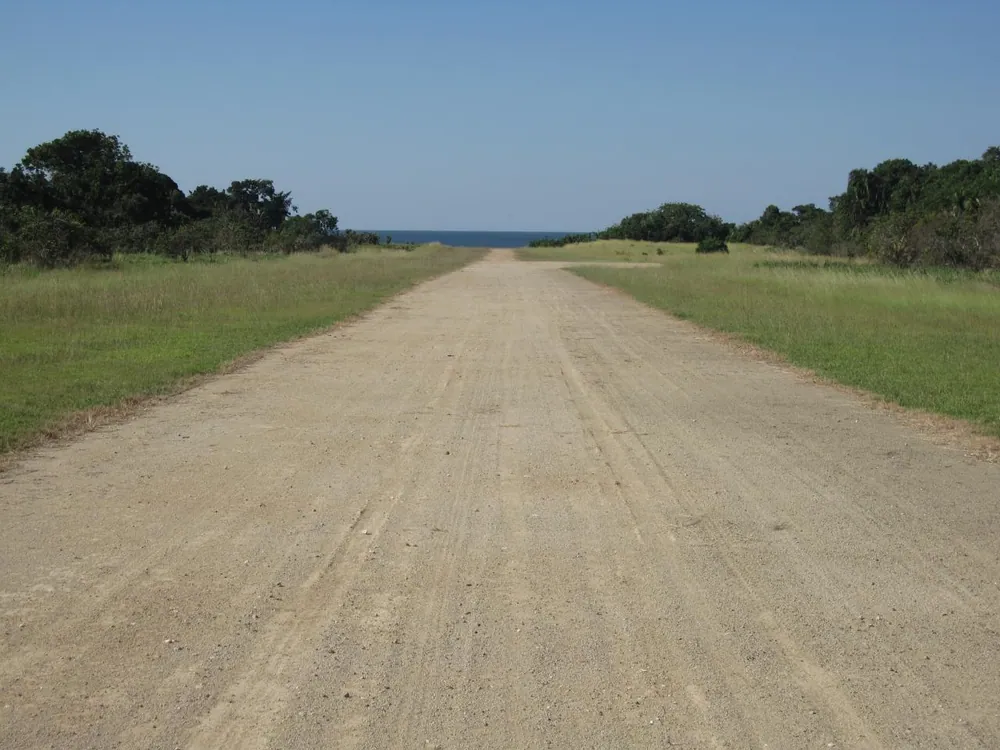
Getting there. TANAPA lists scheduled and charter flights to the island's airstrip from Arusha, Bukoba, Kilimanjaro, Dar es Salaam, Mwanza and other cities. By water, you can take your own boat from Mwanza to the park headquarters at Kageye. By road, it is 270 km from Mwanza to Muganza on the mainland shore, and from there a boat across.
Fees. Rubondo is in TANAPA's lower band, with one rate all year: USD 30 per non-East African adult per day, USD 10 for children aged 5 to 15 and TZS 5,000 for East African citizens, all before 18 per cent VAT, so USD 35.40 in practice. Staying in a camp or lodge inside the park adds USD 30 per night. The schedule also lists two boat crossings to the island: USD 100 return from Kasenda to Mlaga, and USD 290 return from Ngome. Boat trips are USD 20, canoeing USD 10 for up to three hours, sport fishing USD 25 a day, walks USD 20–25 and a park guide USD 20 per group per day.
Staying. TANAPA has a rest house and cottages at USD 35 per adult, tents it provides at USD 30, and a hostel for groups. There are public campsites at USD 30 per person and special campsites at USD 50. There is also a private tented camp near the headquarters.
When to go. TANAPA's brochure gives short rains from October to December and long rains from March to May, so June to September is the dry season. It gives an average of about 22 °C all year: 25–32 °C by day and 15–20 °C at night.
Fees are from TANAPA's own 2023/24 tariff schedule, the most recent it has published, and are quoted before 18 per cent VAT. They may have gone up since, so check them before you budget.
- How did chimpanzees get to Rubondo Island?
- They were released there. Between 1966 and 1969 the Frankfurt Zoological Society, led by Bernhard Grzimek, shipped 17 chimpanzees from European zoos; one died on the journey and 16 were released. They adapted to the wild, and by 2014 there were about 35.
- Can you see chimpanzees on Rubondo?
- TANAPA offers chimpanzee trekking, but these chimpanzees were never habituated to people as those at Mahale and Gombe were, and they are shy. The same viewing rules apply: no one under 12, a mask within 50 metres, and one hour at most.
- What animals live on Rubondo Island?
- Native animals include sitatunga, hippos, crocodiles, spot-necked otters, bushbuck, vervet monkeys and many fish eagles. Chimpanzees, elephants, giraffes, black-and-white colobus, suni and grey parrots were brought to the island in the 1960s and after.
- How do you get to Rubondo Island National Park?
- By air to the island's airstrip, on scheduled or charter flights, or by boat. You can come by boat from Mwanza, or drive 270 km from Mwanza to Muganza on the mainland shore and cross from there.
- How much does it cost to visit Rubondo?
- TANAPA's 2023/24 schedule sets USD 30 per non-East African adult per day, the same all year, before 18 per cent VAT, so USD 35.40 in practice. Children aged 5 to 15 pay USD 10. Staying inside the park adds USD 30 per night, and boats, fishing and guides are extra.
- Can you fish at Rubondo?
- Yes, for Nile perch and other fish, on a catch-and-release basis. TANAPA charges USD 25 a day for sport fishing. Nile perch are not native to Lake Victoria; they were introduced in the 1950s.
- When is the best time to visit Rubondo?
- June to September, the dry season between the long rains of March to May and the short rains of October to December.
Edited by Kabeer Dalvi
Checked against
- Rubondo Island National Park — official pageTANAPA
- Tanzania National Parks Tariffs 2023/2024 — schedule to GN No. 490A of 2020TANAPA
- Rubondo Island National Park — official park brochureTANAPA
- Welcome to Rubondo Island National Park — the park's sign (photographed 2016)Wikimedia Commons
- Population history of chimpanzees introduced to Lake Victoria's Rubondo Island (2021)Primates
- Ecological features and ranging patterns at a chimpanzee release site on Rubondo Island (2010)Biological Conservation
- An island where chimpanzees rule (11 February 2022)Frankfurt Zoological Society
- Rubondo Island National Park — geography, the Zinza, other introductionsWikipedia
- Nile perch — introduction to Lake VictoriaWikipedia
- Sitatunga — range and hoovesWikipedia