Mahale Mountains
National Park · TANAPA
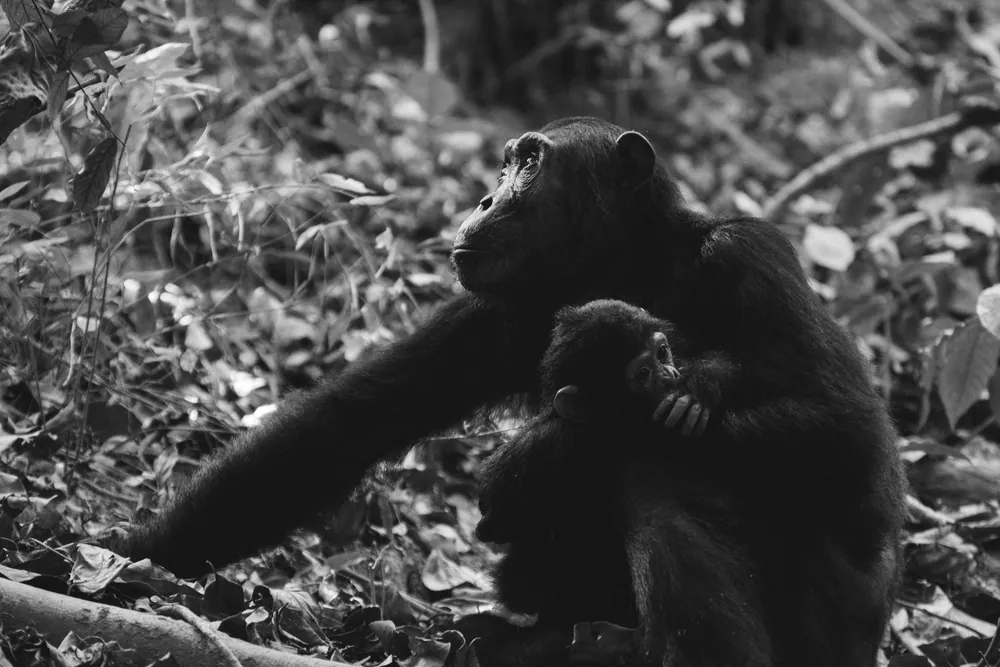
Chimpanzees on a forested mountainside falling into Lake Tanganyika.
- Area
- 1,613 km²
- Established
- 1985
- Region
- Kigoma Region
- Best time
- May–October
Wildlife
- Eastern chimpanzee
- Red colobus
- Blue monkey
- Bushpig
- Endemic cichlids
There are no roads in Mahale. You arrive by boat along the shore of Lake Tanganyika, and everything after that is on foot. The mountains rise straight out of the lake to over 2,400 metres at Nkungwe, and the forest on their western slopes holds one of the largest known populations of eastern chimpanzee — around a thousand animals.
The M group, habituated by Japanese researchers from Kyoto University over decades of continuous study beginning in the 1960s, is the one visitors track. Finding them takes anywhere from twenty minutes to several hours of steep, humid walking, and time with them is limited and rule-bound: distance kept, masks worn, no visit if you are unwell. Chimpanzees catch human respiratory infections easily, and it kills them.
Lake Tanganyika itself is the second deepest lake in the world and holds hundreds of endemic cichlid species. The standard afternoon after a morning's tracking is to snorkel off the beach with the mountains behind you, which is an unreasonable combination for one place to offer.
Tracking the M group
Habituated over sixty years of continuous research. Steep, humid, and worth it.
Lake Tanganyika
Second deepest lake on earth, clear, and full of endemic cichlids.
Mount Nkungwe
2,462 m, climbable over two days with a ranger.
Arrival by boat
There is no other way in, and it sets the tone.
Fly to Mahale airstrip, then a boat along the lakeshore. Often combined with Katavi.
Driving in is not practical. Camps here run their own vehicles, and we arrange the flight and the game drives instead of a hire.