Gombe
National Park · TANAPA
A narrow strip of forest above Lake Tanganyika where Jane Goodall changed what we know about ourselves.
- Area
- 52 km²
- Established
- 1968
- Region
- Kigoma Region
- Best time
- May–October
Wildlife
- Eastern chimpanzee
- Olive baboon
- Red colobus
- Red-tailed monkey
- Bushbuck
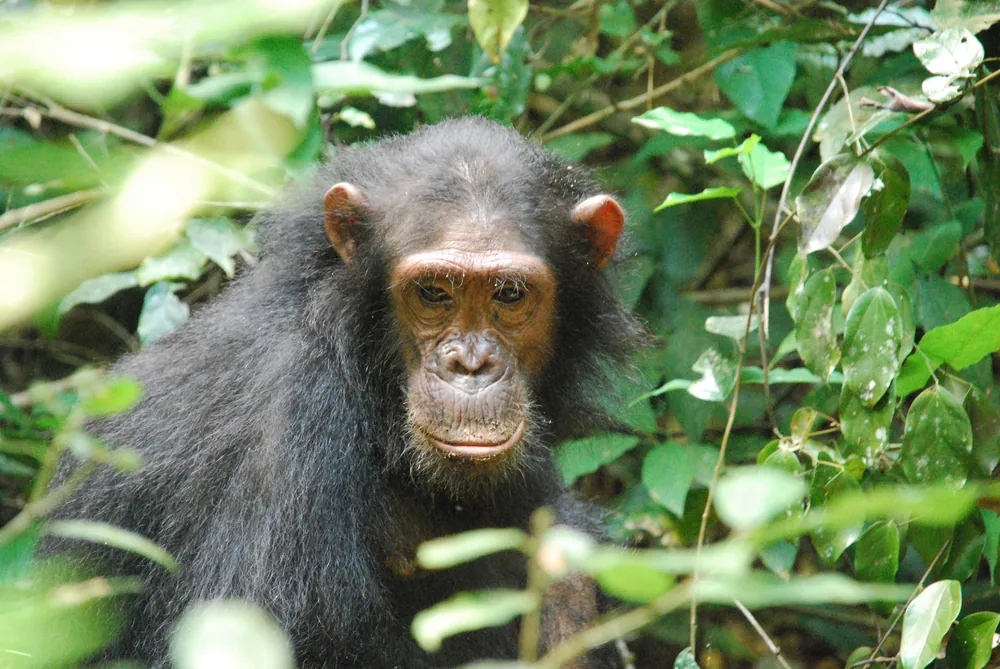
Gombe is tiny — a strip of steep valleys and forest running up from the lakeshore north of Kigoma — and it is one of the most consequential pieces of ground in the history of biology. Jane Goodall began observing chimpanzees here in 1960, and within months had recorded them stripping leaves from twigs to fish termites from a mound.
Until then, toolmaking was held to be what separated humans from animals. Louis Leakey's response on receiving her telegram is quoted so often precisely because it was the right reaction: now we must redefine tool, redefine Man, or accept chimpanzees as human. Goodall went on to document hunting, warfare between communities, and long-term social bonds — and the research at Gombe has continued without interruption ever since, making it one of the longest-running studies of wild animals anywhere.
For visitors it is a steep walk in humid forest to find the habituated community, under the same health rules that apply at Mahale. The park is reached by boat from Kigoma, and most people combine it with the ferry up Lake Tanganyika or a visit to Ujiji, where Stanley is said to have met Livingstone.
Chimpanzee tracking
Steep, humid, and in the place where chimpanzee research began.
The Kasekela community
Continuously studied since 1960 — among the longest records of any wild animal population.
Jane Goodall's research station
Still working, and part of the visit.
Lake Tanganyika beaches
Clear water directly below the forest.
Boat from Kigoma, roughly an hour or two depending on the vessel. Kigoma has flights from Dar es Salaam and Arusha.
Driving in is not practical. Camps here run their own vehicles, and we arrange the flight and the game drives instead of a hire.