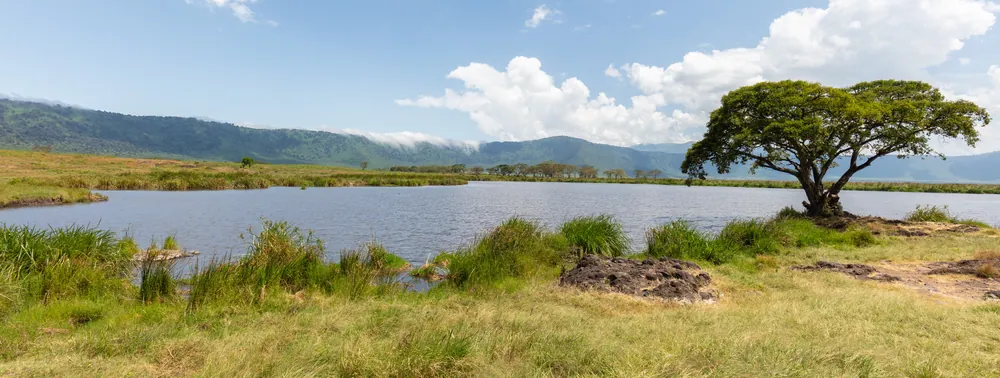
Lake Manyara
National Park · TANAPA
A narrow strip between the Rift wall and a soda lake.
- Area
- 325 km²
- Established
- 1960
- Region
- Arusha and Manyara regions
- Best time
- June–October for game; November–June for birds
Wildlife
- Lion
- Elephant
- Hippo
- Baboon
- Blue monkey
- Flamingo
- Pelican
Small, and compressed into a strip a few kilometres wide between the Rift Valley escarpment and the lake itself — of the park's 325 square kilometres, roughly 230 are water. That compression is the appeal: you pass through groundwater forest, then open floodplain, then the lake shore, within a single morning.
The forest at the northern entrance is fed by springs at the foot of the escarpment and feels nothing like the plains an hour away — fig and mahogany, troops of baboon, and blue monkeys overhead. Beyond it the country opens onto grassland where elephant and buffalo feed.
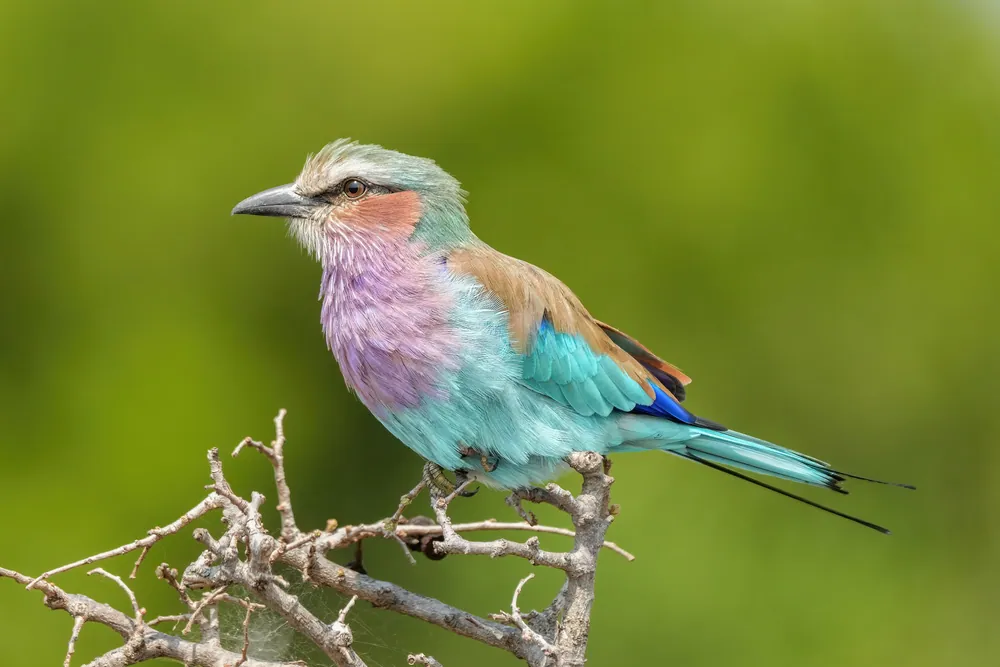
Manyara is best known for two things. Lions here have a well-documented habit of lying up in the acacias, which is unusual enough to have been studied rather than merely marketed. And in the wet season the soda lake carries flamingo in enormous numbers — counts in the early 1990s recorded well over a million lesser flamingos — alongside pelican, stork and more than 350 recorded bird species.
Tree-climbing lions
Genuinely a local habit, though never guaranteed.
The groundwater forest
Spring-fed, at the northern gate, and completely unlike the country beyond it.
Flamingos on the soda lake
Wet season. Numbers that are difficult to describe without sounding exaggerated.
The escarpment viewpoint
The Rift wall above the park, with the lake laid out below.
126 km south-west of Arusha, about ninety minutes by road. Usually combined with Ngorongoro or Tarangire.
No positioning charge — the vehicle is already based nearby.