Kitulo
National Park · TANAPA
A high grassland plateau that flowers — the first park in tropical Africa created mainly for its plants.
Edited by Kabeer Dalvi
- Area
- 465.9 km²
- Established
- 2005
- Region
- Njombe and Mbeya regions
- Best time
- Late November–April, during the flowering
Wildlife
- Ground orchids (40+ species)
- Kipunji
- Plains zebra
- Kipengere seedeater
- Blue swallow
- Denham's bustard
- Abbott's duiker
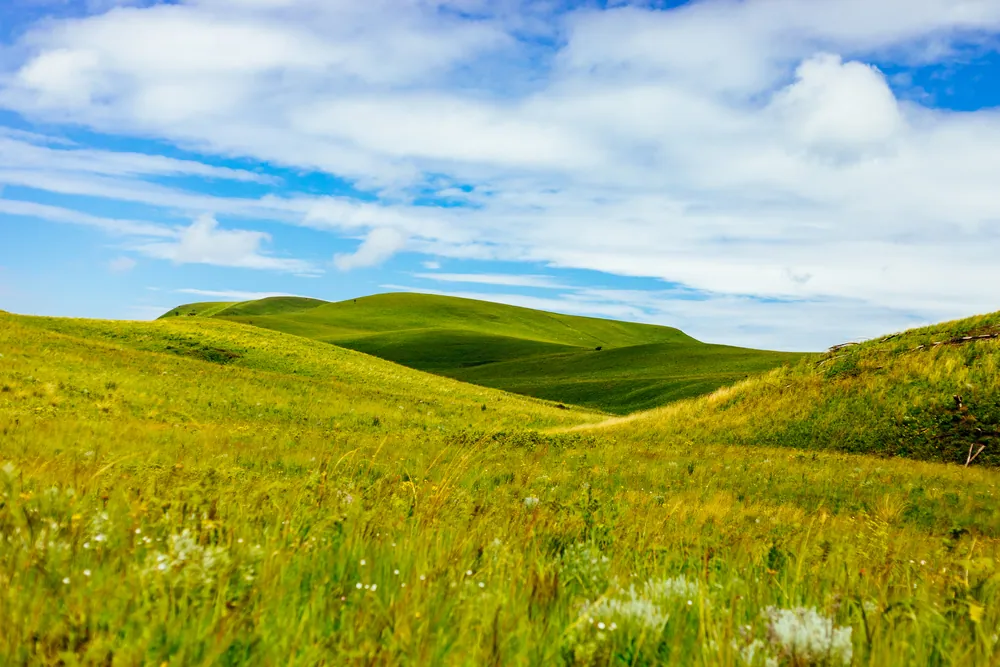
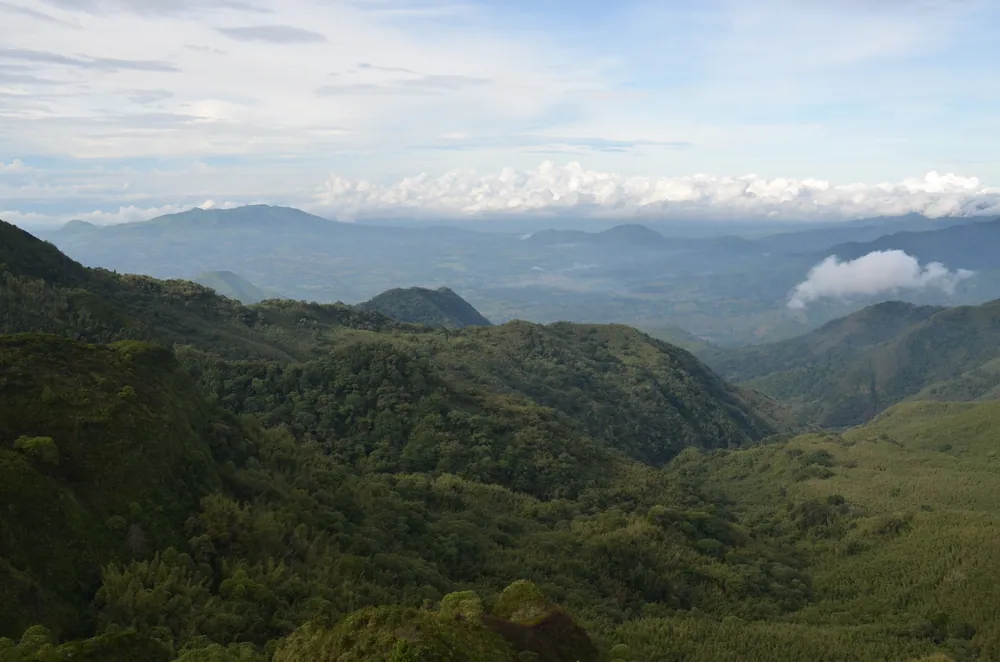
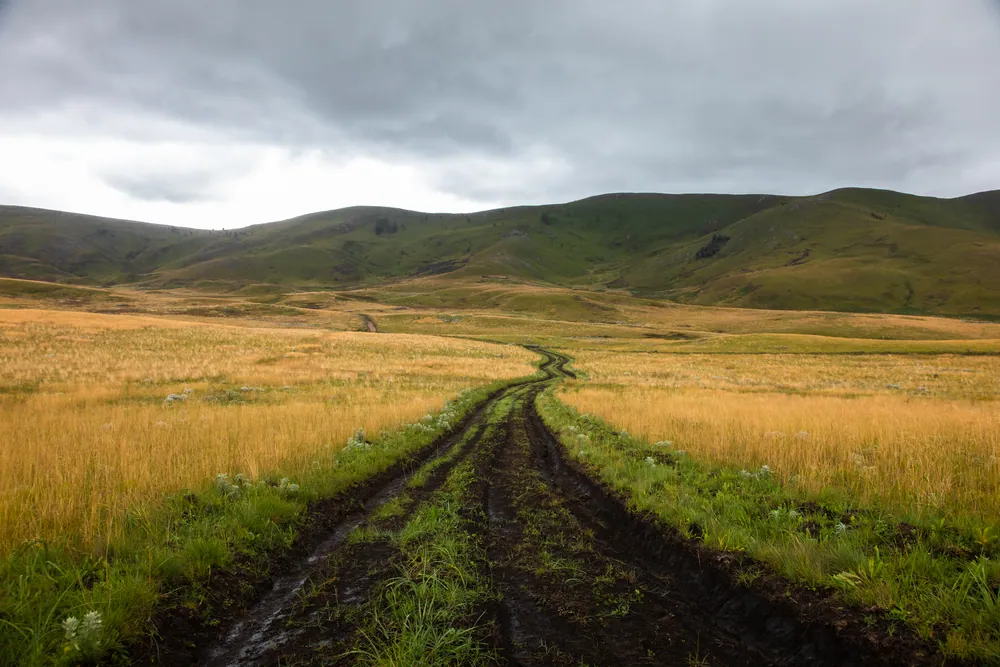
People here call it Bustani ya Mungu, the Garden of God, and botanists have called it the Serengeti of Flowers. Kitulo is a plateau of high grassland at about 2,600 metres in the southern highlands, between the Kipengere and Poroto mountains. When it opened in 2005 it was, by most accounts, the first national park in tropical Africa set up mainly to protect plants.
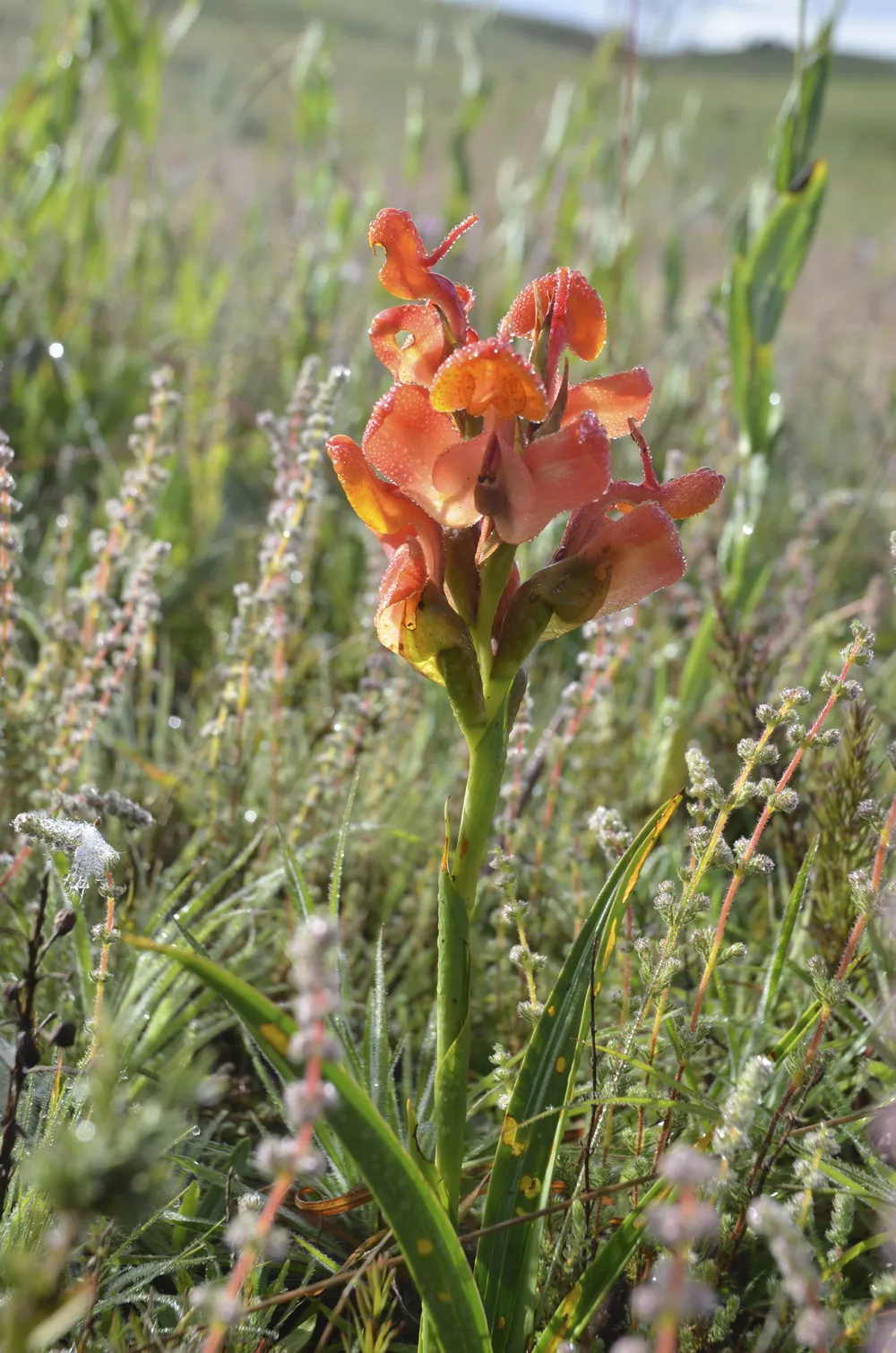
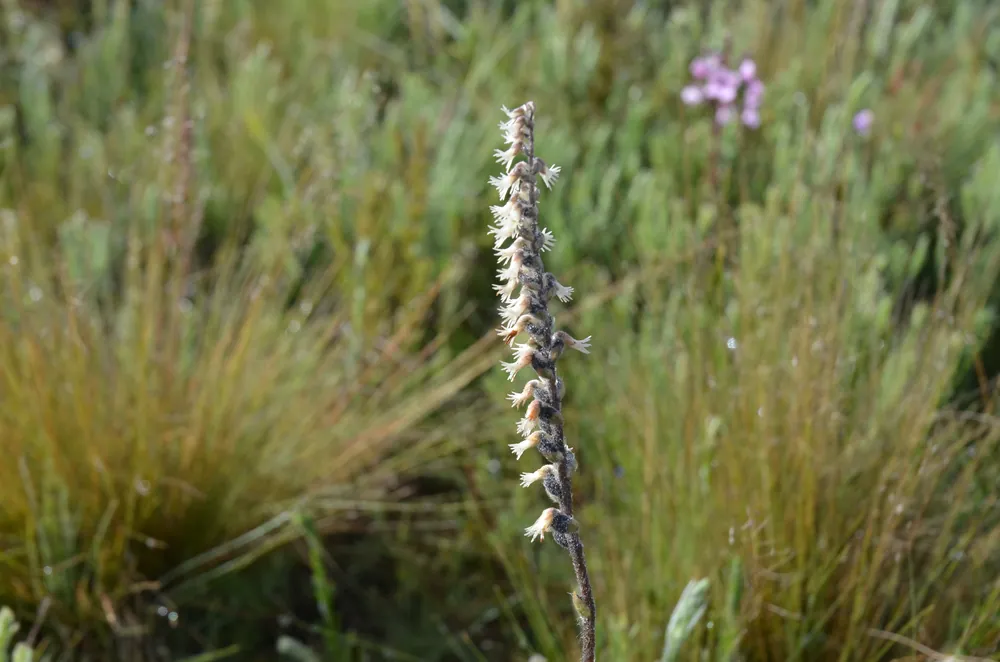
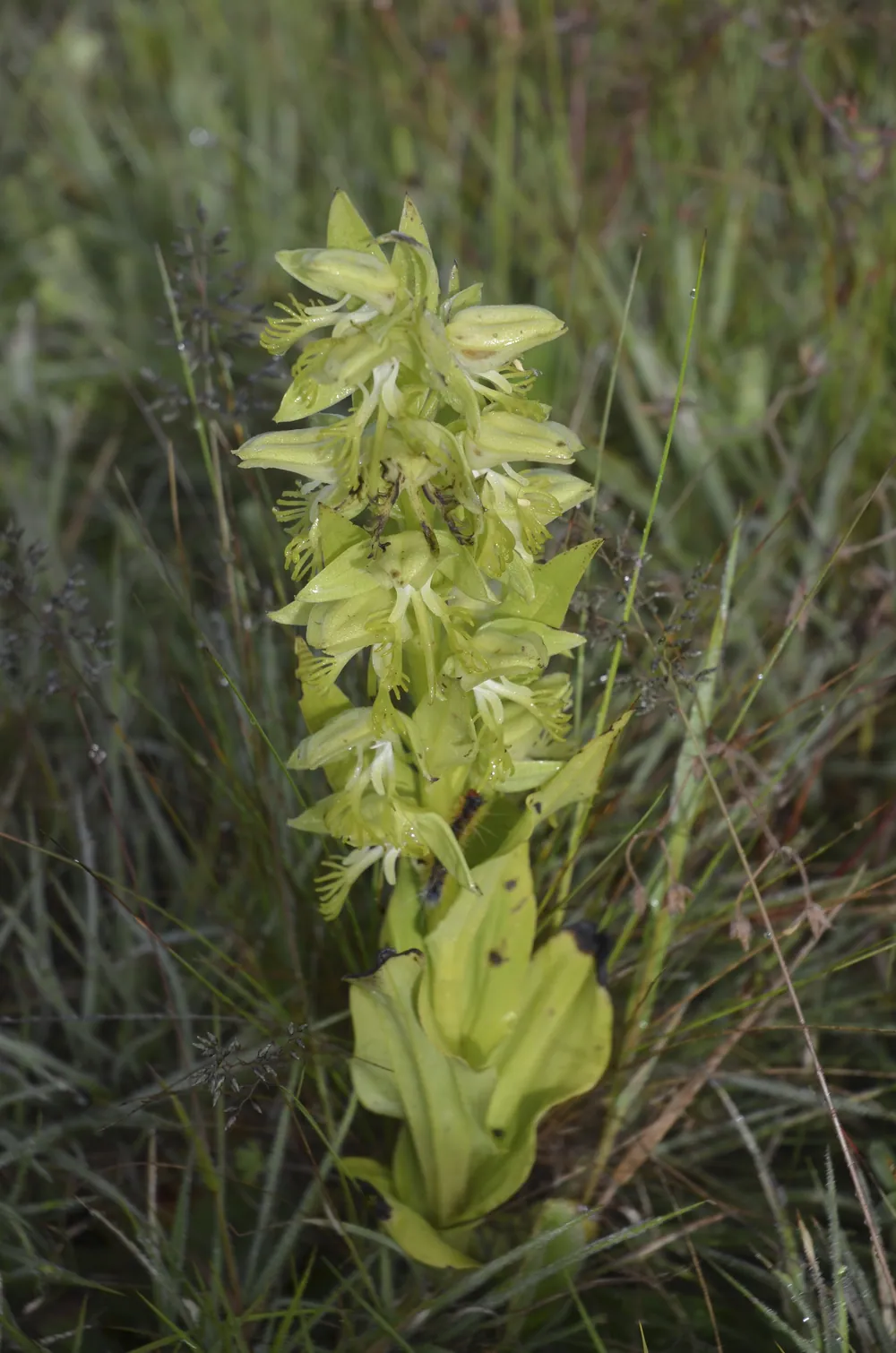
From late November to April, in the rains, the grassland comes into flower. TANAPA counts more than 350 species of plants on the plateau, among them more than 40 kinds of ground orchid, and irises, lilies, lobelias and red-hot pokers. For the rest of the year it is open, quiet, cold country with long views.
It is not a park for big game: TANAPA says there are no large predators. It is a park for walkers, botanists and birders, and it is cold. Nights can be close to freezing from June to August, which surprises people who packed for Tanzania.
The flowering
Late November to April: more than 350 plant species, including over 40 ground orchids.
Walking and cycling
No large predators. Trails to waterfalls, a crater lake and Mtorwi peak.
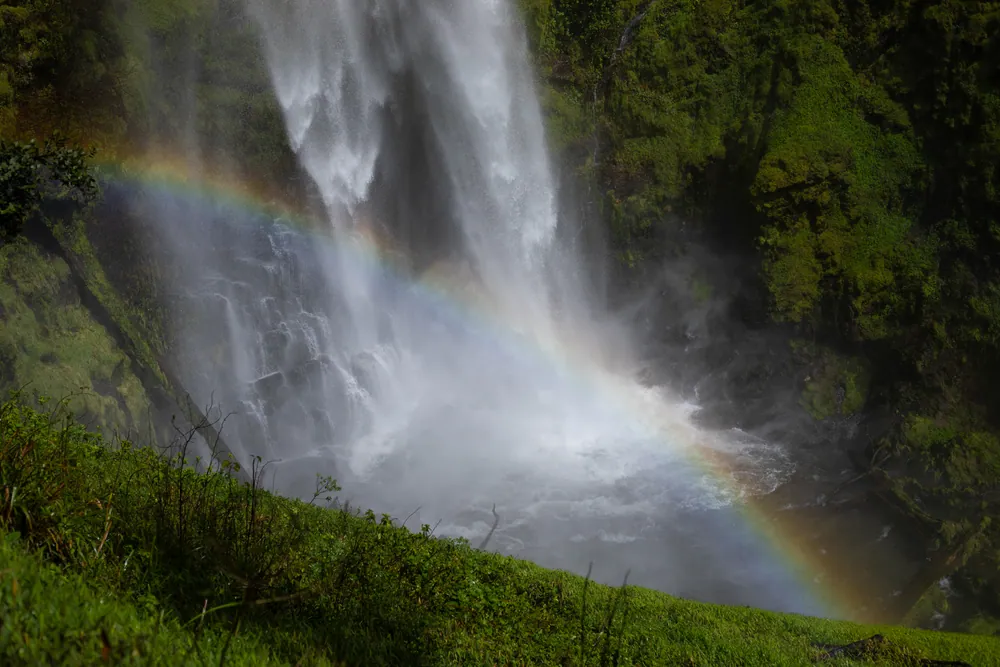
The Nhumbe waterfall
About 100 metres high, in the east of the park.
The kipunji
A monkey unknown to science until 2005, living in the Livingstone Forest.
By road from Mbeya, 67 km through Isyonje or 103 km through Chimala, according to TANAPA; or 165 km from Njombe through Makete. The nearest airport is Songwe, near Mbeya.
Kitulo lies on the Kitulo Plateau in the southern highlands, across the border of Njombe and Mbeya regions, north of Lake Nyasa. TANAPA gives its area as 465.9 km² and its height as about 2,600 metres, and puts Mtorwi peak, in the east of the park, at 2,961 metres. Other sources give a smaller area, 412.9 km².
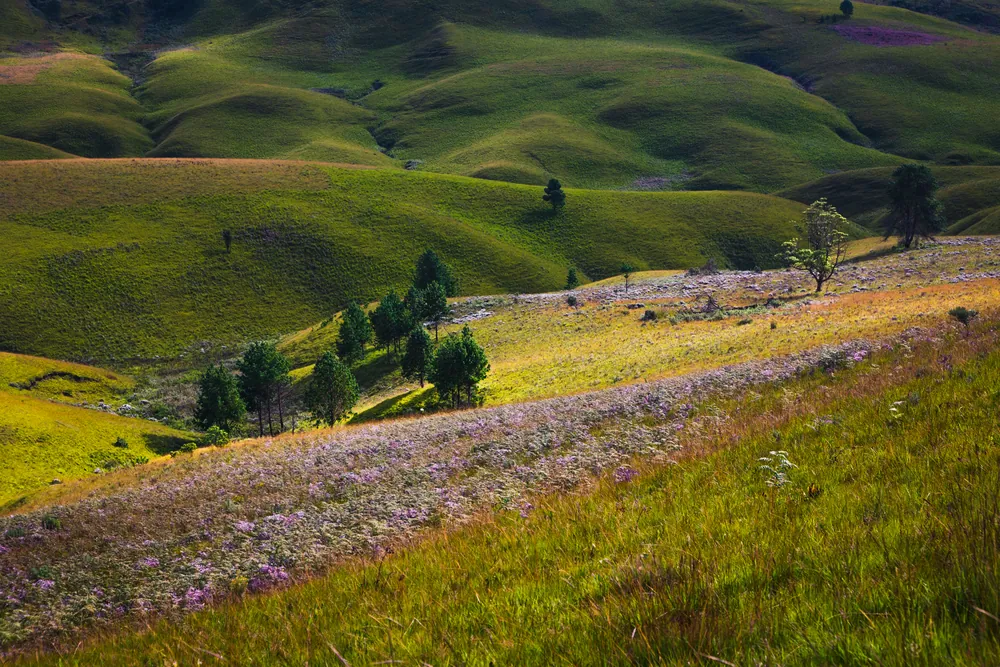
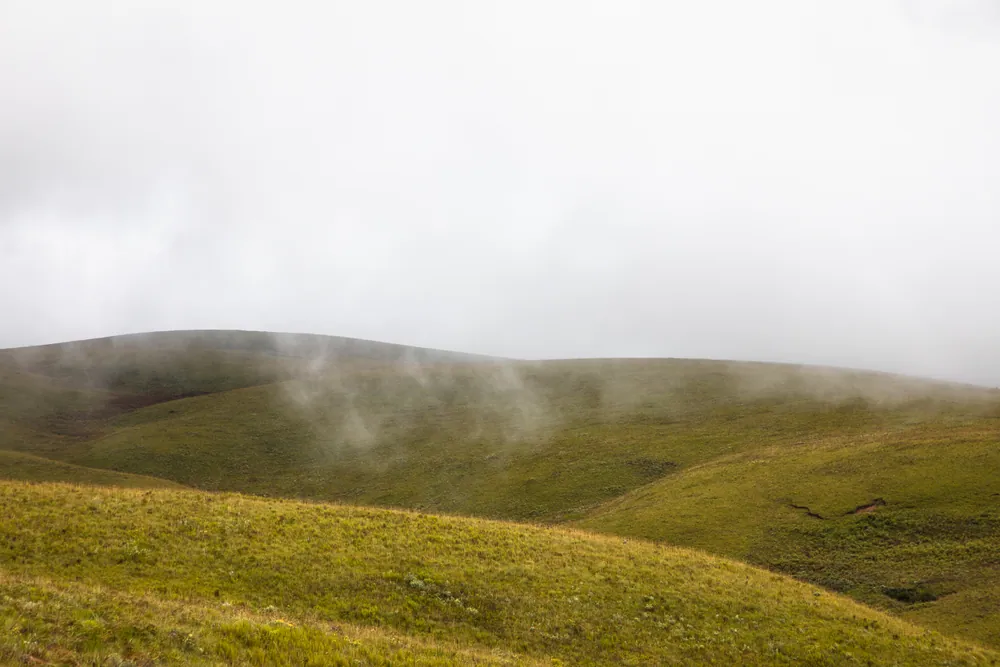
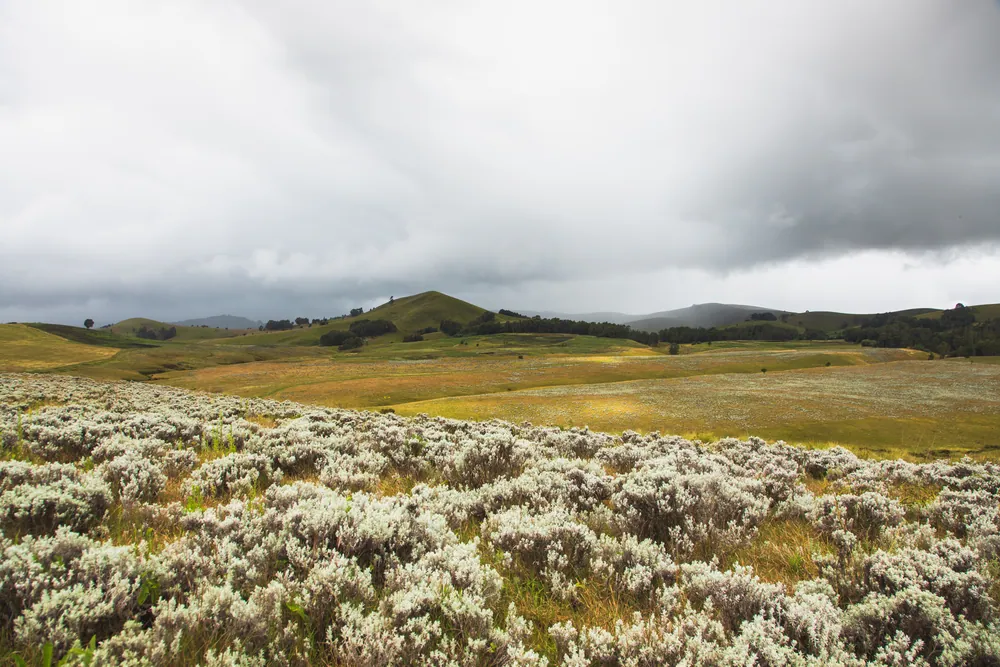
The park is mostly montane grassland: rolling hills of grass, with bogs in the hollows and rocky ridges between them. TANAPA's brochure describes three kinds of ground: well-drained grassland on volcanic soils, bogs that are wet for part or all of the year, and rocky ridges and slopes.
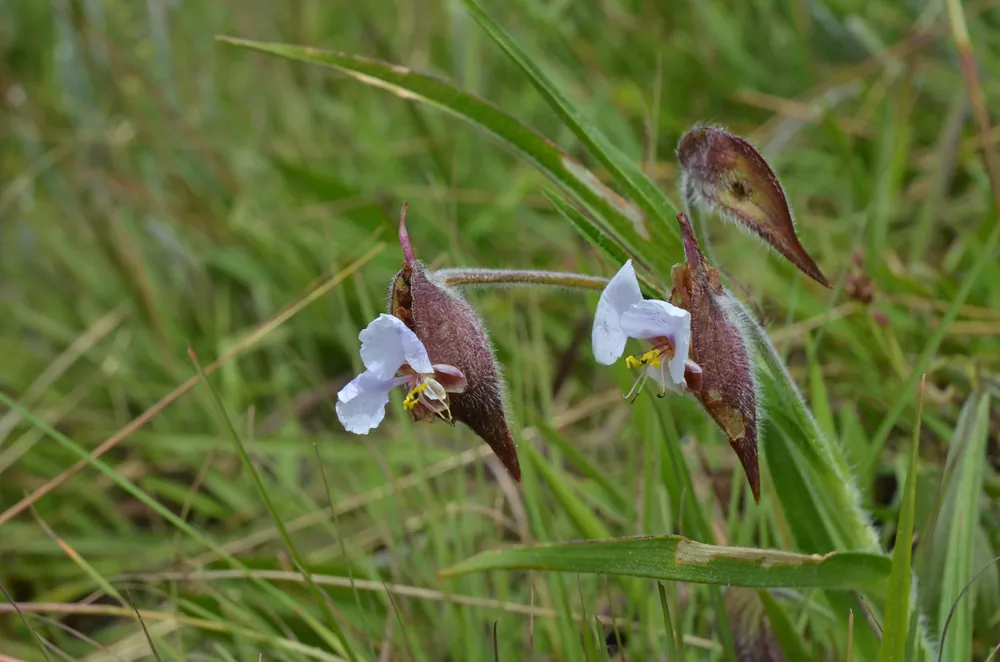
The flowers are the reason to come. TANAPA counts more than 350 species of vascular plants, including 45 ground orchids. Of those, it says, 31 are found only in Tanzania and 16 only around Kitulo and the Poroto Mountains. Some plants carry the park's name, such as Commelina kituloensis. The flowering runs from late November to April, in the rains.
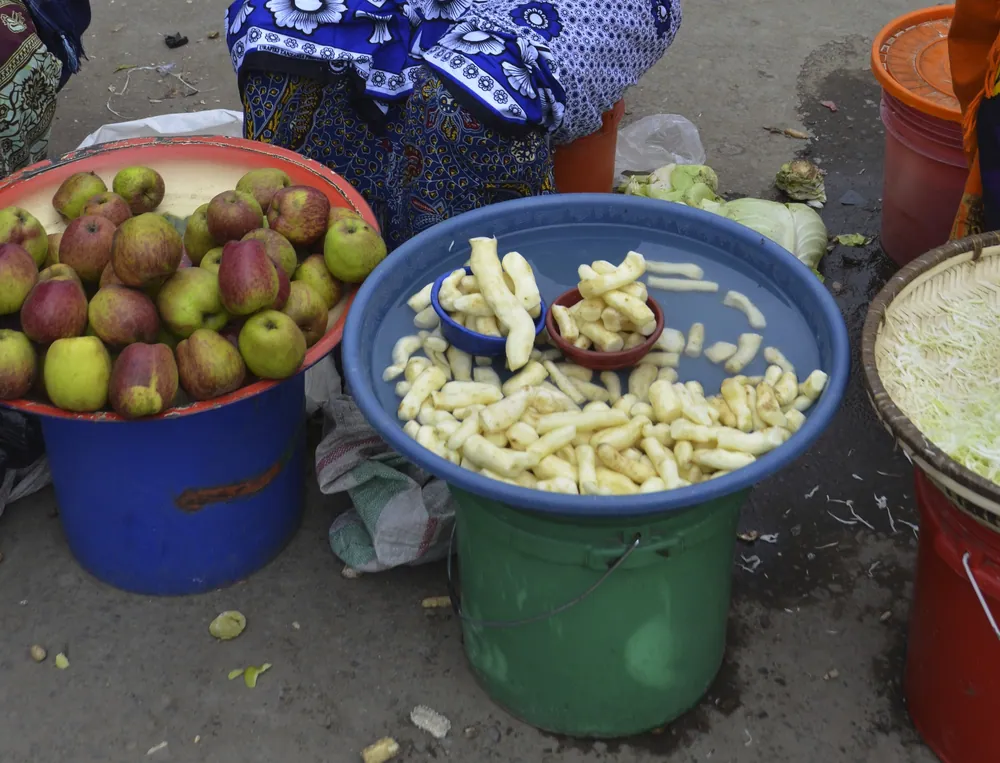
The park was created to save the orchids. In parts of Zambia, northern Malawi and south-western Tanzania, people have long eaten chikanda (or kinaka), a dish made from the boiled tubers of ground orchids. In 2003 the ecologist Tim Davenport of the Wildlife Conservation Society (WCS) and H. J. Ndangalasi reported that the trade had become a large commercial business: between 2.2 and 4.1 million orchid tubers a year were being taken from Tanzania to Zambia. As many as 85 species could be at risk, and large areas had already been stripped of their orchids.
WCS proposed protecting the plateau, and in 2002 President Benjamin Mkapa announced the national park. It was gazetted on 16 September 2005 (Government Notice 279) and took in part of the farm on the plateau and two forest reserves, Livingstone and Nhumbe.
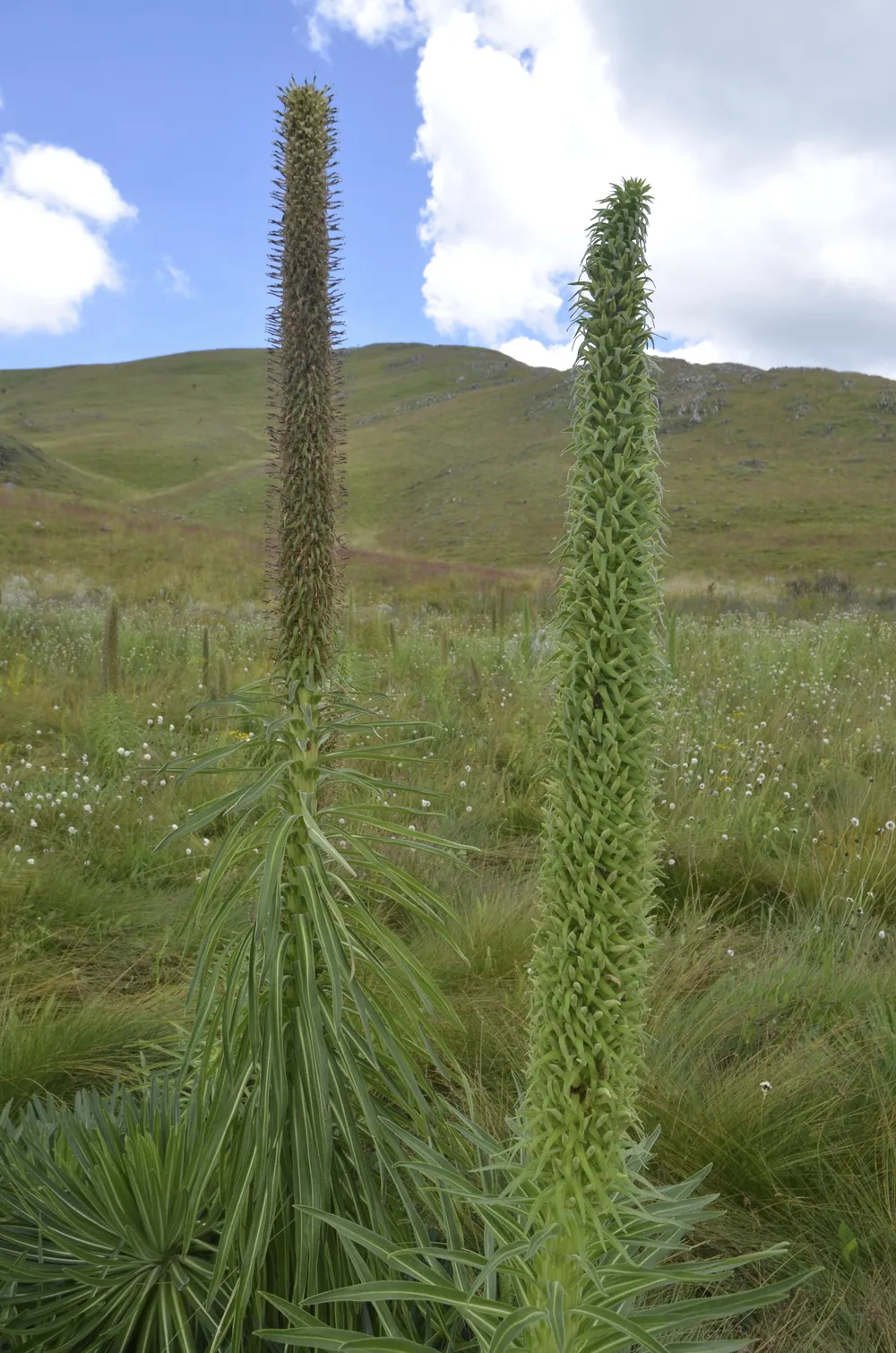
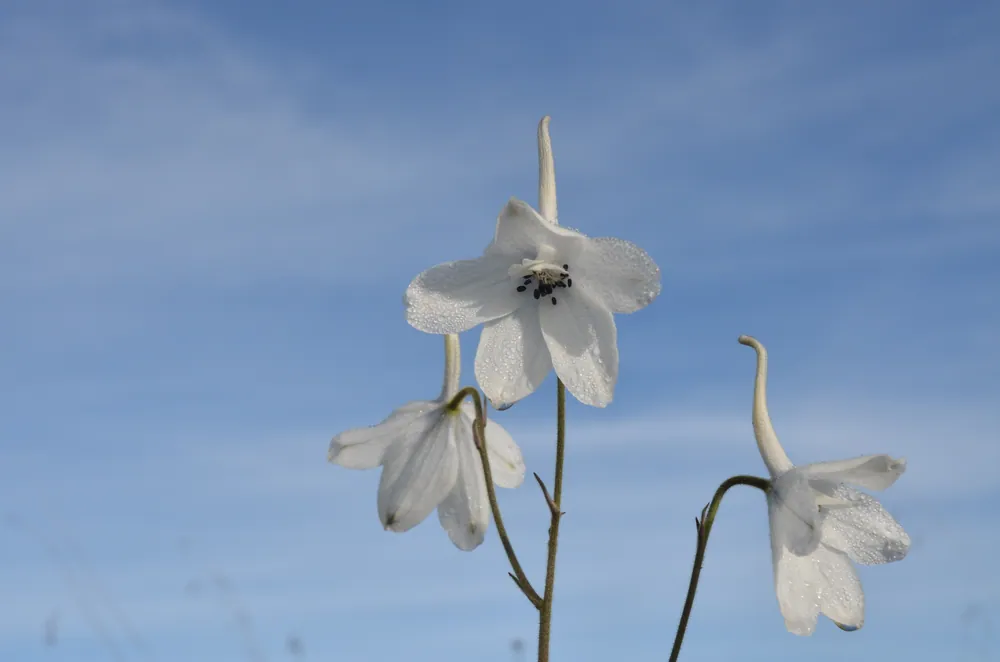
Among the plants you may see are Disa, Habenaria, Satyrium and Holothrix orchids, the tall Lobelia mildbraedii, wild delphiniums, Dierama (wandflowers), Moraea irises, red-hot pokers and the flame lily. Picking or taking any plant is forbidden.
TANAPA's brochure begins the park's history with a visit by the British explorer Frederic Elton, which it dates to 1870. Elton's only journey into this part of Africa, north from Lake Nyasa, was in 1877, the year he died.
In the 1960s the Food and Agriculture Organization of the United Nations took over a large part of the plateau for a wheat and sheep scheme. According to TANAPA, neither did well in the cold, wet climate, and in 1972 the land became a dairy farm, which is still working today. Hunting by the farmers wiped out the plateau's plains zebra in the 1960s.
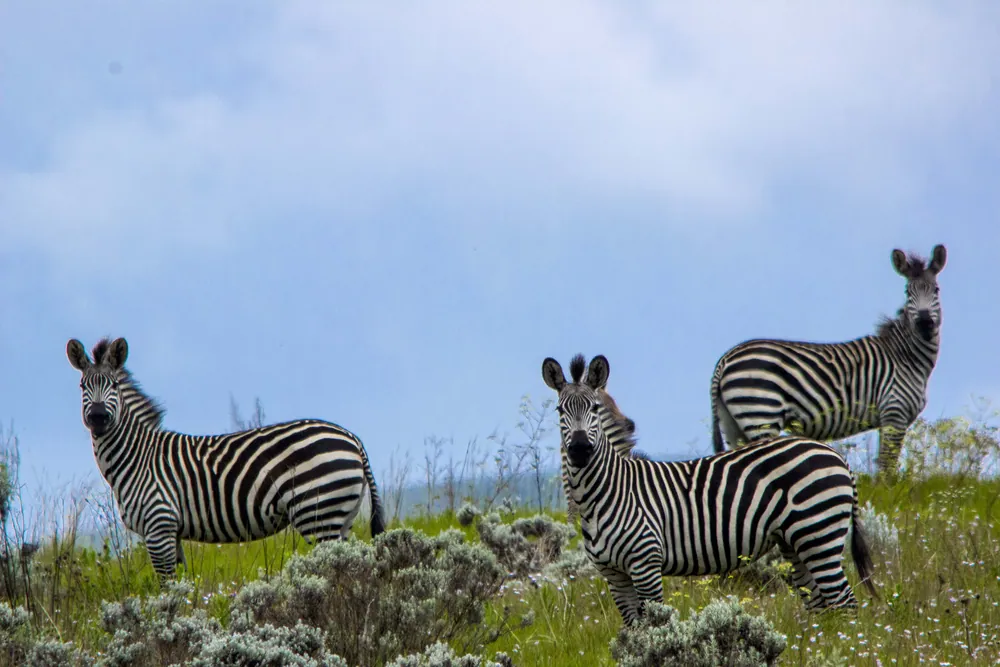
In October 2018, WCS and its partners brought 24 zebra (16 females and 8 males) from Mikumi National Park, about 700 km away, and released them on the plateau. WCS says that grazing animals, as well as fire, help keep the grassland rich in plants.
The largest forest in the park is the Livingstone Forest, which runs down the south-western slopes below the plateau. It was a forest reserve of about 240 km² until it became part of the park in 2005. There is mountain bamboo between the upper forest and the grassland. In the east, the Nhumbe valley holds forest of East African juniper and a waterfall about 100 metres high.
The Livingstone Forest is home to the kipunji, a monkey that scientists did not know about until the early 2000s. A WCS team found it on nearby Mount Rungwe and in the Livingstone Forest, and another team found it, separately, in the Ndundulu forest far to the north-east. It was described in the journal Science in 2005 and later given a genus of its own, Rungwecebus, named after Mount Rungwe. It is listed as Endangered. A census published in 2022 counted 59 groups in the Livingstone Forest, Mount Rungwe and the nearby Madehani village forest. The whole population is estimated at around 1,800 monkeys.
The forest is also home to Abbott's duiker and a dwarf galago from the Rungwe area. The kipunji lives deep in the forest and is rarely seen. Ask at the park headquarters if you want to try.
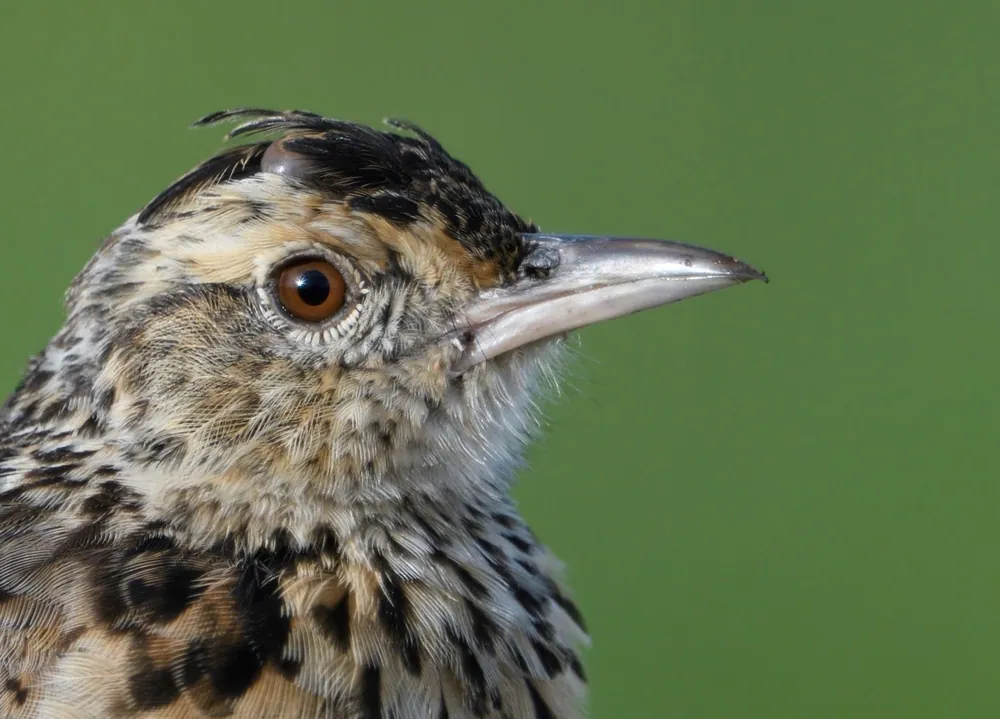
Kitulo is an Important Bird Area. Among its birds are the Kipengere seedeater and Uhehe fiscal, both of which live only in these highlands. TANAPA says blue swallows and Denham's bustards breed on the plateau, and that migrants come to spend part of the year here: lesser kestrels and pallid harriers from Europe, and Abdim's storks from north Africa. TANAPA's brochure calls several of these birds endemic, but the kestrels, harriers and storks are migrants that breed elsewhere.
Lake Dhambwe, a small crater lake reached by a 3 km trail through bamboo, has waterbirds such as the yellow-billed duck, white-faced whistling duck and red-knobbed coot.
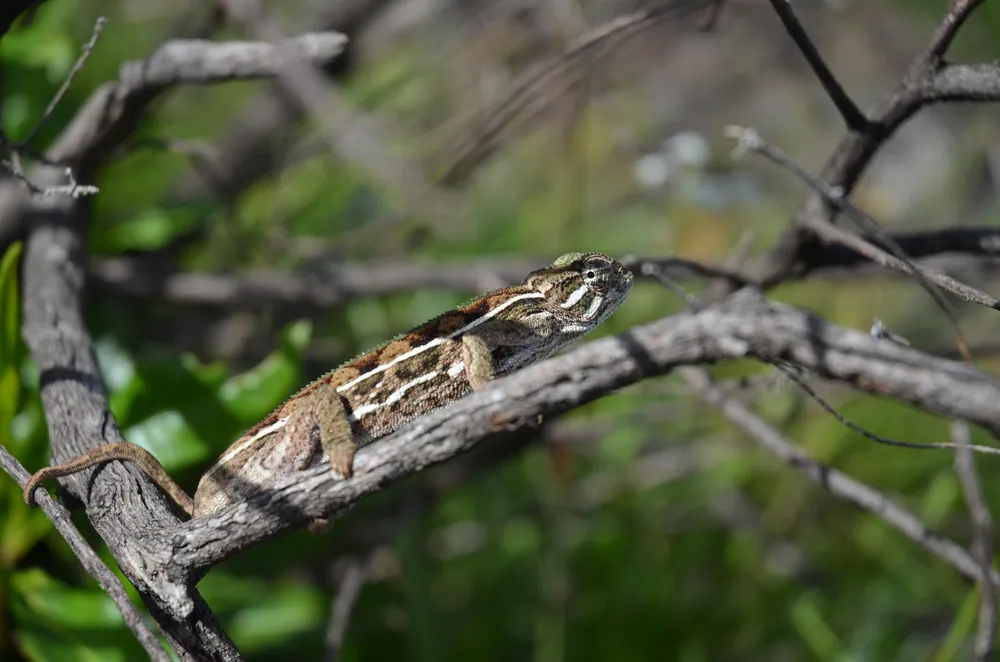
The mammals are small and shy: common duiker, klipspringer, reedbuck, bushbuck, side-striped jackal and slender mongoose, and the zebra brought back in 2018. There are no large predators.
By road, TANAPA gives three routes: from Mbeya through Isyonje, 67 km; from Mbeya through Chimala, 103 km; and from Njombe through Ikonda and Makete, 165 km. The main gate is Mwakipembo, near Matamba. By air, the nearest airport is Songwe, near Mbeya, 83 km away by the Isyonje road. By rail, TAZARA trains stop at Makambako. The roads are rough, and in the flowering season they are also wet. Come in a four-wheel-drive vehicle.
Fees. Kitulo is in TANAPA's lower band, with one rate all year: USD 30 per non-East African adult per day, USD 10 for children aged 5 to 15, and TZS 5,000 for East African citizens. All are exclusive of 18 per cent VAT, so USD 35.40 in practice. A walking safari is USD 20 for up to four hours or USD 25 for longer, and a park guide USD 20 per group per day. Cycling is USD 25 a day and motorbiking USD 20.
Things to do. Drive or walk the plateau when it is in flower. Walk to the Nhumbe waterfall (about 100 metres high, 20 km from the main gate, and an hour's walk down and back) or the smaller Mwakipembo falls, 4 km from the gate. Walk to Lake Dhambwe, or climb Mtorwi from the Nhumbe valley. There are two cycling loops, 22 km in all, from the Mwakipembo gate. TANAPA also points to the Mlivili and Usalama caves, where Wanji, Kinga and Nyakyusa people hid during wars in the past.
Staying. TANAPA has cottages in the park (book ahead), the Mwakipembo public campsite with toilets, a dining shelter and a fireplace, and the Maua special campsite. Public campsites are USD 30 per person per night and special campsites USD 50. Matamba, just outside the park, has guesthouses and lodges.
When to go. It depends what you come for. The flowers are best from late November to April, which is also the rainy season. The rains run from October to May, with about 1,600 mm a year. TANAPA gives daytime highs of 14.5 to 18 °C and nights of 7 to 8 °C from December to April. From June to August nights can fall to 0.5 °C, with frost. Bring warm clothes whenever you come.
Fees are from TANAPA's own 2023/24 tariff schedule, the most recent published, and are quoted exclusive of 18 per cent VAT. They may have risen since; confirm before budgeting.
- When do the flowers bloom at Kitulo?
- From late November to April, during the rains. TANAPA counts more than 350 plant species on the plateau, including over 40 ground orchids. Outside those months the plateau is open grassland with fewer flowers.
- How do you get to Kitulo National Park?
- By road from Mbeya: 67 km through Isyonje or 103 km through Chimala, according to TANAPA. From Njombe it is 165 km through Makete. The nearest airport is Songwe, near Mbeya. The roads are rough and muddy in the rains, so come in a four-wheel-drive vehicle.
- How much does it cost to enter Kitulo?
- USD 30 per non-East African adult per day, the same all year, exclusive of 18 per cent VAT: USD 35.40 in practice. Children aged 5 to 15 pay USD 10. Walks, guides, cycling and camping are extra.
- Why was Kitulo made a national park?
- Mainly to protect its plants, especially its ground orchids. In 2003 researchers found that millions of orchid tubers a year were being dug up and taken to Zambia, where they are eaten as chikanda. The park was announced in 2002 and gazetted in 2005.
- Are there animals in Kitulo?
- Small ones, mostly: duikers, reedbuck, klipspringer and jackal, plus plains zebra brought back from Mikumi in 2018. The rare kipunji monkey lives in the Livingstone Forest. There are no large predators. Birds include the Kipengere seedeater, blue swallow and Denham's bustard.
- How cold is Kitulo?
- Cold for Tanzania. TANAPA gives daytime highs of 14.5 to 18 °C and nights of 7 to 8 °C from December to April, and nights down to 0.5 °C with frost from June to August. Bring warm clothes and rain gear.
- Where can you stay at Kitulo?
- TANAPA has cottages in the park (book ahead), the Mwakipembo public campsite and the Maua special campsite. Matamba, just outside the park, has guesthouses and lodges.
Edited by Kabeer Dalvi
Checked against
- Kitulo National Park — official pageTANAPA
- Tanzania National Parks Tariffs 2023/2024 — schedule to GN No. 490A of 2020TANAPA
- Kitulo National Park — official park brochureTANAPA
- An escalating trade in orchid tubers across Tanzania's Southern Highlands: assessment, dynamics and conservation implications (2003)Oryx
- Absent for decades, zebras reintroduced to park in southern Tanzania (2018)Mongabay
- Kitulo National Park — creation, area, forests, mammalsWikipedia
- Kipunji — discovery, status, 2022 censusWikipedia
- James Frederic Elton — his 1877 journeyWikipedia