Rumanyika-Karagwe
National Park · TANAPA
A small Kagera park with a nineteenth-century kingdom behind its name.
Edited by Kabeer Dalvi
- Area
- 247 km²
- Established
- 2019
- Region
- Kyerwa District, Kagera Region
- Best time
- January–February and June–August
Wildlife
- Buffalo
- Waterbuck
- Leopard
- Bushbuck
- Baboon
- Vervet monkey
- Forest birds
Rumanyika-Karagwe covers 247 square kilometres in Kyerwa District, in the far north-west of Tanzania near the Ugandan border. It was upgraded from game reserve to national park in 2019. It is named after Rumanyika, king of Karagwe in the mid-nineteenth century, who welcomed the explorers John Hanning Speke and James Augustus Grant in 1861 on their way to find the source of the Nile.
The park is a deep valley with a slow, winding river that leads into lakes and swamps, with forest, and tall-grass acacia woodland on the lower slopes. TANAPA lists buffalo, waterbuck, leopard, bushbuck, baboons and monkeys, and more than 300 bird species.
It is small and very few people visit. The only accommodation inside is camping, and you see the park on game drives and on foot with a ranger.
The Karagwe kingdom
King Rumanyika welcomed Speke and Grant in 1861.
A deep river valley
Forest, swamp and small lakes below steep hills.
Walking with a ranger
The best way to see a park this small.
Over 300 bird species
Forest birds and waterbirds, by TANAPA's count.
By road from Bukoba (185 km) or Kayanga (85 km) to the Nyakatuntu gate, or from Uganda through the Kikagati–Murongo border post, 8 km from the Rugasha gate.
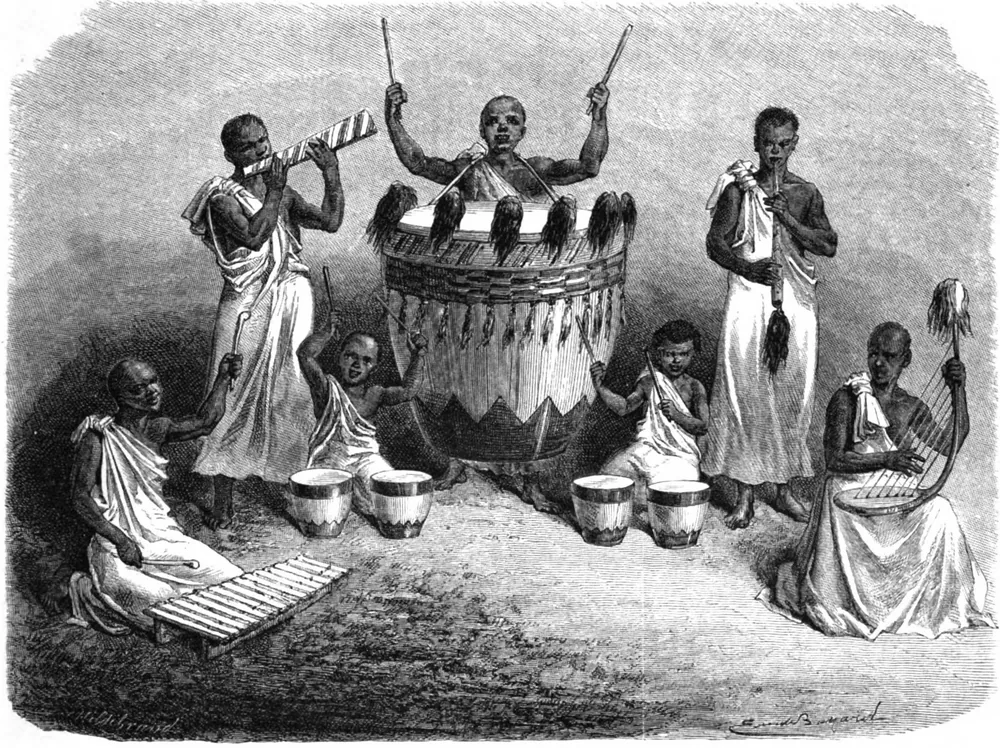
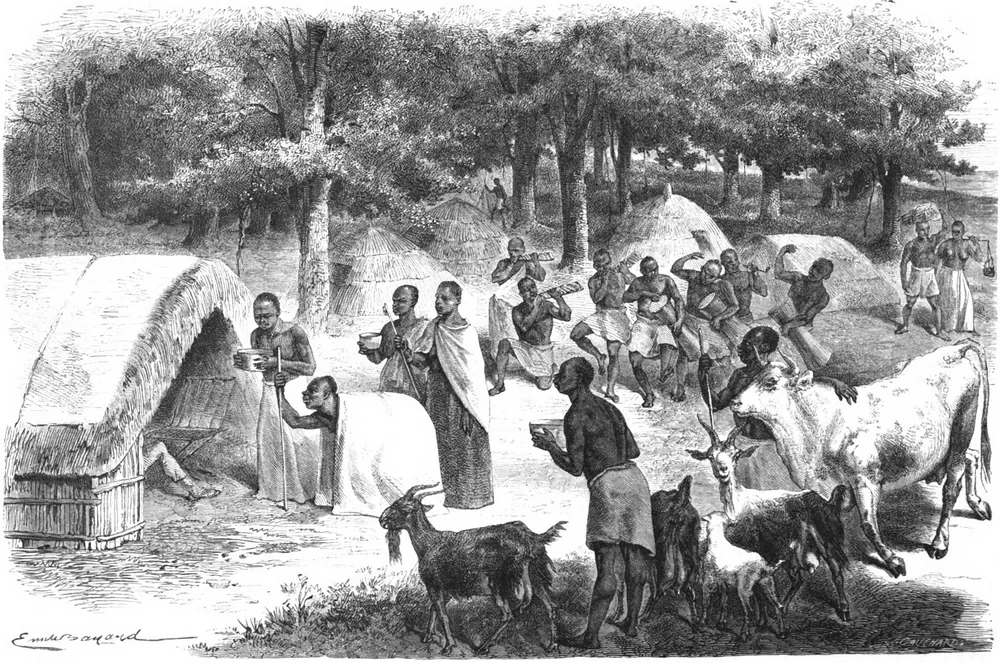
Karagwe was one of the kingdoms of the Great Lakes, between Lake Victoria and what is now Rwanda. By tradition it was founded by Ruhinda around 1450, and its kings ruled for five hundred years. Its capital was at Bweranyange. Its wealth was in cattle and iron, and it sat on the trade routes that ran from the coast to Buganda. The kingdom was at its strongest in the nineteenth century, under Ndagara (about 1820 to 1853) and then his successor Rumanyika, who ruled until the early 1880s. The old kingdoms of Tanzania were abolished soon after independence, in the early 1960s.
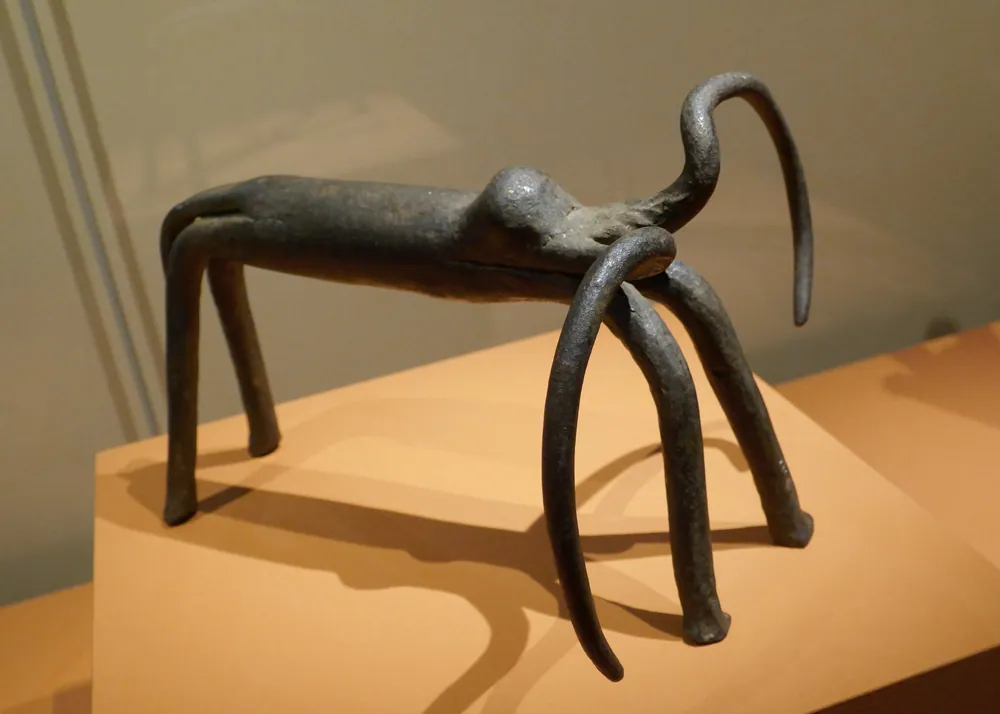
The best-known art of Karagwe is its ironwork: tools, spears, and cattle figures forged in iron. Some of them were symbols that tied the king to the smiths and to iron-making. The Nyambo people, cattle-keepers, trace their descent to the kingdom.
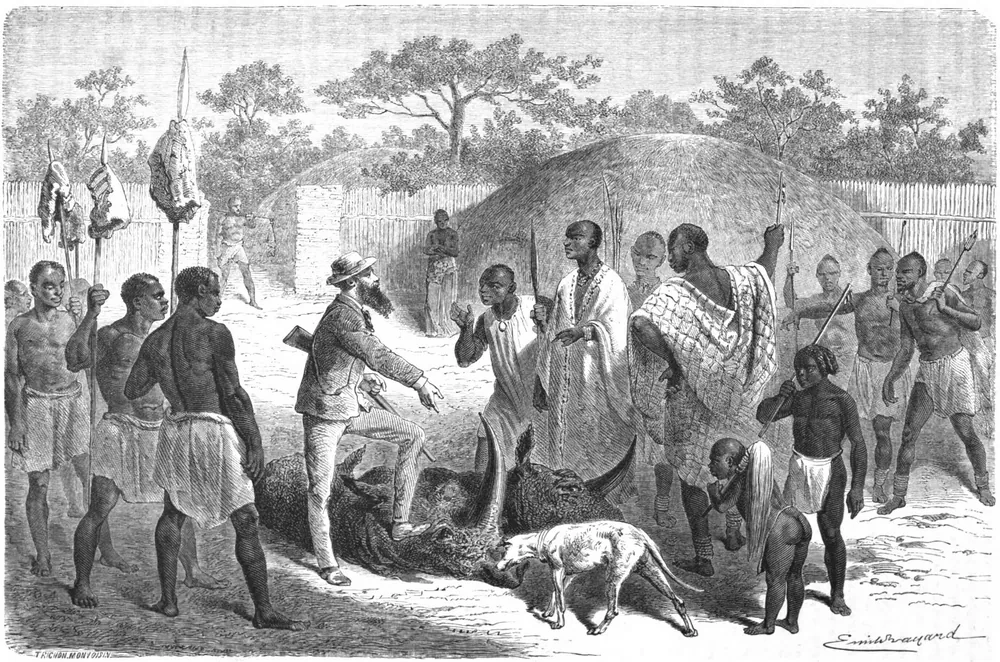
In November 1861 the British officers John Hanning Speke and James Augustus Grant reached Karagwe on their journey to find the source of the Nile. Rumanyika treated them very well. When the road to Buganda opened in January 1862, Speke went on north. Grant's leg had become so badly inflamed that he could not walk, and he stayed on as the king's guest, treated by local doctors, until 14 April 1862. Then he left to join Speke.
One of Rumanyika's gifts is still in London. His canoe-men caught a young male sitatunga, the swamp antelope, in the reeds, and the king gave it to Speke. It became the type specimen of the species, the one it is described from, which is named Tragelaphus spekii after Speke. The Natural History Museum in London holds it. Sitatunga skins, Speke wrote, were highly prized in Karagwe and worn by kings and officers.
The park carries the king's name. It was first a game reserve called Rumanyika Orugundu, in honour of the Karagwe kingdom.
TANAPA's brochure gives the history. The area became a game controlled area in 1965 and a game reserve in 1974. It was run by the regional administration until 1996, when it became a national project under the government's Wildlife Division. It became a national park in 2019, one of three in Kagera that year, with Burigi-Chato and Ibanda-Kyerwa.
TANAPA gives the park's height as about 1,700 metres above sea level, so the nights are cool. Its map shows the main features: the Nyakatuntu gate, visitor centre and public campsite in the south-east; a permanent tented camp at Rugasha in the north; the Omurushamboya dam in the centre; and a hot spring on the eastern edge. TANAPA's website says the Kagera River forms part of the boundary.
Wildlife. TANAPA's brochure lists buffalo, waterbuck, leopard, bushbuck, baboons and monkeys. Its website adds elephant and giraffe. The brochure counts more than 300 bird species, forest birds and waterbirds among them.
Getting there. By road, it is 185 km from Bukoba through Kyaka and Omurushaka to Nyakatuntu, or 85 km from Kayanga through Kigorogoro. From Uganda, the Kikagati–Murongo border post is about 8 km from the Rugasha gate. By air, fly to Bukoba or Chato, then take a light aircraft to the Ihanda airstrip in Karagwe District or the Kagaga airstrip in Ibanda-Kyerwa. Ibanda-Kyerwa's gate is near the same border post, so you can visit both parks on one trip.
What you do. Game drives on the park's tracks, walking safaris with an armed ranger, and birdwatching. The fee schedule also lists canoeing, boat trips and sport fishing here.
Fees. Rumanyika-Karagwe is in TANAPA's lower band, with one rate all year: USD 30 per non-East African adult per day, USD 10 for children aged 5 to 15 and TZS 5,000 for East African citizens, all before 18 per cent VAT, so USD 35.40 in practice. Public camping is USD 30 per person per night. A walk is USD 20–25, canoeing USD 10 for up to three hours, a boat trip USD 20, sport fishing USD 25 a day and a park guide USD 20 per group per day.
Staying. The brochure says the only accommodation inside the park now is camping. Otherwise you stay in the nearest towns.
When to go. TANAPA gives 729 to 995 mm of rain a year, with little or none in January and February and the most from March to May and September to December. Its best times are January to February and June to August. Temperatures range from about 14 °C to 26 °C.
Fees are from TANAPA's own 2023/24 tariff schedule, the most recent it has published, and are quoted before 18 per cent VAT. They may have gone up since, so check them before you budget.
- Who was Rumanyika?
- The king of Karagwe from the 1850s until the early 1880s, when the kingdom was at its strongest. He welcomed the explorers Speke and Grant in 1861, and the park is named after him.
- Where is Rumanyika-Karagwe National Park?
- In Kyerwa District, Kagera Region, in the far north-west of Tanzania near the Ugandan border. It covers 247 km².
- What animals live in Rumanyika-Karagwe?
- TANAPA lists buffalo, waterbuck, leopard, bushbuck, baboons and monkeys, and on its website elephant and giraffe. It counts more than 300 bird species.
- How do you get to Rumanyika-Karagwe?
- By road from Bukoba (185 km) or Kayanga (85 km) to the Nyakatuntu gate, or from Uganda through the Kikagati–Murongo border post, 8 km from the Rugasha gate. Light aircraft can fly from Bukoba or Chato to nearby airstrips.
- How much does it cost to visit Rumanyika-Karagwe?
- TANAPA's 2023/24 schedule sets USD 30 per non-East African adult per day, the same all year, before 18 per cent VAT, so USD 35.40 in practice. Camping is USD 30 per person per night.
- When is the best time to visit Rumanyika-Karagwe?
- TANAPA recommends January to February and June to August, the drier months.
Edited by Kabeer Dalvi
Checked against
- Rumanyika-Karagwe National Park — official pageTANAPA
- Tanzania National Parks Tariffs 2023/2024 — schedule to GN No. 490A of 2020TANAPA
- Rumanyika-Karagwe National Park — official park brochureTANAPA
- Retracing royal roots of a 160 year old specimen (2026)Natural History Museum, London
- Grant, James Augustus (1827–1892) — the Dictionary of National Biography entryBurtoniana
- Kingdom of Karagwe — rulers, iron, abolitionWikipedia
- Rumanyika-Karagwe National ParkWikipedia