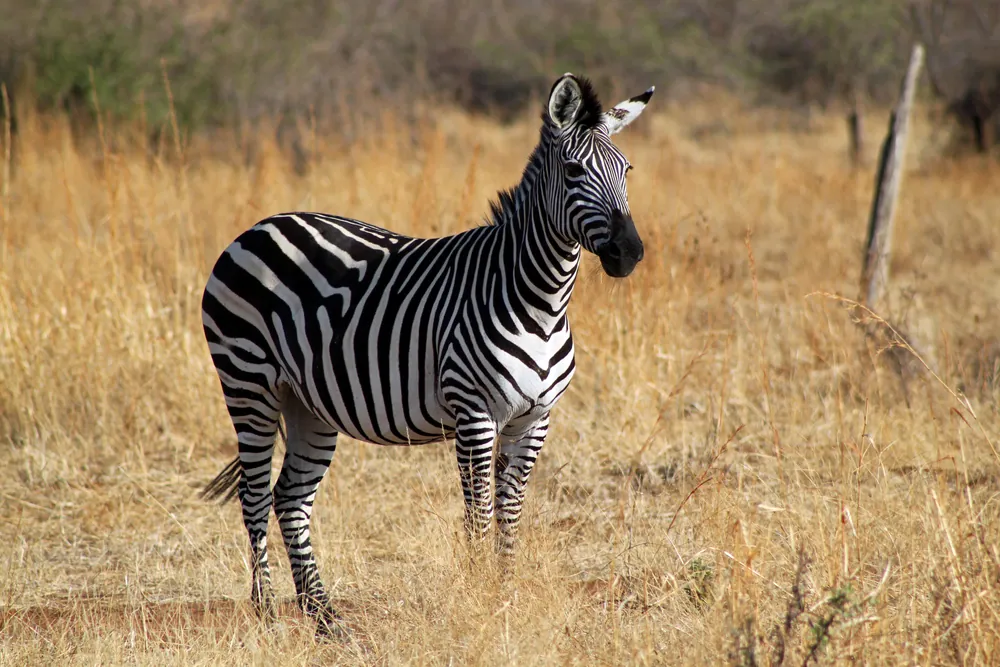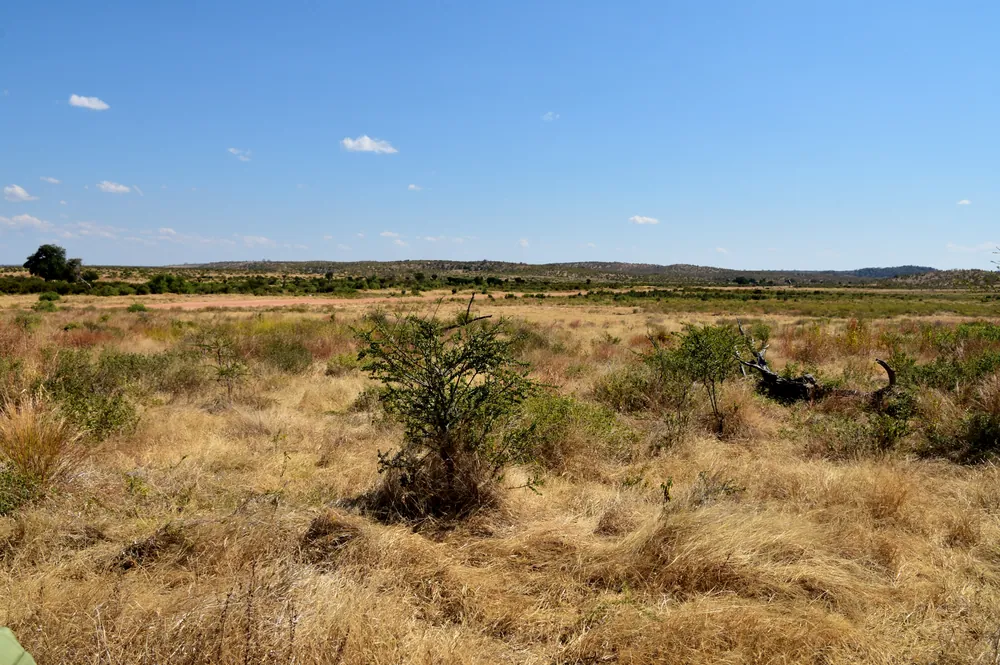
Ruaha
National Park · TANAPA
The second largest park in the country, and one of the emptiest.
Edited by Kabeer Dalvi
- Area
- 19,822 km²
- Established
- 1964
- Region
- Iringa Region
- Best time
- June–October
Wildlife
- Lion
- Leopard
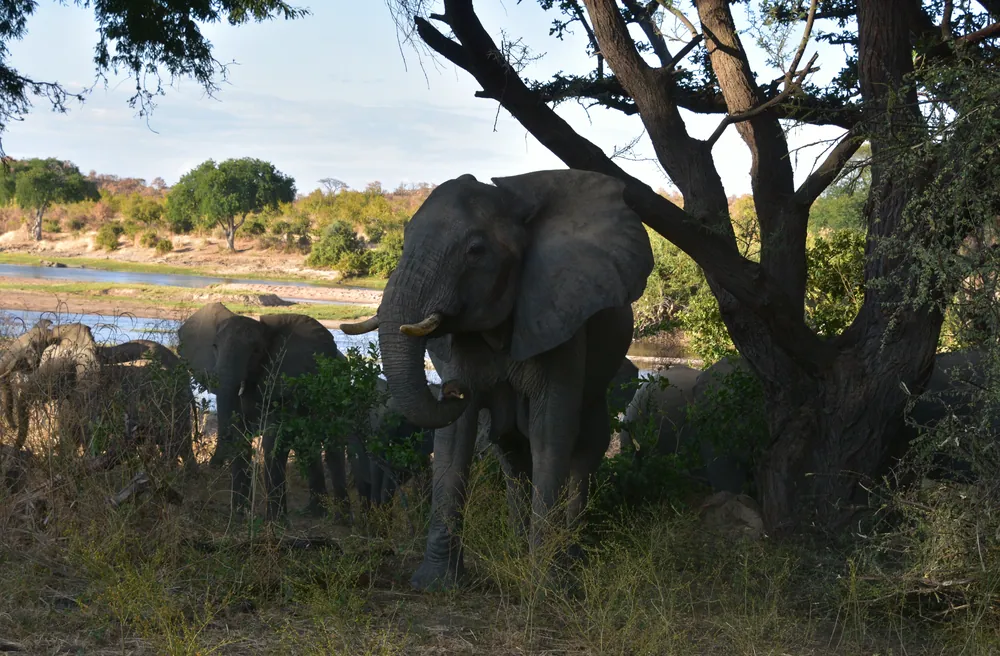
- Elephant
- Greater and lesser kudu
- Sable
- Roan
- African wild dog
Ruaha covers about 19,822 square kilometres of the central Tanzanian plateau, making it the second largest national park in the country after Nyerere. It was larger until 2023, when boundary changes brought it down from 20,226 km². It receives a fraction of the visitors the northern circuit does, and in the dry season it is as good as anywhere in East Africa for predators.
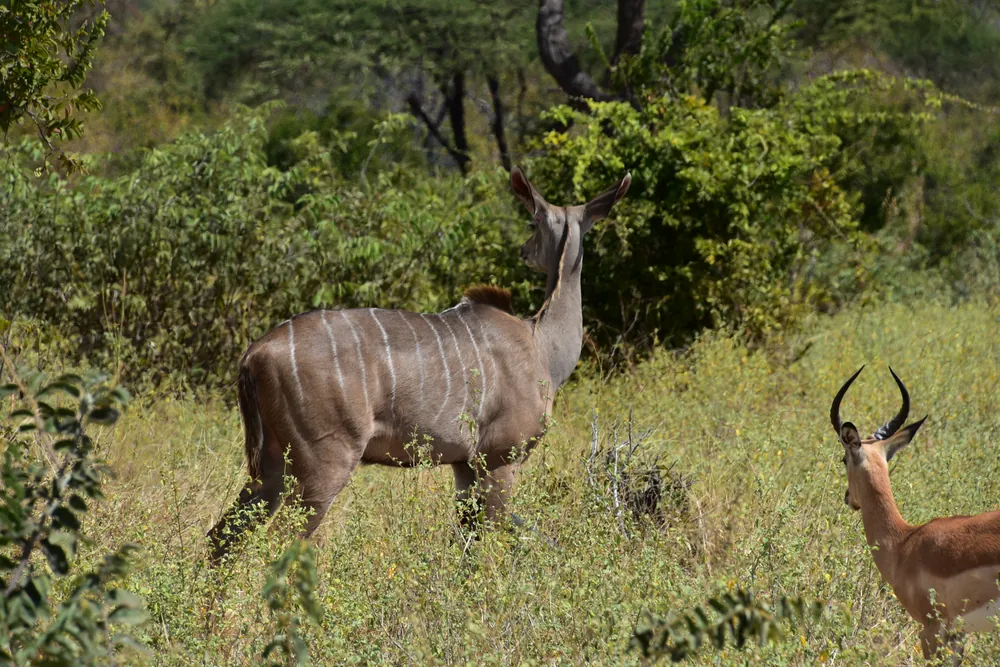
The park sits on a transition zone where eastern and southern African species overlap — which is why you can see greater and lesser kudu in the same place, along with sable and roan antelope. It holds large populations of elephant, lion, leopard and cheetah, and rare African wild dog, and TANAPA records more than 570 bird species.
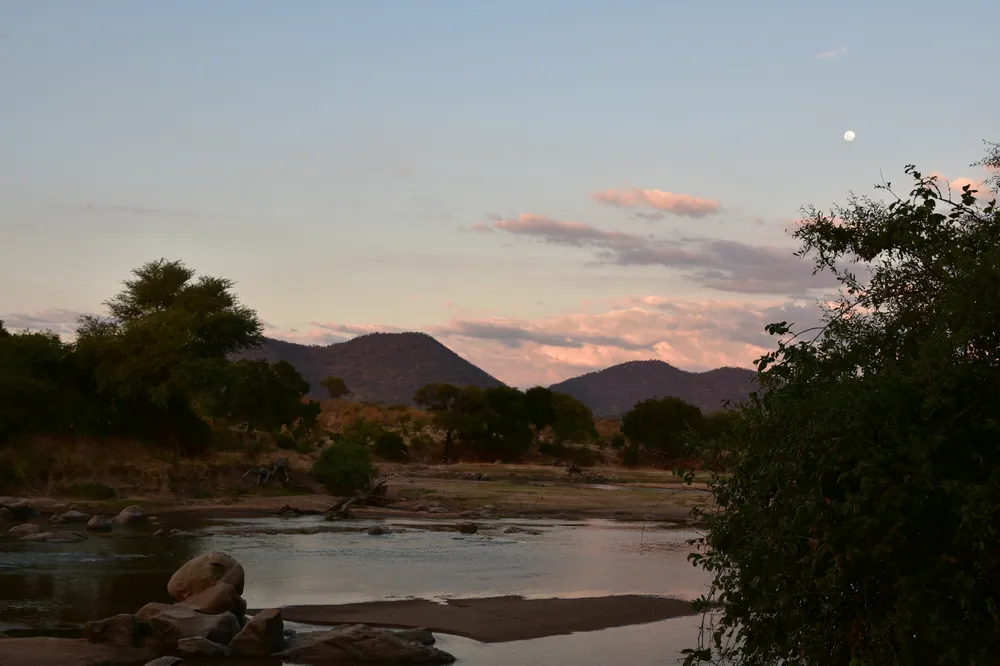
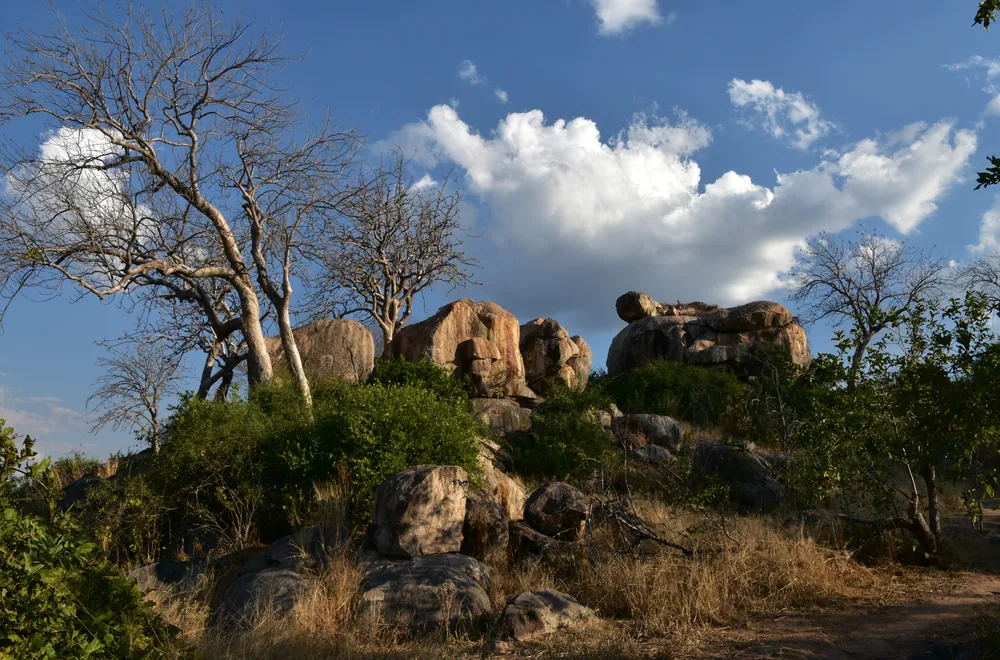
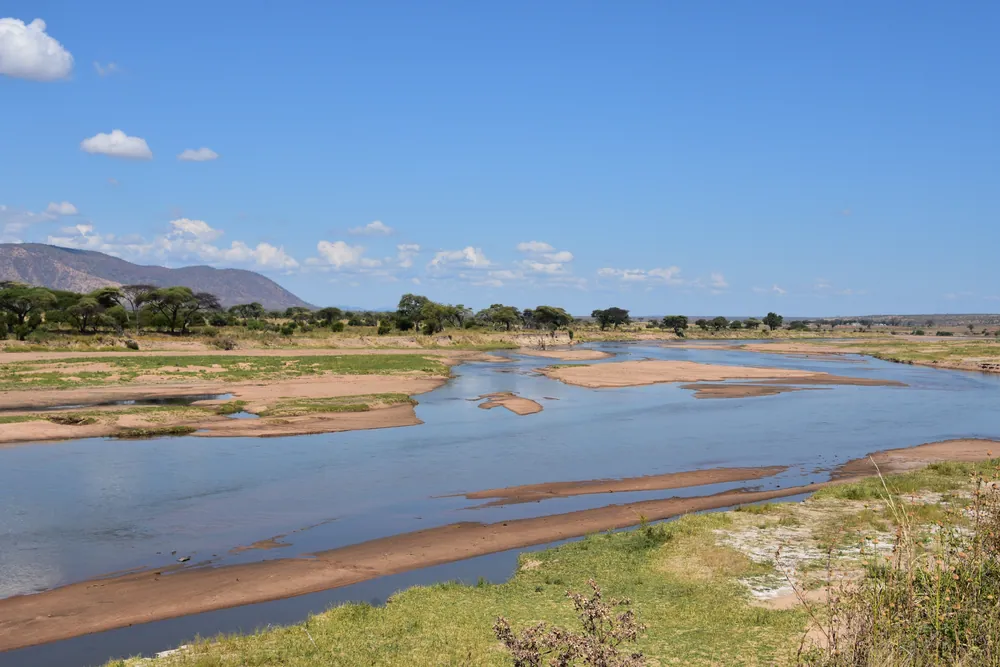
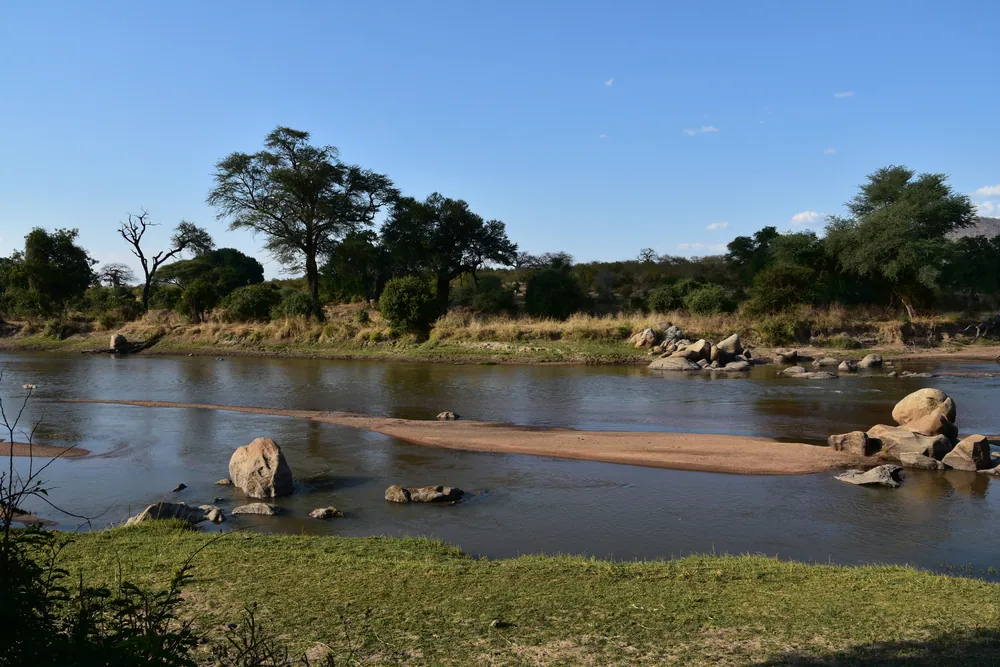
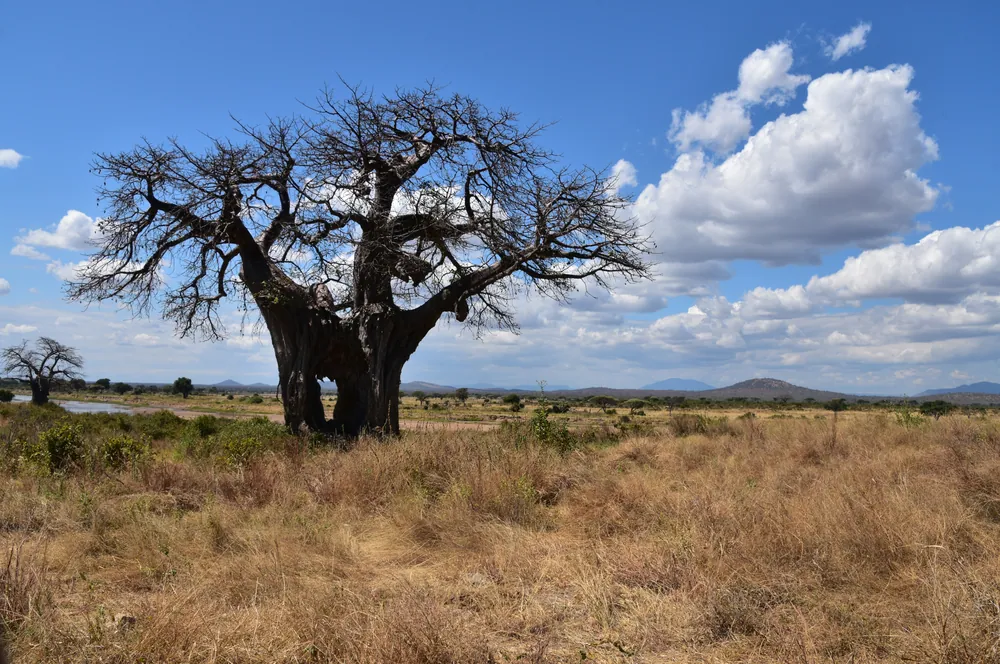
The Great Ruaha River is the spine of it. In the dry months it shrinks to a chain of pools along a wide sand bed, and everything in the park arranges itself around them. Baobabs stand across the hills, and the light in the late afternoon is the sort people spend a career trying to photograph.
The Great Ruaha River
Dry-season pools where the whole park concentrates.
Predators
Lion, leopard, cheetah and wild dog, in a park few people visit.
Kudu, sable and roan
The transition-zone overlap that makes Ruaha's species list unusual.
Almost nobody else
A fraction of the northern circuit's traffic, on many times the area.
Flights from Dar es Salaam, Kilimanjaro or Arusha to the Msembe and Jongomero airstrips. By road it is about 108 km from Iringa and 625 km from Dar es Salaam.
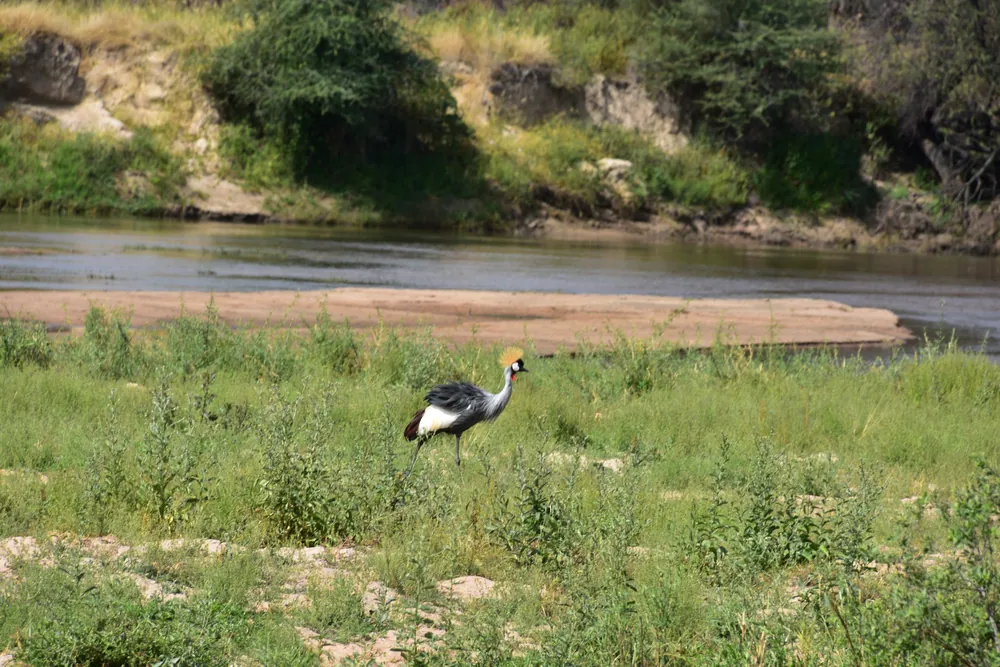
The park takes its name from the Great Ruaha River, which runs about 475 km from the Kipengere range in the south-west to the Rufiji, and forms the park's south-eastern edge. In the dry season, TANAPA notes, it is what draws the park's wildlife in: the river shrinks to channels and pools across a wide bed of sand and boulders, and the animals come down to it.
TANAPA lists sand rivers among the park's landscapes, and its map marks the Mwagusi, the Mdonya and the Jongomero running in towards the Great Ruaha.
The river now stops. It used to flow all year. Since the early 1990s its dry-season flow has fallen, sections of it dried out completely in 1993 and in dry years since, and by 2019 it carried no flowing water for several months a year. The cause lies upstream, in the Usangu plains, where large rice-irrigation schemes and heavy dry-season grazing take the water before it reaches the park. Downstream the same river feeds the Mtera and Kidatu hydropower dams and millions of people across its basin, so every user competes for the same flow.
In 2008 the Usangu wetlands, the river's upstream catchment, were brought inside the park. Whether that has been enough to restore the dry-season flow is not settled.
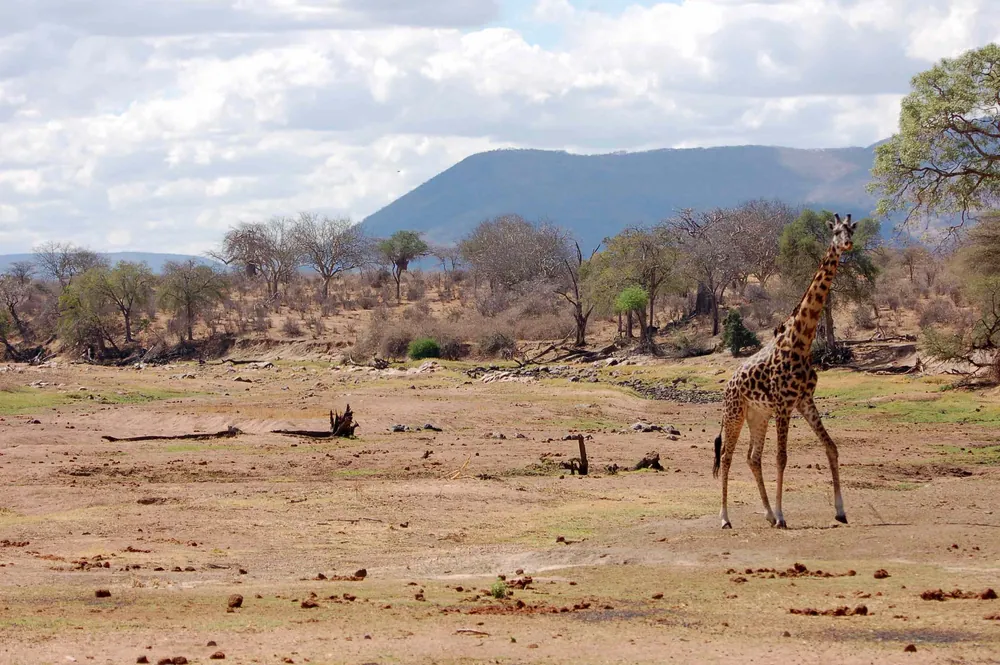
Ruaha sits where the wildlife of East Africa meets that of southern Africa, and its species list shows it. Greater and lesser kudu live here together, which few parks can say. So do sable and roan antelope, Lichtenstein's hartebeest, topi and bohor reedbuck, and TANAPA notes that the park is the most southerly point in the range of Grant's gazelle, an East African species.
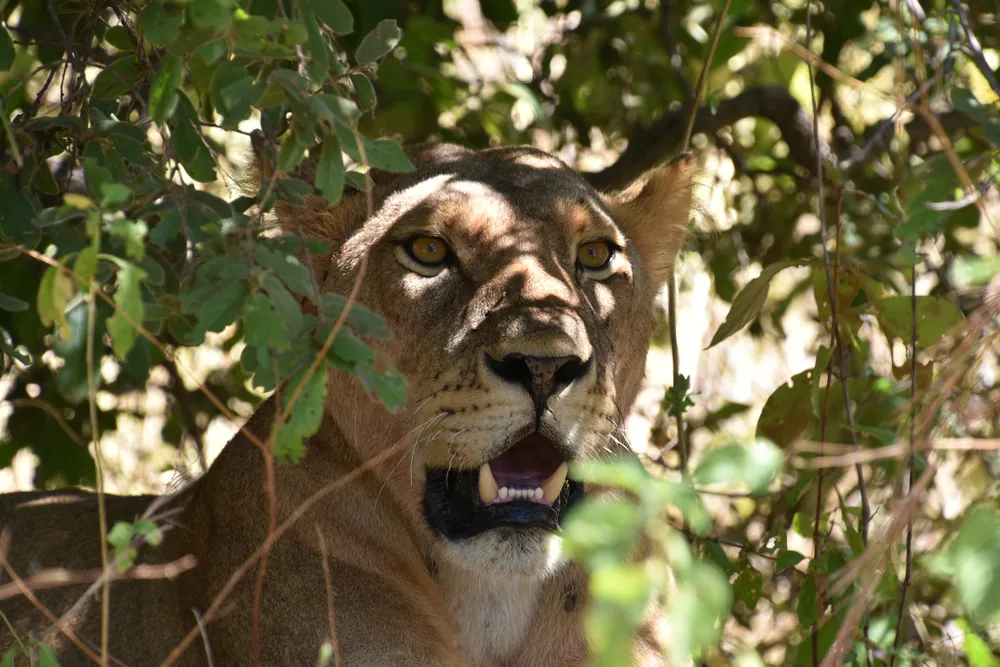
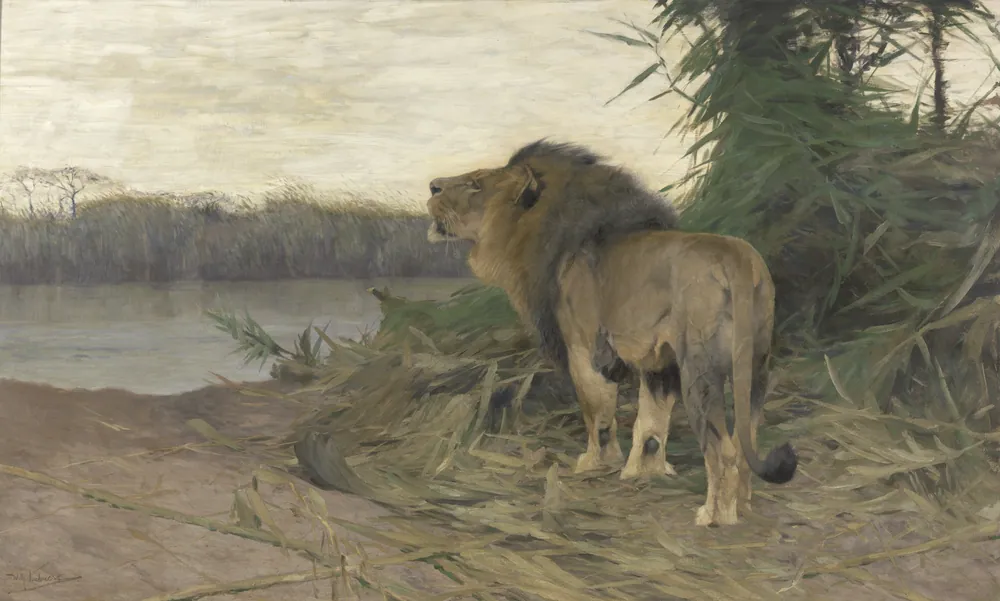
It is above all a predator park. The wider Ruaha landscape supports close to 10% of the world's remaining lions, according to the UN Development Programme's Equator Initiative. Leopard, cheetah and African wild dog are all present, and TANAPA describes the wild dog population as healthy. Elephant, buffalo, giraffe and zebra make up the rest of the familiar list.
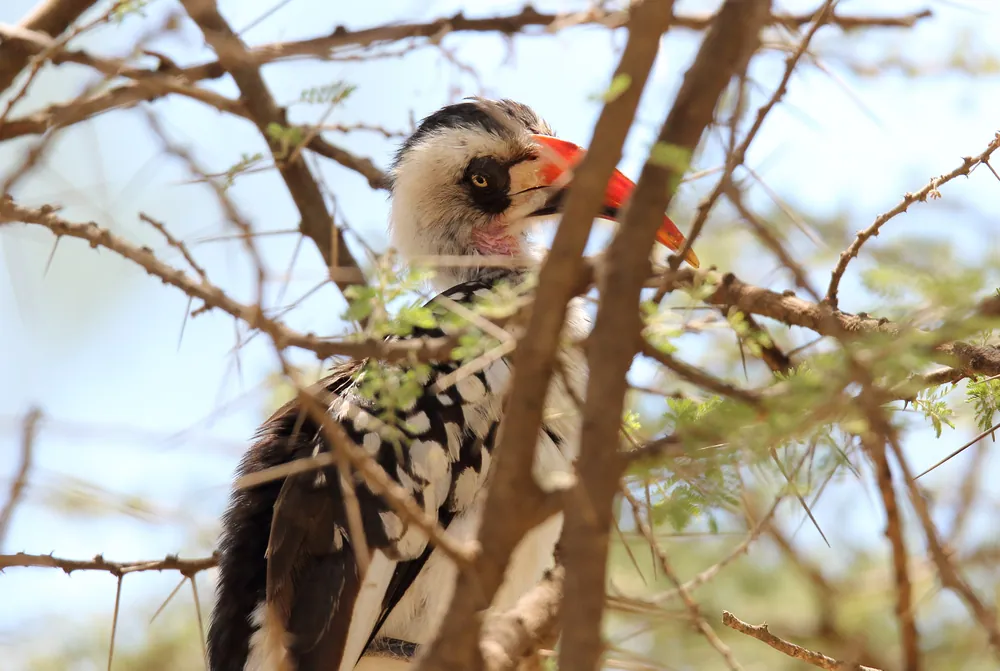
Birds. TANAPA's brochure counts 574 species. Two of them carry the park's name: the Ruaha red-billed hornbill and the Ruaha chat were first recorded here and named after it. Because of where it lies, the park is visited by both southern and northern migrants.
The protected area began in 1910 as the Saba Game Reserve, gazetted by the German colonial government. In 1946 the British enlarged it and renamed it the Rungwa Game Reserve. TANAPA's website spells it Rungwe, but its own brochure, its park map and the reserve that still exists to the north all use Rungwa.
In 1964, three years after independence, the southern part of that reserve became Ruaha National Park. A section of the Great Ruaha River was added in 1974, and in 2008 the park took in the Usangu Game Reserve and wetlands, reaching 20,226 km², the largest national park in Tanzania until Nyerere was created in 2019.
People were here long before any of it. TANAPA lists the burial site of Mapenza, a Gogo chief, inside the park, and rock-painting sites at Ganga la Mafunyo, Nyanywa, Chahe and Idinda. Outside the boundary, the Isimila pillars near Iringa are among the region's best-known archaeological sites; see the Iringa guide.
Elephants. The Ruaha–Rungwa ecosystem held about 34,000 elephants in 2009. By 2015 a census found about 15,800, give or take 4,800: a fall of some 60% in six years.
Lions. Ruaha's lions range well beyond the park and meet livestock, and the landscape has recorded the highest rate of lion killing in East Africa, by herders protecting their animals. In February 2018 the carcasses of six lions and 74 vultures were found, apparently poisoned. The Ruaha Carnivore Project, founded in 2009 and working with Oxford University's Wildlife Conservation Research Unit, employs men from pastoralist communities as "Lion Defenders" who track lions, warn villages and help find lost cattle instead of killing them.
The boundary. In June 2023 Parliament approved taking 478 km² out of the park and returning it to 29 neighbouring villages, to reduce conflict. TANAPA now gives the area as 19,822 km², a reduction of 404 km² from 20,226; we have not found the notice that reconciles the two figures. Then in October 2023 the government announced a plan to extend the park over other villages, and reporting by Mongabay put the number of people facing relocation at about 21,000.
That plan brought serious allegations. In June 2023 villagers, supported by the Oakland Institute, complained to the World Bank that park rangers had carried out killings, disappearances, sexual assaults and cattle seizures. The complaint concerned the Bank's REGROW programme, US$150 million since 2017 to develop tourism in southern Tanzania, and in April 2024 the Bank suspended its funding, saying it had information suggesting breaches of its policies. TANAPA and the ministry did not respond to Mongabay's questions. We have not verified the allegations or the government's position, and we do not know what has happened to the extension plan since.
This section relies on news reporting (Xinhua, Mongabay) and an advocacy group (the Oakland Institute) as well as official figures. We have said who said what rather than presenting any of it as settled fact.
By air, scheduled light aircraft fly from Dar es Salaam, Kilimanjaro and Arusha to the Msembe airstrip at park headquarters and to Jongomero. By road, TANAPA gives the distance as 108 km from Iringa, 480 km from Mbeya and 625 km from Dar es Salaam. The speed limit inside is 50 km/h and off-road driving is not allowed.
Fees. Ruaha is in TANAPA's lower band, with one rate all year: USD 30 per non-East African adult per day, USD 10 for children aged 5 to 15, and TZS 5,000 for East African citizens, all exclusive of 18 per cent VAT, so USD 35.40 in practice. That is less than half the Serengeti or Nyerere rate. Staying in a lodge or camp inside the park adds a concession fee of USD 30 per night.
Activities are charged on top: a walking safari is USD 20 for one to four hours or USD 25 for longer, a night game drive USD 50 (TANAPA says a ranger must be booked in advance from park headquarters), and a hot-air balloon flight carries a park fee of USD 30. A park guide is USD 20 per group per day.
Staying. Besides the private lodges and tented camps, TANAPA runs its own accommodation at Msembe: self-contained cottages on bed-and-breakfast from USD 50 a head, or USD 100 for a family of two adults and two children; a rest house at USD 30; and hostels for organised groups. Public campsites, with showers and toilets, are USD 30 per person per night and special campsites USD 50. TANAPA recommends booking ahead.
When to go. There is one rainy season, from about the end of November to May. June to October is dry and the game concentrates on the river. TANAPA gives average monthly temperatures of 23 °C in July to 29 °C in September, with days reaching 40 °C and nights falling to 8 °C.
Fees are from TANAPA's own 2023/24 tariff schedule, the most recent published, and are quoted exclusive of 18 per cent VAT. They may have risen since; confirm before budgeting.
- How big is Ruaha National Park?
- TANAPA gives 19,822 km², which makes it the second largest national park in Tanzania after Nyerere. It was 20,226 km² from 2008, when the Usangu wetlands were added, until boundary changes in 2023.
- What is Ruaha National Park known for?
- Predators and space. The wider Ruaha landscape holds close to 10% of the world's remaining lions, and leopard, cheetah and wild dog are all present. It is also where East and southern African species overlap, so greater and lesser kudu, sable and roan antelope are found together.
- How much does it cost to enter Ruaha?
- TANAPA's 2023/24 schedule sets USD 30 per non-East African adult per day, the same all year, exclusive of 18 per cent VAT: USD 35.40 in practice. Children aged 5 to 15 pay USD 10. A concession fee of USD 30 per night applies if you stay in a lodge or camp inside the park, and walks, night drives and guides are extra.
- How do you get to Ruaha National Park?
- Most visitors fly: scheduled light aircraft go from Dar es Salaam, Kilimanjaro and Arusha to the Msembe and Jongomero airstrips. By road, TANAPA gives the distance as 108 km from Iringa, 480 km from Mbeya and 625 km from Dar es Salaam.
- Why is the Great Ruaha River dry?
- It used to flow all year. Since the early 1990s, rice irrigation and dry-season grazing in the Usangu plains upstream have taken so much water that sections of the river dried out completely in 1993 and in dry years since; by 2019 it had no flow for several months a year. The Usangu wetlands were brought inside the park in 2008.
- When is the best time to visit Ruaha?
- June to October, the dry season, when wildlife is drawn to the Great Ruaha. The single rainy season runs from about the end of November to May. Days can reach 40 °C and nights fall to 8 °C.
- Can you do walking safaris in Ruaha?
- Yes. Walking safaris are an official TANAPA activity here, usually in the morning or evening: USD 20 for one to four hours or USD 25 for a longer walk, on the 2023/24 schedule. Night game drives are also possible, at USD 50, with a ranger booked in advance from park headquarters.
Edited by Kabeer Dalvi
Checked against
- Ruaha National Park — official pageTANAPA
- Tanzania National Parks Tariffs 2023/2024 — schedule to GN No. 490A of 2020TANAPA
- Ruaha National Park — official park brochure (2024)TANAPA
- Tanzanian parliament endorses resolution to deduct Ruaha National Park for human activities (28 June 2023)Xinhua
- Human rights allegations prompt World Bank to freeze project's funds in Tanzania (25 April 2024)Mongabay
- Setting the record straight about evictions and abuses to expand Ruaha National ParkThe Oakland Institute
- Ruaha Carnivore Project — lions, human–carnivore conflict and the Lion DefendersUNDP Equator Initiative
- Great Ruaha River — course and dry-season drying since 1993Wikipedia
- Ruaha National Park — history, elephant census, 2018 poisoningWikipedia