Mkomazi
National Park · TANAPA
Dry thornbush under the Pare and Usambara mountains, and a rhino sanctuary.
Edited by Kabeer Dalvi
- Area
- 3,245 km²
- Established
- 2008
- Region
- Kilimanjaro and Tanga regions
- Best time
- June–October
Wildlife
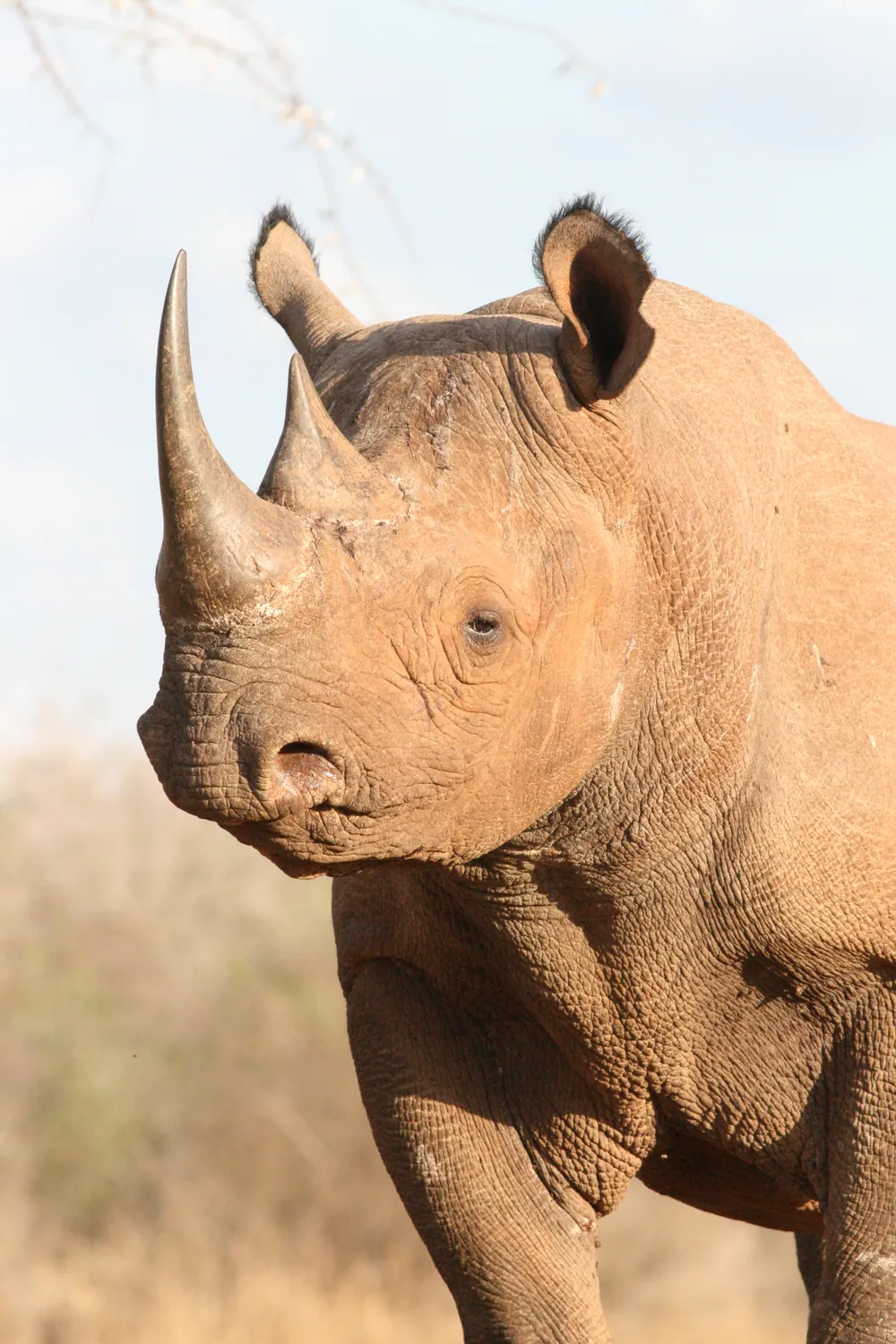
- Black rhino
- African wild dog
- Elephant
- Gerenuk
- Fringe-eared oryx
- Lesser kudu
- Eland
- Cheetah
Mkomazi is dry country: acacia and commiphora thornbush running north-east to the Kenyan border, where it joins Tsavo West National Park in one large ecosystem. The Pare and Usambara mountains rise along its western and southern sides. It was a game reserve from 1951 and became a national park in 2008.
The animals include the dry-country species that the famous northern parks mostly lack: gerenuk, which browses standing on its hind legs, fringe-eared oryx and lesser kudu. TANAPA counts more than 450 bird species. On a clear day Kilimanjaro can be seen from the park.
Mkomazi is best known for its fenced black rhino sanctuary and for a long programme that bred African wild dogs and released them into the wild. It also has a harder history: the herders who grazed their cattle here were evicted in 1988. Few visitors come.
Rhino viewing
An hour with the black rhinos in their sanctuary, booked in advance.
Dry-country species
Gerenuk, fringe-eared oryx and lesser kudu, rare in the other northern parks.
Birds of the dry north
More than 450 species, including some at the southern edge of their range.
Close to Same
Zange, the main gate, is 6 km from Same town on the Moshi–Dar es Salaam road.
Zange gate is 6 km from Same, and TANAPA puts it 112 km from Moshi and 190 km from Arusha. Charter flights use the Kisima and Kavateta airstrips inside the park.
Mkomazi lies in north-eastern Tanzania, mostly in Same District of Kilimanjaro Region, with its eastern part in Lushoto and Mkinga districts of Tanga Region. TANAPA gives its area as 3,245 km². Its long north-eastern edge is the Kenyan border, and across it is Tsavo West National Park, so animals can move freely between the two.
The park joins two old reserves: Mkomazi Game Reserve in the west and the smaller Umba Game Reserve in the east. TANAPA's brochure says the name comes from a Pare word for "a scoop of water", because water is scarce here.
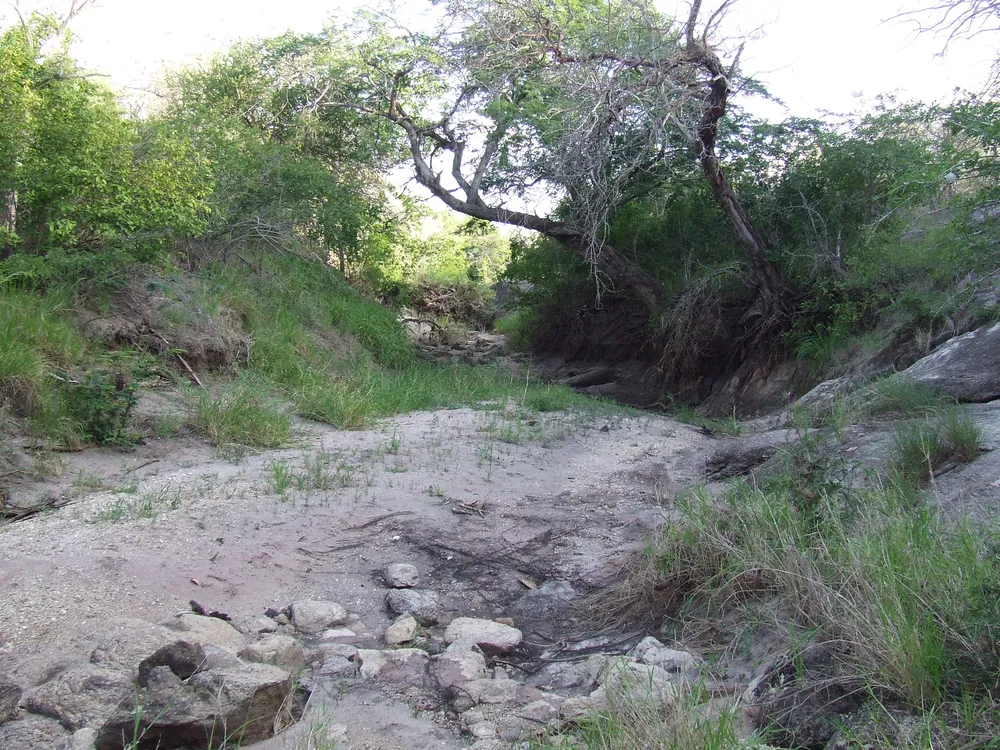
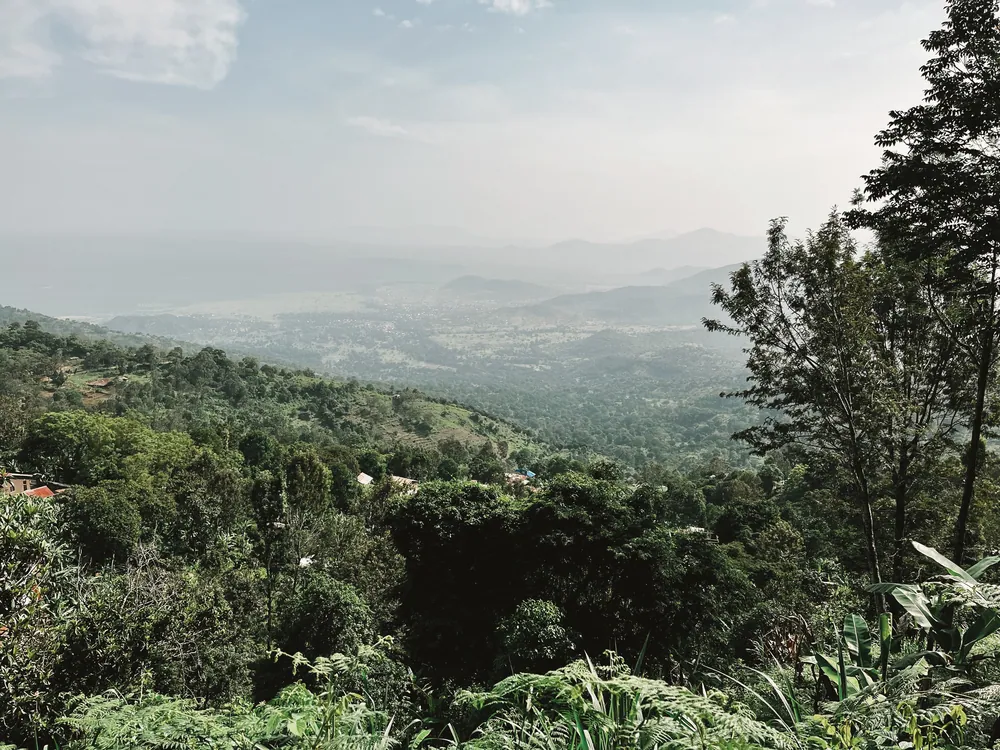
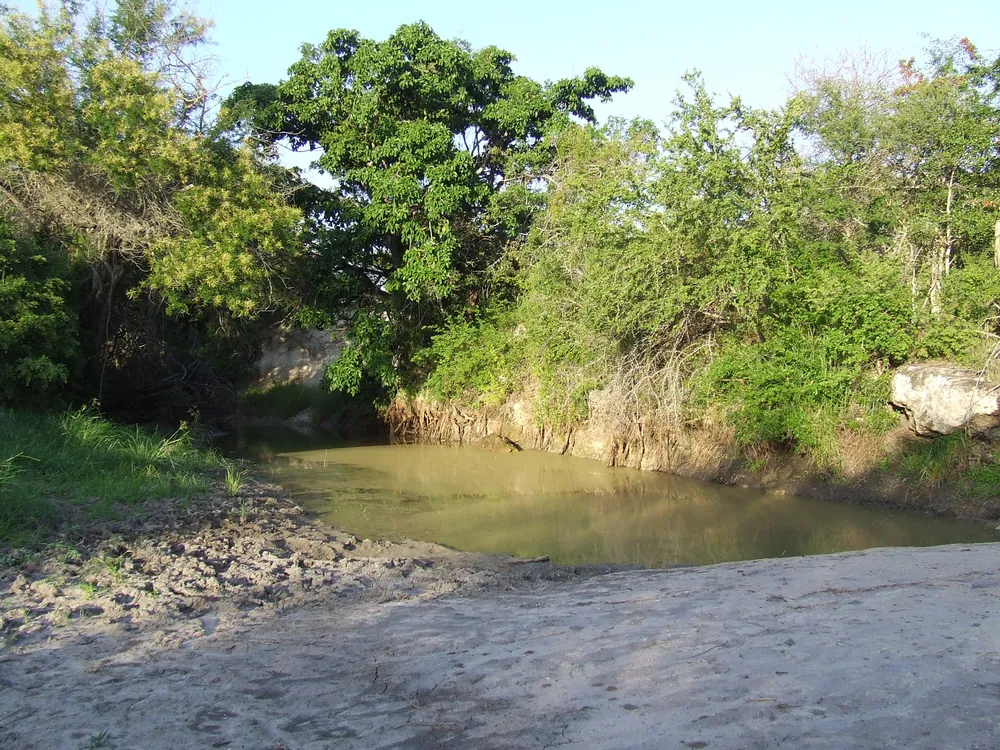
The land is semi-arid. It is mostly acacia and commiphora bush and grassland, with rocky hills and sand rivers that are dry for much of the year. The Pare Mountains rise along the west and the Usambara Mountains to the south, and TANAPA says Kilimanjaro can be seen on a clear day.
When the Mkomazi reserve was created in 1951, the colonial government let some Parakuyo herding families stay, with a few thousand cattle, in the eastern half. Other herders came in over the years, among them Maasai and local Pare and Sambaa farmers with cattle. Published histories of the reserve, drawing on the geographer Dan Brockington's research, report about 20,000 cattle were counted in the eastern half in the early 1960s, and about 80,000 across the whole reserve by the mid-1980s.
The government decided that grazing was damaging the reserve, and by July 1988 all the herders had been evicted. Some of them took the government to court. In June 1998 the High Court found that a group of Maasai plaintiffs had customary rights in the Umba part of the reserve and that their eviction had not followed the law. It ordered compensation of TZS 300,000 (about USD 450 at the time) for each of the 15 who had given evidence. The plaintiffs appealed, and the case reached the Court of Appeal in 1999.
The eviction is still argued over. For conservation groups, Mkomazi is a success: a damaged reserve brought back to health. Critics, Brockington the best known, say that thousands of people lost their grazing, that most got no compensation, and that the case for removing them was made without much evidence.
The cattle figures come from Dan Brockington's research as summarised by Wikipedia; the High Court ruling from an account of the case in Cultural Survival Quarterly. We have not been able to confirm the outcome of the 1999 appeal from the judgment itself.
In 1989 the government invited Tony Fitzjohn, who had worked with George Adamson in Kenya, to help restore Mkomazi. For the next thirty years the George Adamson Wildlife Preservation Trust worked with the government, rebuilding roads, dams and airstrips and paying for patrols. According to the Trust, only 11 elephants were left in 1989, and up to 600 were counted in the wet season of 2010.
The Trust built a fenced rhino sanctuary between 1995 and 1997 for the eastern black rhino. It was first 45 km² and later grew to 55 km². Fifteen rhinos were brought in: four from Addo Elephant National Park in South Africa in 1997 and four more in 2001; three from Port Lympne in England in 2012; and four from Dvůr Králové Zoo in the Czech Republic, three in 2009 and one in 2016. The Trust says there were 34 rhinos in the sanctuary when it handed the project to TANAPA at the end of 2019.
In 1995 the Trust began the first programme in East Africa to breed African wild dogs in captivity and release them. It started with 25 pups from three packs on the Maasai Steppe. By 2019 more than 200 wild dogs had been released into the Mkomazi–Tsavo ecosystem. The wild dog is listed as Endangered.
Fitzjohn died on 23 May 2022, aged 76.
TANAPA names fringe-eared oryx, gerenuk, lesser kudu, Grant's gazelle and eland as the animals of this dry country. The oryx, gerenuk and lesser kudu are hard to find in the better-known northern parks. There are also elephant, buffalo, lion, leopard and cheetah, and zebra, hartebeest and giraffe. With the rhinos in the sanctuary, TANAPA says the park has all of the Big Five.
TANAPA counts more than 450 bird species. Some are birds of the dry country of Kenya, Ethiopia and Somalia that reach the southern edge of their range here, among them the violet wood-hoopoe, Friedmann's lark, the Somali long-billed crombec and the yellow-vented eremomela. TANAPA's brochure calls them endemic, which they are not, but it also gives the real reason they are here. Other birds include the vulturine guineafowl, ostrich, secretary bird and eastern chanting goshawk. TANAPA suggests Zange, Maore, Mbula, Dindira, Norbanda and Ngurunga for birding.
By road, the main gate is Zange, 6 km from Same town. TANAPA puts it 112 km from Moshi, 152 km from Kilimanjaro International Airport and 190 km from Arusha. From Tanga (150 km) or Mombasa (140 km), you can enter at Umba gate, but only by special arrangement. By air, charter flights land at the Kisima and Kavateta airstrips inside the park.
Fees. Mkomazi is in TANAPA's lower band, with one rate all year: USD 30 per non-East African adult per day, USD 10 for children aged 5 to 15, and TZS 5,000 for East African citizens. All are exclusive of 18 per cent VAT, so USD 35.40 in practice. Rhino viewing in the sanctuary is USD 30 per adult for one hour (USD 10 for children), and must be booked in advance. A walking safari is USD 20 for up to four hours or USD 25 for longer, and a park guide USD 20 per group per day.
Staying. TANAPA runs cottages at the public campsite at Zange, and there are special campsites at Dindira and Maore. Public campsites are USD 30 per person per night and special campsites USD 50. The schedule also lists the Kisima base camp at USD 200 per person per night. There is one private tented camp, and staying at a private camp inside the park adds a concession fee of USD 25 per night. Same town, 6 km from the gate, has small lodges and hotels.
When to go. The long rains fall from March to May and the short rains in November and December. TANAPA says it is hottest from October to April and coolest from May to September. June to October, after the long rains and before the short ones, is the usual time to visit.
Fees are from TANAPA's own 2023/24 tariff schedule, the most recent published, and are quoted exclusive of 18 per cent VAT. They may have risen since; confirm before budgeting.
- Where is Mkomazi National Park?
- In north-eastern Tanzania, on the Kenyan border next to Tsavo West National Park, mostly in Kilimanjaro Region with its eastern part in Tanga Region. The main gate, Zange, is 6 km from Same town, which TANAPA puts 112 km from Moshi.
- Can you see black rhinos in Mkomazi?
- Yes, in the fenced rhino sanctuary, on a rhino-viewing trip that must be booked in advance. TANAPA's 2023/24 schedule charges USD 30 per adult for one hour. The George Adamson Wildlife Preservation Trust, which built the sanctuary, says it held 34 rhinos when it handed the project to TANAPA at the end of 2019.
- How much does it cost to enter Mkomazi?
- USD 30 per non-East African adult per day, the same all year, exclusive of 18 per cent VAT: USD 35.40 in practice. Children aged 5 to 15 pay USD 10. Rhino viewing, walks and guides are extra.
- What animals live in Mkomazi?
- Dry-country species such as fringe-eared oryx, gerenuk, lesser kudu, Grant's gazelle and eland, as well as elephant, buffalo, lion, leopard, cheetah and African wild dog. Black rhino live in the sanctuary. TANAPA counts more than 450 bird species.
- Why were people evicted from Mkomazi?
- The government decided that cattle grazing was damaging the old game reserve, and by July 1988 all the herders, mainly Parakuyo and Maasai, had been removed. In 1998 the High Court found that the eviction of one group had not followed the law and ordered compensation for 15 of them. The eviction is still debated.
- When is the best time to visit Mkomazi?
- The dry months from June to October, which TANAPA says are also the coolest part of the year. The long rains fall from March to May and the short rains in November and December.
- Where can you stay near Mkomazi?
- Inside the park there are TANAPA cottages at Zange, public and special campsites, the Kisima base camp and one private tented camp. Same town, 6 km from the main gate, has small lodges and hotels.
Edited by Kabeer Dalvi
Checked against
- Mkomazi National Park — official pageTANAPA
- Tanzania National Parks Tariffs 2023/2024 — schedule to GN No. 490A of 2020TANAPA
- Mkomazi National Park — official park brochureTANAPA
- Black rhino sanctuaryGeorge Adamson Wildlife Preservation Trust (Kora Project)
- African wild dog programmeGeorge Adamson Wildlife Preservation Trust (Kora Project)
- Trust history — the Mkomazi ProjectGeorge Adamson Wildlife Preservation Trust (Kora Project)
- Legitimizing dispossession: the Tanzanian High Court's decision on the eviction of Maasai pastoralists from Mkomazi Game ReserveCultural Survival Quarterly
- Fortress Conservation: The Preservation of the Mkomazi Game Reserve, Tanzania (Dan Brockington, 2002)Indiana University Press / James Currey
- Anthony Fitzjohn obituary (2022)The Irish Times
- Mkomazi National Park — the two reserves, cattle numbers, evictionWikipedia