Songwe
The newest region in Tanzania, split from Mbeya in 2016: coffee highlands on the Zambian and Malawian borders, one of the country's busiest border crossings, and a sixteen-tonne meteorite lying in the hills where it fell.
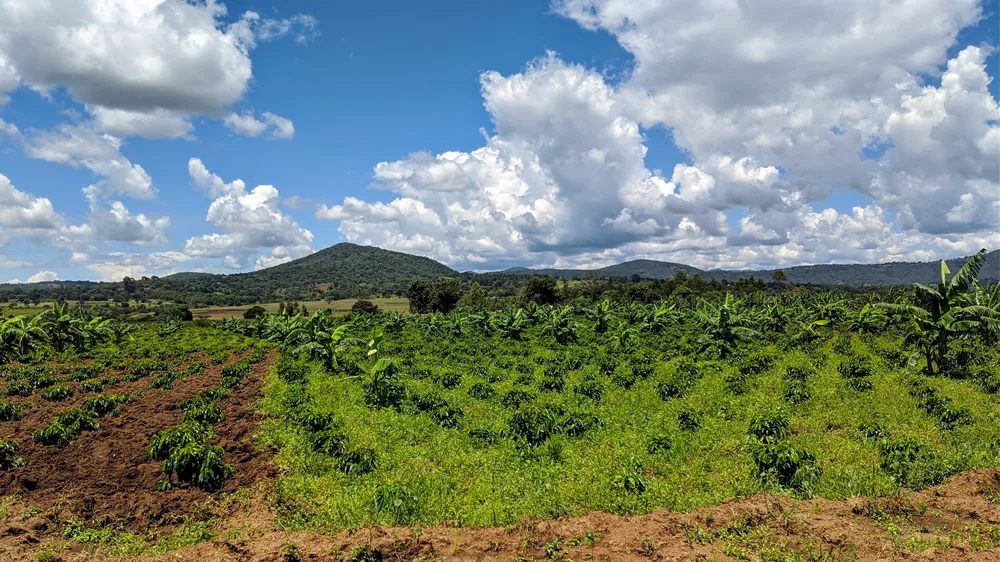
A coffee farm in the hills of Songwe Region. Coffee is the region's leading cash crop.
- Region
- Songwe Region, southern highlands
- Population
- 1,344,687 (2022 census)
- Area
- 27,656 km²
- Created
- 29 January 2016, from western Mbeya
- Capital
- Vwawa
A stone from space, and a border
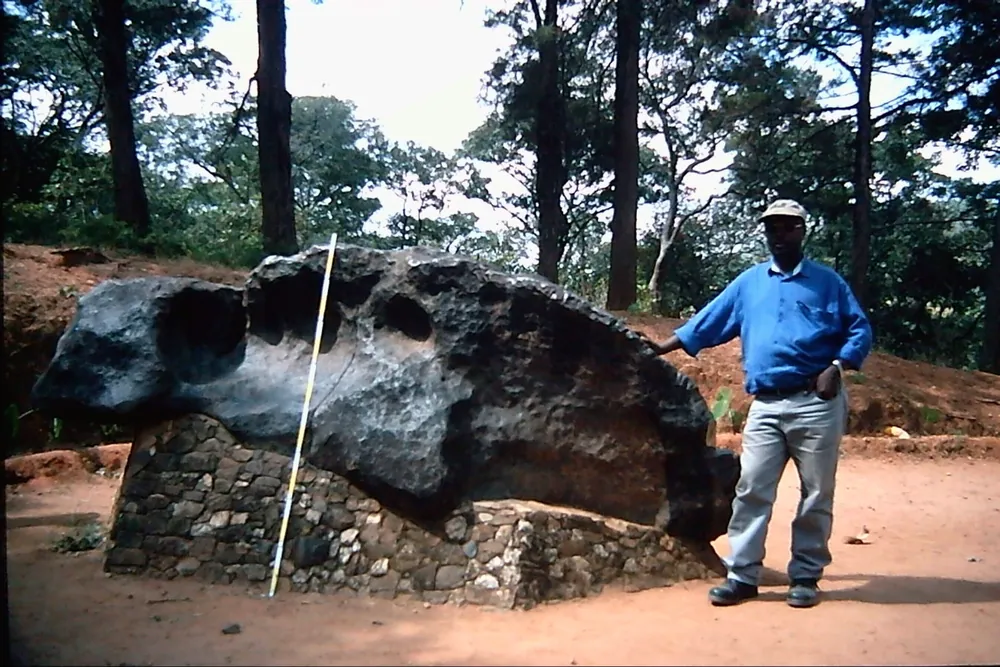
The oldest thing in the region arrived from space. The Mbozi meteorite lies in the hills of Mbozi District: an iron meteorite roughly three metres long, weighing an estimated sixteen tonnes, and among the largest in the world. Local people had long known it; it came to scientific attention in 1930. Rather than move it, the ground around it was excavated so that it now sits on a plinth of its own rock.
The region is otherwise new. Songwe Region was created on 29 January 2016 out of the western half of Mbeya Region, with Vwawa as its capital and four districts — Ileje, Mbozi, Momba and Songwe — plus the border town of Tunduma.
That border is the region's other defining fact. Tunduma is the main road crossing into Zambia, and Isongole, in the Ileje highlands, is the main crossing into Malawi. Both the Tanzam highway and the TAZARA railway run through the region on their way south, which makes this corner of Tanzania one of the country's busiest trade corridors.
Coffee, and everything that crosses the border
What the region produces
- Coffee
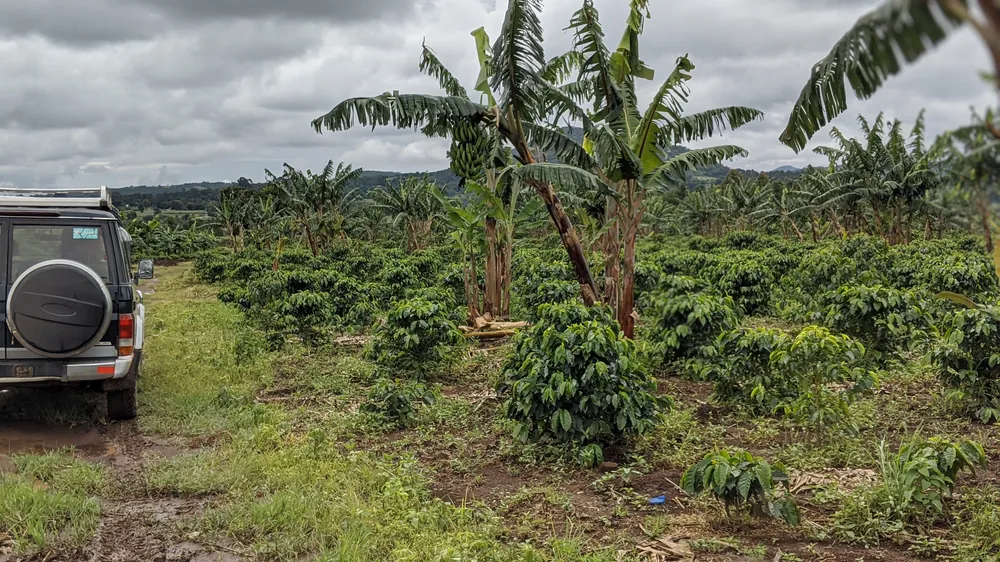
- The leading cash crop, mostly smallholder
- Sesame & sunflower
- The next cash crops
- Maize & beans
- The staples of the highlands
- Fishing
- On Lake Rukwa, in the west
- Transit trade
- Tunduma, on the road to Zambia
About three-quarters of households here live from farming, and the region is among the country's more productive. Coffee leads the cash crops — Mbozi arabica is well known in the trade — with sesame and sunflower behind it, and maize and beans grown to eat.
The border economy is the other half. Freight for Zambia and the Copperbelt moves through Tunduma day and night, by road and by rail, and the town has grown into a sprawling, hard-working trading post with all the traffic and informal commerce that implies.
In the west, the land drops to Lake Rukwa, and the fishing communities of Momba District work its southern shore.
Highland peoples, three countries
The Nyiha are the largest group in the region, with the Ndali, Lambya, Nyamwanga, Mambwe and Bungu alongside them — a mix that reflects how many directions this corner of the country connects to. Families commonly have relatives across the Zambian or Malawian border, and trade and marriage have crossed those lines for far longer than the lines have existed.
The Ileje highlands in the south are green, steep and cool, looking down towards Malawi. The Mbozi plateau in the middle is coffee and maize country. Only in the far west, towards Lake Rukwa, does the land dry out.
There is very little formal tourism here, and the region does not pretend otherwise. What it offers is the meteorite, the highland farms, and the experience of a genuine frontier town, which is a particular kind of interesting.
Towns, parks and places across Songwe Region
Natural wonder
Mbozi meteorite
The sixteen-tonne iron meteorite in Mbozi District — one of the largest in the world, and the region's best-known sight.
Town
Vwawa
The regional capital, a highland town on the Tanzam highway in Mbozi District.
Border town
Tunduma
The main road crossing into Zambia, and one of the busiest inland trade points in the country.
Highland district
Ileje and Isongole
Steep, green country on the Malawian border, with the Isongole crossing at its edge.
Rift lake
Lake Rukwa
The region's western edge, in Momba District — shallow, alkaline and changeable.
Informational — none of this is ticketed by us
Natural wonder
The Mbozi meteorite
About three metres long and an estimated sixteen tonnes, standing where it fell. A short detour off the road west.
Working farms
Mbozi coffee country
Smallholder arabica across the plateau — hills, drying tables and washing stations in season.
Landscape
The Ileje highlands
Cool, steep farmland running down to the Malawian border at Isongole.
Border town
Tunduma
Trucks, rail freight and constant trade. Not pretty, but it explains a large part of the region.
Rift lake
Lake Rukwa's southern shore
Fishing country in the west of the region, well off any tourist route.
Journey
The TAZARA railway
The line to Zambia runs through the region; the passenger service is slow, cheap and a genuine journey.
Before you go
- Getting there
- The nearest airport is Songwe, which serves Mbeya city and lies east of the region, in Mbeya Region. The Tanzam highway and TAZARA trains both run through the region.
- Getting around
- A vehicle and driver. The meteorite is signposted off the road west of Mbeya; the last stretch is rough.
- When to come
- May to October is dry. The rains, roughly November to April, are heavy in the highlands.
- Borders
- Zambia at Tunduma and Malawi at Isongole. Carry your passport, and expect queues and touts at Tunduma.
- Climate
- Cool in the highlands, hot towards Lake Rukwa. Pack a warm layer for the evenings.
- Money
- Shillings. ATMs in Vwawa and Tunduma; carry cash elsewhere.
Last reviewed 2026-09-17
Editorial — fact-check complete
Checked against
- 2022 Population and Housing Census — administrative unitsNational Bureau of Statistics, Tanzania
- Songwe Region — creation, districts, borders, economyWikipedia
- Mbozi meteorite — size, weight and discoveryWikipedia
- Mbozi MeteoriteNgorongoro Conservation Area Authority