Simiyu
Cotton country on the southern edge of the Serengeti — the region most safari traffic drives through without stopping, and the heartland of Sukuma competitive dance.
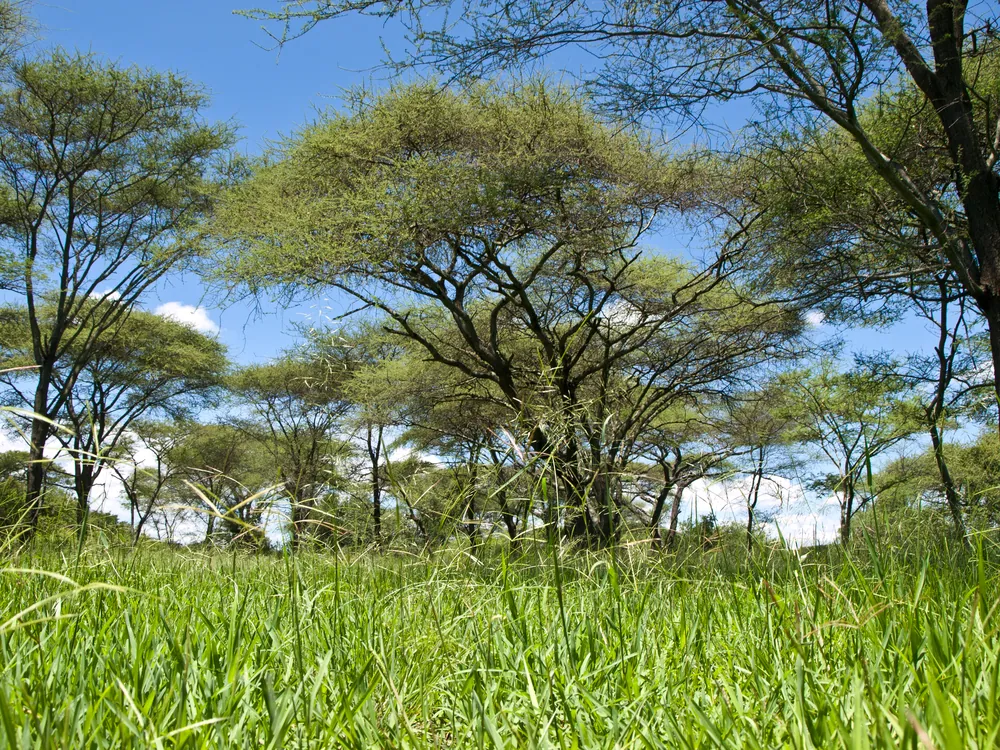
Acacia and long grass on the plains near the Ndabaka gate of the Serengeti, on the region's northern edge.
- Region
- Simiyu Region, Lake Zone
- Population
- 2,140,497 (2022 census)
- Created
- 2012, from Shinyanga Region
- Capital
- Bariadi
- Borders
- Serengeti National Park and Lake Victoria
A new region in old Sukumaland
Simiyu is one of the newest regions in the country: it was created in 2012 out of the eastern districts of Shinyanga, with Bariadi as its capital. Its five districts — Bariadi, Busega, Itilima, Maswa and Meatu — were already a coherent block of country, the eastern side of Sukumaland, and the change was administrative rather than cultural.
The deeper history here is agricultural. Cotton was pushed into this country under colonial rule and stayed, because the soils and the rainfall suit it; the ox-plough spread with it, and the combination of cattle, cotton and maize has shaped the landscape ever since.
The region's northern boundary is the Serengeti. The park's western corridor and the Ndabaka gate, on the main road between Mwanza and Musoma, lie on Simiyu's edge, and the wildebeest migration crosses in and out of the region's grasslands on its way round the ecosystem.
Cotton, cattle and grain
What the region produces
- Cotton
- The principal cash crop
- Groundnuts & sunflower
- The other cash crops
- Maize & sorghum
- The staple food crops
- Livestock
- The second economy, at scale
- Tourism
- Serengeti gates and Maswa Game Reserve
About 80% of the working population farms. Cotton is the cash crop, with groundnuts and sunflower behind it, and maize and sorghum are what people grow to eat. Cattle, goats and sheep are kept in large numbers and are the second pillar of the rural economy.
Tourism touches the region without settling in it. The Serengeti's gates are here and the vehicles pass through, but the lodges and the spending are mostly on the other side of the park boundary.
Maswa Game Reserve, adjoining the park in Meatu District, is a hunting reserve rather than a photographic one, and it forms part of the buffer that keeps the southern Serengeti intact.
The dance societies
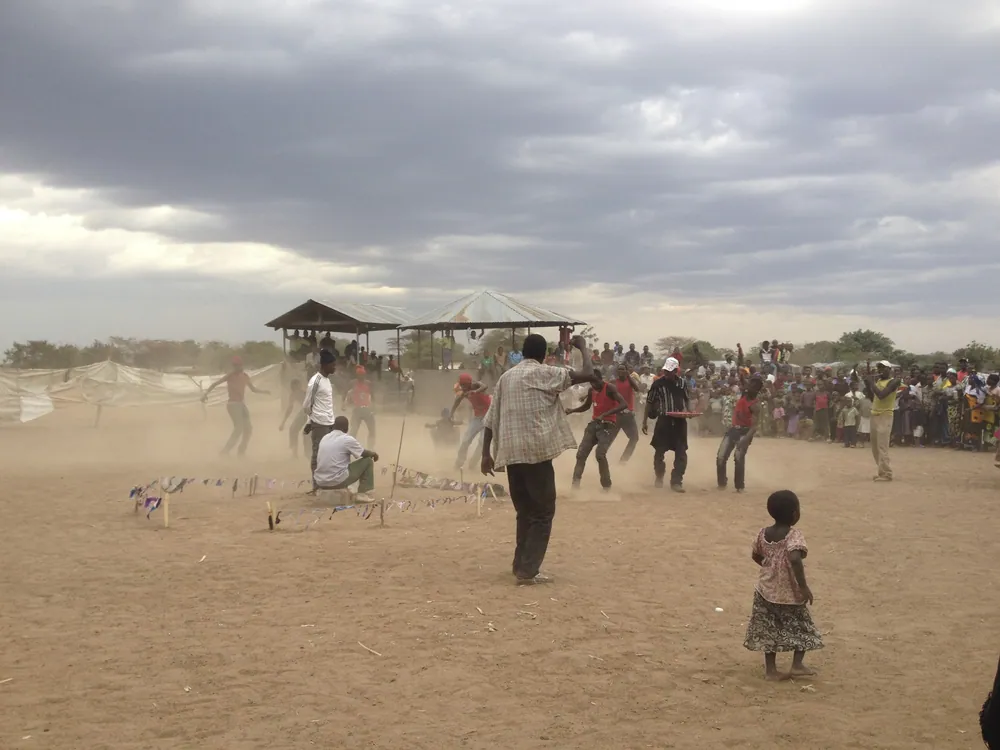
This is Sukuma country, and the Sukuma have one of the strongest public performance traditions in East Africa. Dancers belong to rival societies — the bagika and the bagalu, whose rivalry is said to date from the mid-nineteenth century — and they compete in front of a crowd that decides, by staying or drifting away, who has won.
Dances are built on the work and the animals of the region: hoe dances, porcupine and hyena dances, and the famous snake dance, bugobogobo, in which lead dancers handle live snakes to demonstrate courage and their command of medicine.
The season runs from about June, when the harvest is in, through August. Competitions can last a day or stretch over weeks. They are village events rather than shows for visitors: go with someone local, ask before photographing, and do not expect a timetable.
Towns, parks and places across Simiyu Region
National park
Serengeti National Park
The park's southern and western edges lie in Simiyu, with the Ndabaka gate on the Mwanza–Musoma road.
Game reserve
Maswa Game Reserve
Adjoining the Serengeti in Meatu District — a hunting reserve and an important buffer for the ecosystem.
Town
Bariadi
The regional capital, a market town in the middle of the cotton country.
District
Busega
The north-western corner, on Lake Victoria, where the road from Mwanza meets the Serengeti gate.
District
Meatu
The dry south, running towards Lake Eyasi and the Maswa reserve.
Informational — none of this is ticketed by us
Safari gateway
The Ndabaka gate and western corridor
The Serengeti entrance nearest Lake Victoria, and the way into the western corridor and the Grumeti.
Living culture
Sukuma dance competitions
Bagika against bagalu, from about June to August. Village events — ask locally, and go with someone who knows.
Game reserve
Maswa Game Reserve
Wild country along the park boundary in Meatu. Access is controlled; arrange through the reserve.
Market
Bariadi market
Cotton, cattle and grain — the commercial centre of the region.
Landscape
The plains
Open grass, acacia and long horizons on the road between Mwanza and the park.
Lakeshore
Lake Victoria shore, Busega
Fishing villages at the region's north-western edge, close to the Serengeti gate.
Before you go
- Getting there
- By road: the Mwanza–Musoma highway crosses the north of the region, and Bariadi is a few hours east of Mwanza. There are no scheduled flights to the region itself.
- Getting around
- A vehicle and driver. Most visitors pass through on the way to or from the Serengeti.
- When to come
- June to October is dry and is also the dance season. The migration is usually in the southern and western Serengeti between about December and June.
- Park fees
- Serengeti entry is charged by TANAPA at the gate, in the usual way; the reserve next door is separate and permit-based.
- Respect
- Dance gatherings are community events. Ask before photographing, and follow whatever your host tells you.
- Money
- Shillings. ATMs in Bariadi; carry cash elsewhere.
Last reviewed 2026-09-17
Editorial — fact-check complete
Checked against
- 2022 Population and Housing Census — administrative unitsNational Bureau of Statistics, Tanzania
- Simiyu Region — creation, districts, economyWikipedia
- Serengeti National ParkTanzania National Parks (TANAPA)
- From 'Dancing with Porcupines' to 'Twirling a Hoe': Sukuma dance societiesUtamaduni (research paper)