Jozani Chwaka Bay
National Park · Zanzibar
Zanzibar's only national park, and the last refuge of an endemic monkey.
- Area
- 50 km²
- Established
- 2004
- Region
- Unguja, Zanzibar
- Best time
- Year-round
Wildlife
- Zanzibar red colobus
- Sykes' monkey
- Ader's duiker
- Bush baby
- Mangrove kingfisher
Jozani is Zanzibar's national park, and it is worth saying plainly that it is not managed by TANAPA — Zanzibar administers its own protected areas, as it does its own tourism licensing. It was gazetted in 2004, protecting the largest remaining block of indigenous forest on Unguja along with the mangroves and salt marsh of Chwaka Bay.
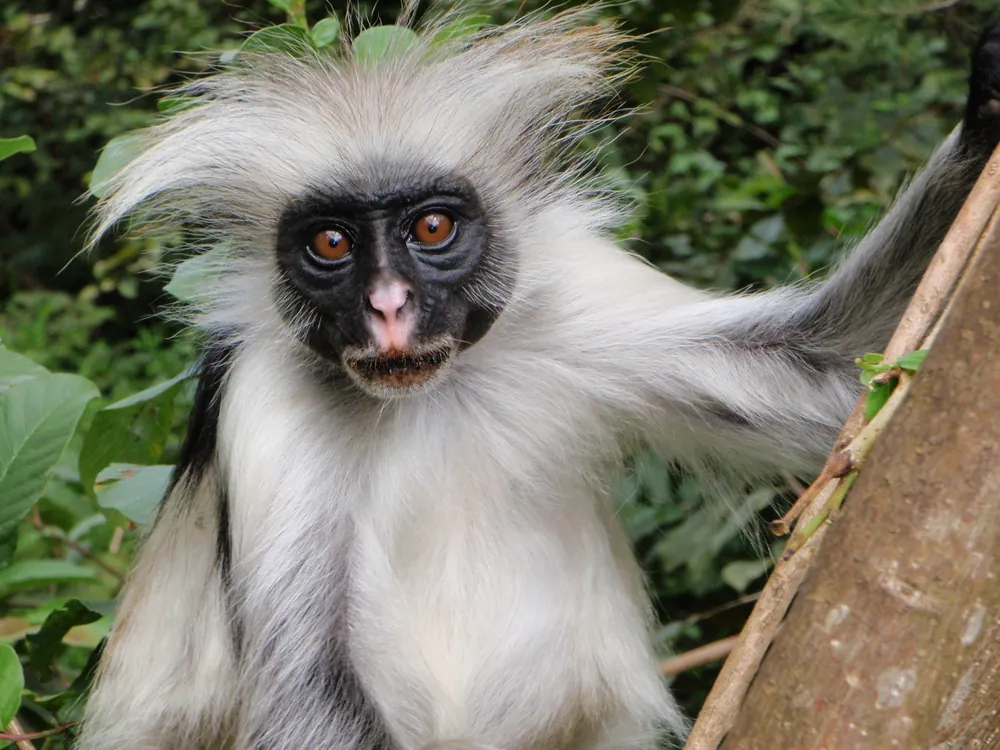
The reason most people come is the Zanzibar red colobus, Piliocolobus kirkii, which exists on this island and nowhere else on earth. Once close to extinction, the population has recovered to a few thousand and the troops near the forest edge are thoroughly used to people — close views are near certain, which is unusual for a primate anywhere.
The other half of the visit is the mangrove boardwalk at Chwaka Bay, a raised walkway through tidal forest that explains more about how this coast works than any amount of beach does. The park is small, easily done in half a day from Stone Town, and the entrance fee goes to Zanzibar rather than the mainland park system.
Zanzibar red colobus
Endemic to the island, and habituated to the point of near-certain sightings.
The mangrove boardwalk
A raised walk through tidal forest at Chwaka Bay.
Indigenous groundwater forest
The last substantial block left on Unguja.
Half a day from Stone Town
Forty minutes each way, and easily combined with a spice farm.
About 40 minutes by road south-east of Stone Town, on the way to the east-coast beaches.
No positioning charge — the vehicle is already based nearby.
Checked against
- Jozani Chwaka Bay National ParkZanzibar Commission for Tourism
- Jozani Chwaka Bay National ParkWikipedia