Dodoma
The capital a country chose rather than inherited — a dry central plateau town turned seat of government, at the heart of Tanzania's only real wine country, and a few hours from some of the oldest rock paintings in Africa.
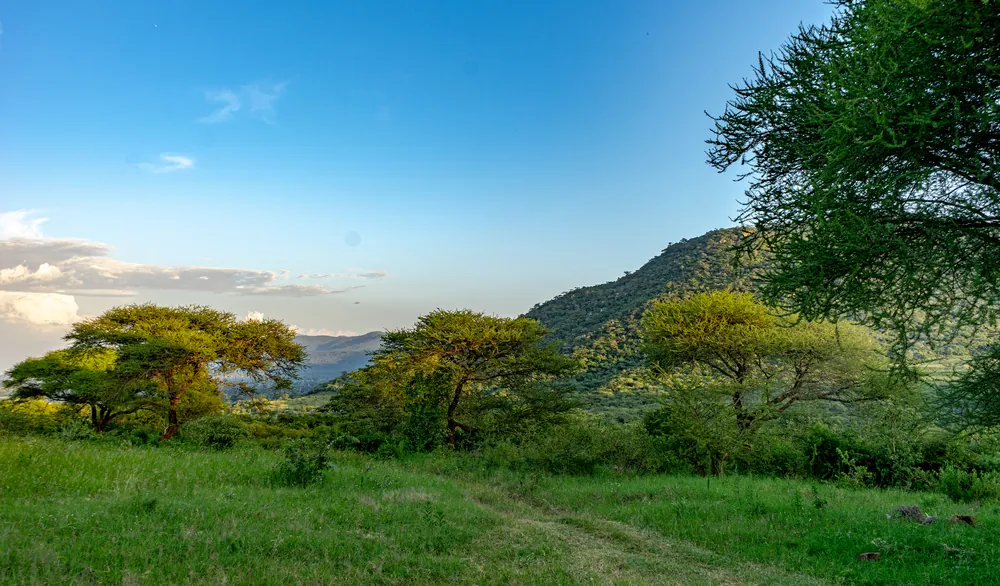
The hills of Kondoa district, north of the city. Dodoma Region is far greener in the rains than its reputation suggests.
- Region
- Dodoma Region, central Tanzania
- Population
- 765,179, Dodoma City (2022 census)
- Capital since
- Designated 1973
- Known for
- Parliament, wine, the Kondoa rock art
- Heritage
- Kondoa Rock-Art Sites, UNESCO 2006
A capital chosen on purpose
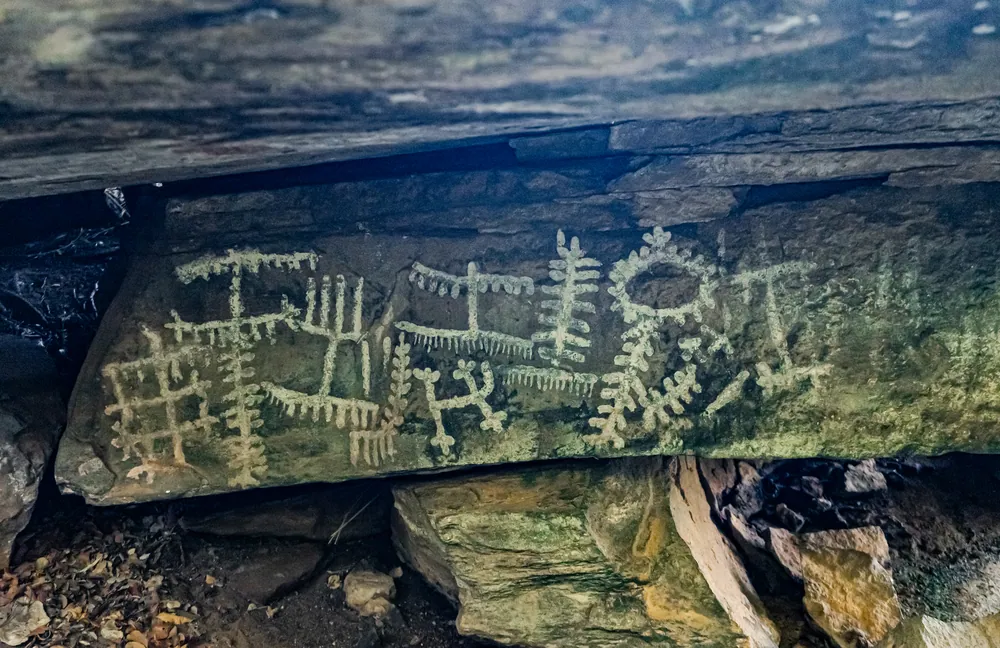
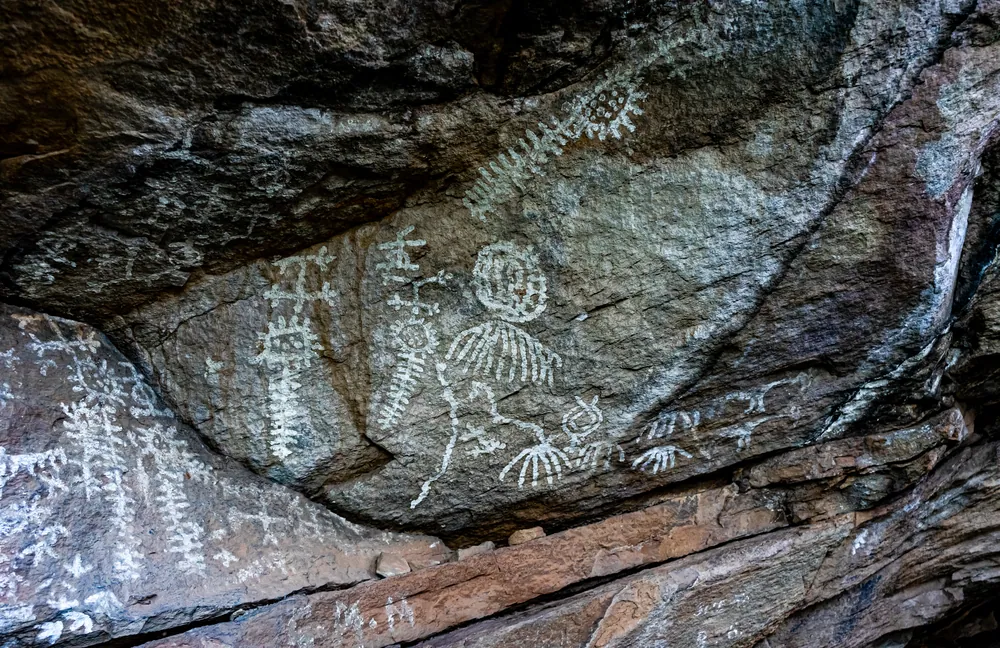
Long before the capital, there were the paintings. The Kondoa Rock-Art Sites, north of the city on the eastern slopes of the Masai escarpment, hold more than a hundred and fifty painted shelters showing people, animals and hunting scenes, made over a span of centuries by hunter-gatherer and later pastoralist communities. Some of the shelters are still used by local people for rituals today. UNESCO inscribed them as a World Heritage Site in 2006.
Dodoma town itself grew in the German period as a station on the Central Railway, a dry and modest plateau town serving the surrounding farmland. It would have stayed modest, except for a political decision.
In 1973 the government of Julius Nyerere decided to move the capital from Dar es Salaam to Dodoma. The reasoning was deliberate: Dodoma sits close to the geographical centre of the country, and moving government inland was meant to spread development away from the coast and signal a national rather than colonial orientation. For a long time the move existed mostly on paper. Parliament met here, but ministries stayed in Dar es Salaam.
That changed from 2016, when the government began relocating ministries in earnest, and Dodoma has grown rapidly since — new government districts, roads, a university and an airport being expanded. It is still a young capital, and it feels like one: wide, spread out, and in the middle of being built.
Government, and Tanzania's vineyards
What the region produces
- Government
- The largest employer, and growing
- Grapes & wine
- Tanzania's main wine region
- Sunflower
- Pressed for cooking oil
- Groundnuts & millet
- Drought-tolerant staples
- Livestock
- Cattle and goats across the plateau
Government is now the city's engine. The relocation of ministries brought civil servants, contractors, hotels and construction, and the city's economy has been reshaped around the business of administration in a single decade.
The surprise is wine. Dodoma's semi-arid climate, with long dry seasons and warm days, suits grapes well, and the region is Tanzania's principal wine-producing area. Vines around Makutupora and Hombolo can crop twice a year. The industry is small by international standards and the wines are mostly for the domestic market, but it is a genuine local tradition going back decades, and tastings are possible.
Beyond the city, the region farms crops that cope with low rainfall: sunflower for cooking oil, groundnuts, millet and sorghum, alongside cattle and goats.
Gogo country, and the paintings in the hills
The Gogo are the principal people of the Dodoma plateau — pastoralists and farmers adapted to a hard, dry country, known across Tanzania for a distinctive and complex musical tradition built around voice and the ilimba, a thumb piano. Gogo music has been recorded and studied far beyond the region.
The city itself has a newer, more mixed culture, shaped by civil servants arriving from every part of the country. It has a large Anglican cathedral and a strong church presence, reflecting the missions that worked in central Tanzania, alongside mosques and a growing university population.
For visitors, Dodoma is chiefly a base. The Kondoa rock art is the reason to come, about three hours north by road, and it deserves to be far better known than it is — to stand under a rock shelter in quiet hills looking at paintings made by people who lived here many centuries ago, often with nobody else there, is one of the most affecting heritage experiences in the country.
Towns, parks and places across Dodoma Region
Town
Kondoa
The old town of the Irangi hills, and the base for visiting the Kondoa rock-art sites.
Town
Kongwa
Headquarters of the failed 1940s groundnut scheme, when its settlement was nicknamed 'Half London'.
Town
Mpwapwa
One of the oldest colonial districts in the country — a German post by the early 1890s — and home of Tanzania's oldest teacher-training college.
Informational — none of this is ticketed by us
World Heritage
Kondoa Rock-Art Sites
More than 150 painted shelters on the Masai escarpment, about three hours north. Go with a guide from the site office.
Vineyards
Wine estates at Makutupora and Hombolo
Tanzania's wine country, close to the city. Small-scale, and tastings can be arranged.
Institution
The Parliament of Tanzania
The National Assembly building. Public visits are sometimes possible when the house is sitting.
Journey
The standard-gauge railway
The electric SGR line to Dar es Salaam — a fast, modern alternative to a long day on the road.
Walking
Irangi hills
Green, rocky country around Kondoa, and the landscape the painters knew.
Culture
Gogo music
Voice and ilimba traditions famous across Tanzania. Ask locally about performances and festivals.
Before you go
- Getting there
- Flights from Dar es Salaam, and a fast standard-gauge railway connection to Dar. By road, roughly six to seven hours.
- For Kondoa
- About three hours north by road. Register at the site office and take a guide — many shelters are unmarked.
- When to come
- June to October is dry. The rains fall roughly December to April, when the plateau turns green.
- Climate
- Semi-arid and warm by day, cool at night. Less humid than the coast.
- Money
- Shillings. ATMs throughout the city; carry cash for Kondoa.
- Time
- East Africa Time, UTC+3, no daylight saving.
Last reviewed 2026-09-15
Editorial — fact-check complete
Checked against
- Kondoa Rock-Art Sites — World Heritage ListUNESCO
- 2022 Population and Housing Census resultsNational Bureau of Statistics, Tanzania
- Dodoma — designation as capitalEncyclopaedia Britannica
- Dodoma Region: districts and townsWikipedia
- Mpwapwa — colonial district and teacher-training collegeWikipedia
- Tanganyika groundnut scheme — KongwaWikipedia